Not that much! Caoimhe³ had been away and was flying back that night and I picked her up at the airport so I didn’t want to go out to any party or anything before that, and I was already tired and feeling a bit anti-social anyway. No costume this year.
I bought far, far too many sweets in anticipation of trick-or-treaters but only got one, so now I have a mountain of sugar and chocolate tempting me. I did put out a jack o’ lantern to try and attrack visitors but I only went to the supermarket to try and get a pumpkin that morning and they were unsurprisingly sold out so I went with the more traditional (and more difficult) option of carving a turnip instead.
I also hung out online with Ruby and another friend to visit The Annual Ghost Town Pumpkin Festival which is a very cute little game that is only online once a year around Halloween. It should still be up for a week or two and it’s free so I really recommend it.
In the opening scene, when Lara is being born, her sisters already know that she’s going to be a princess, but argue about if she will be a blue or red, as if mermaid gender is colour-based, and her father seems like the only clearly male mermaid around. Grace, witch, social outcast, is both red and blue, and in fish form she appears to be a male betta fish and while the show can’t use anything owned by Disney, Grace’s heavy makeup feels suggestive of Ursula, famously based on a drag queen Divine. Even the name is suggestive of a connection. And similarly, Kota, judging from his size, appears to be a female anglerfish, while being very small as a human. It’s not really textual, but there are strong trans undercurrents flowing through the story. And that’s not even to mention the obvious parallels of suitors being disgusted when they find out the biology that Lara and Grace were born with, and learning to be vulnerable and open yourself to love despite fear of hurt and hatred and defiance of what the world says that you should be.
The show in general is gorgeous, funny and sweet. I really love Lara and Mari. I was expecting the ending to be much more harsh considering some comments I’ve seen about it, though I must admit it was strangely flat compared to what came before it, refusing to give the straightforward happy ending that was obviously being promised. Lara rejecting having to be defined by orthodox ideas of “true love” does make sense for her, but as Mari herself points out it’s a strange turn for Lara to say all that cringe shit about wanting to live in a world with her and then just fuck off to find herself afterwards instead. The final tension is never really resolved, just left to sit until we cut to black, with the audience feeling as lost as Mari is, with her own heart having been pierced through with neither the closure of the love being fully consummated nor having her heart completely torn out.
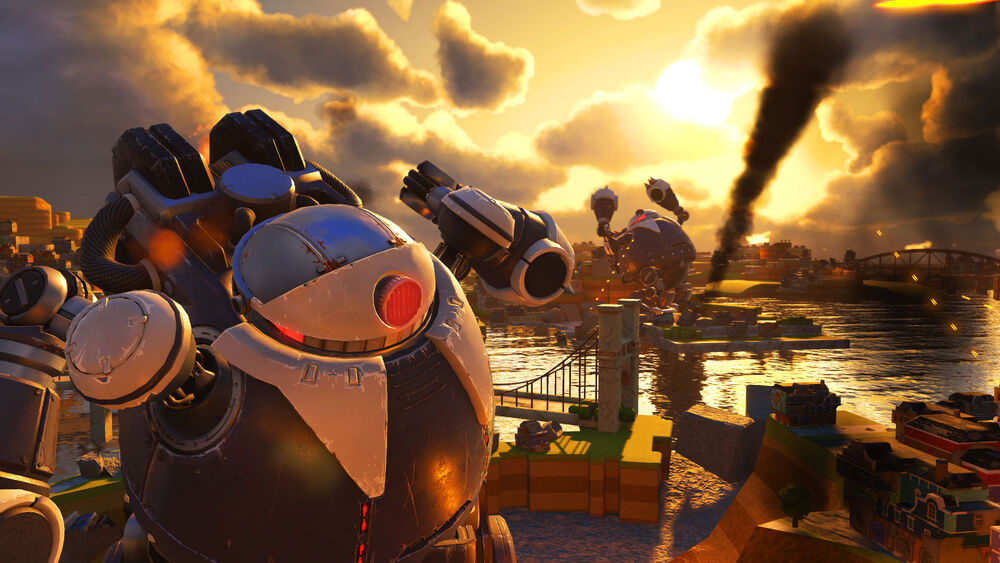
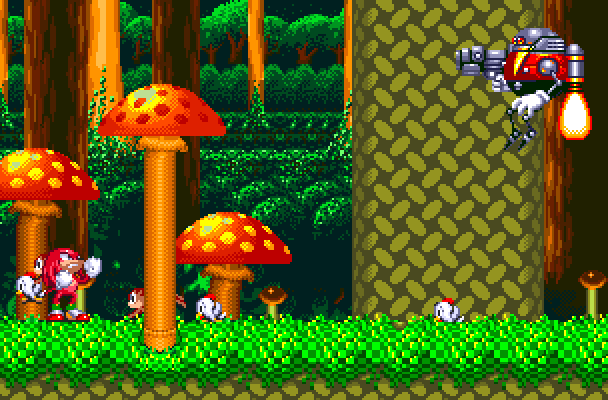
Cool interview with the enemy designer of Sonic 3 & Knuckles. I’ve always thought that the badniks in Sonic 3 had a more industrial look to them compared to the enemies from the previous games and I’ve always really liked that about it and it pleases me to hear the intent behind that being articulated. I also love Mecha Sonic’s design and it’s really lovely to hear him appreciate the fan art and reinterpretations of his designs. Also look at this short fan animation, it’s really cool.
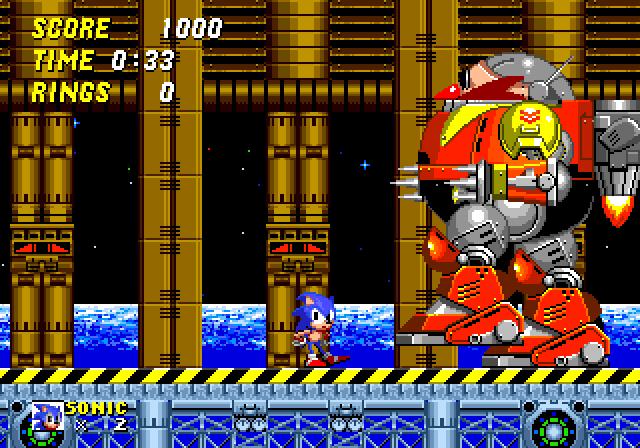
Given that setting, since the Death Egg had suffered enormous damage from crashing due to Sonic's attack in "Sonic 2," I thought the mecha production facilities inside the fortress must also have been heavily damaged, making it difficult to carry out production as before.
From there, I arrived at the idea that Dr. Eggman, needing a fighting force to oppose Sonic under conditions where the production facilities weren't functioning properly, would gather up usable parts and hastily assemble machines to deal with the situation.
I had previous experience working on NES games already - at least, I had tinkered a little bit and had enjoyed enormously Pikuma’s course on beginning-to-end gamedev with 6502 assembly on the NES a few years back, so I felt confident I could pull it off! Even if the journey seemed daunting, I just had to go one step at a time…
Oh do I hate algospeak. I stopped talking to a therapist once in part because I lost a massive amount of respect for him for using the word “unalive”.
In my experience, self-censoring adult terminology on that site in particular is a great sign that you're dealing with someone so incurious, with such a limited experience of online conversation, that they don't understand where they are, or who they're dealing with, or who's accountable for maintaining the peace in the community where they're speaking. I do not want to read the things these people write, and I do not want to talk to them. I'd rather not be the person who teaches them to be curious.
An investigation into the origin of a classic, old web GIF.
Perhaps enough time has passed that she is merely an inconsequential sighting to the average webuser, a rarity of a signal overlooked in the noise. There was once a time that she danced her way across webpages all over geocities and brought a small injection of joy and energy to whatever page she graced. Early on, she was a known quantity but the passage of time and memory made her mysterious. Stayed mysterious for a long while since, honestly, who really cares about the provenance of a free-to-use gif that is barely 5kB?
This is the story of the most inexplicable thing to ever happen to me. It still keeps me up at night, just rolling it around in my head as I fail to make it make sense. This is the story of how I took a video from inside a recurring dream.
I wanted to show the Bad Apple animation without JS or CSS, with an impressively minimal set of HTML tags, by abusing slow chunked response, forcing the browser to load the page piece-by-piece. That's happening now (unless you're reading some archive) but how can we use it for animation?
Every request that reaches the site is examined at the gate. Bots are identified, named, drawn and filed into an enclosure; people are waved through and counted only as an anonymous daily total. Everything you see is live: the figures update as the bots arrive.
Improving my Irish is something I’ve wanted to do for a long time but found difficult to sustain long-term, but I do still have occasional bursts of enthusiasm. In this case I found this article, and especially the videos linked within, a good crash course in improving my understanding of Irish phonetics.
When learners come across this difference in pronunciation, they are usually looking at words like “bhfuil” (i.e. “an bhfuil”) and “mháthair” (i.e. “mo mháthair”). How you pronounce it largely depends on which dialect you choose.
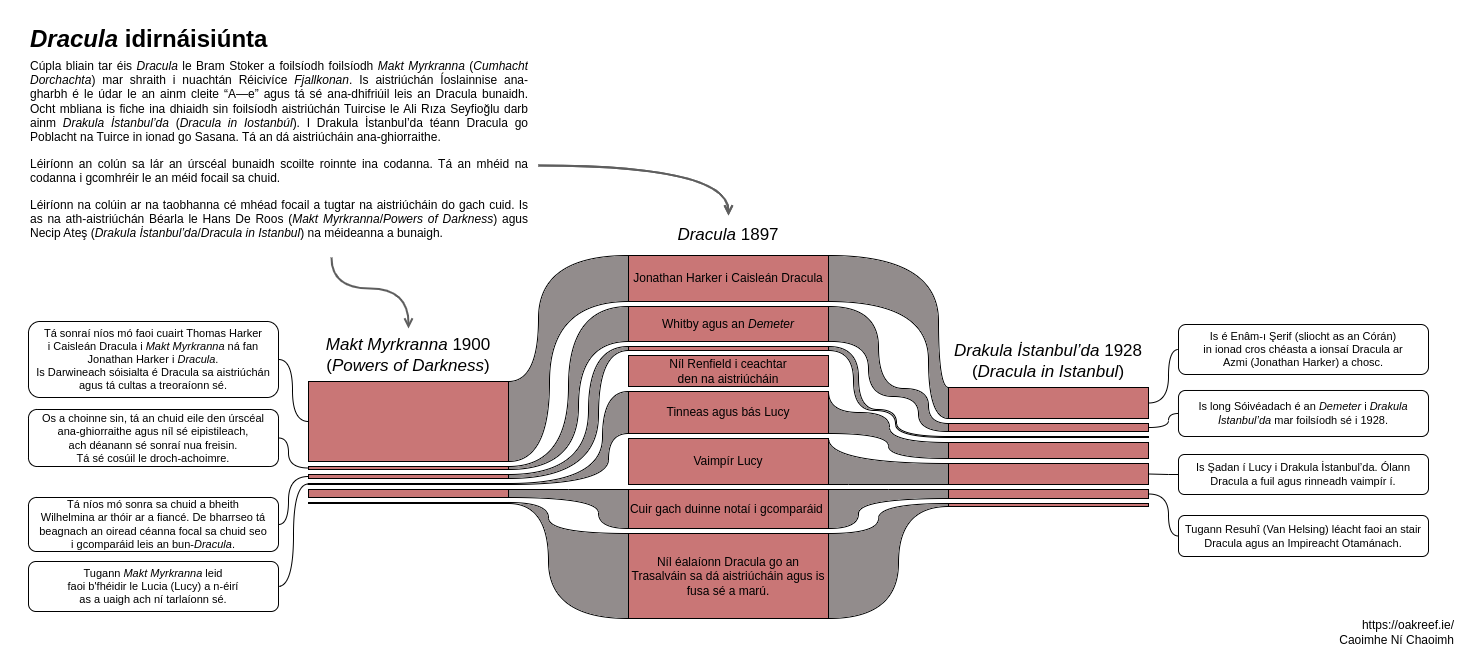
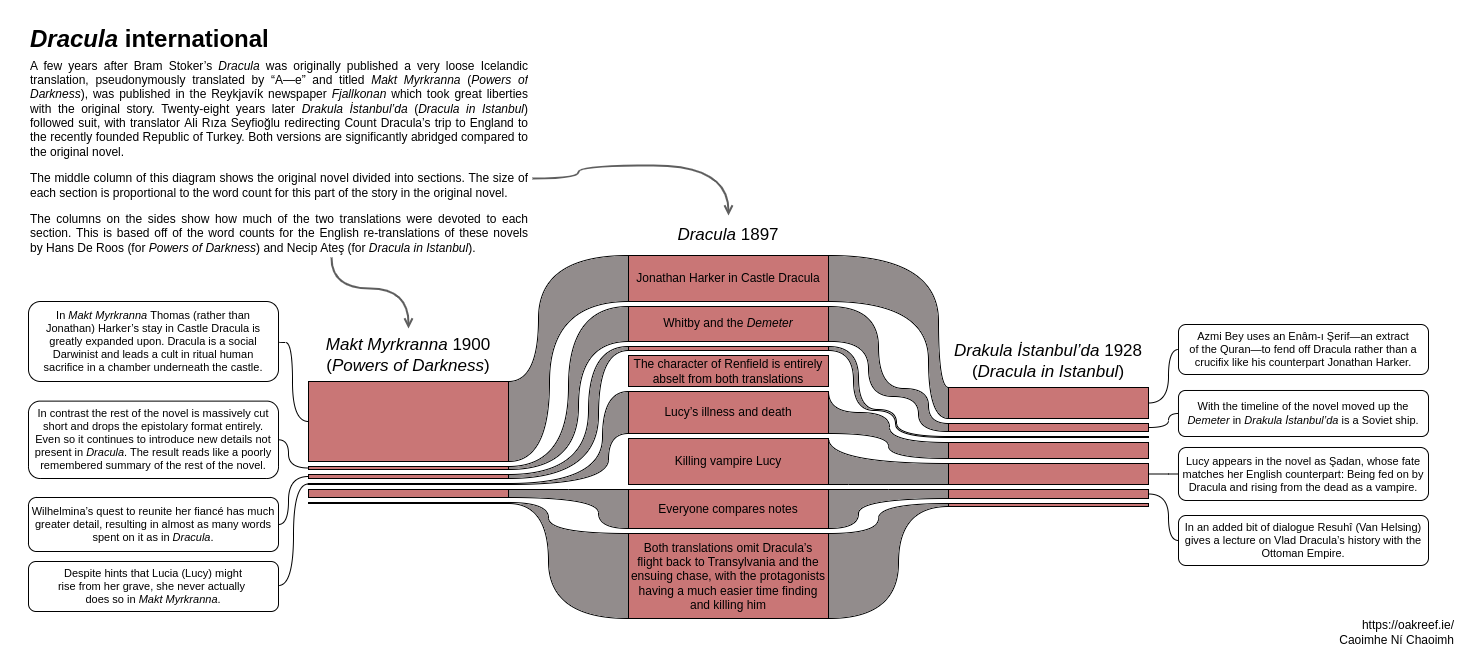
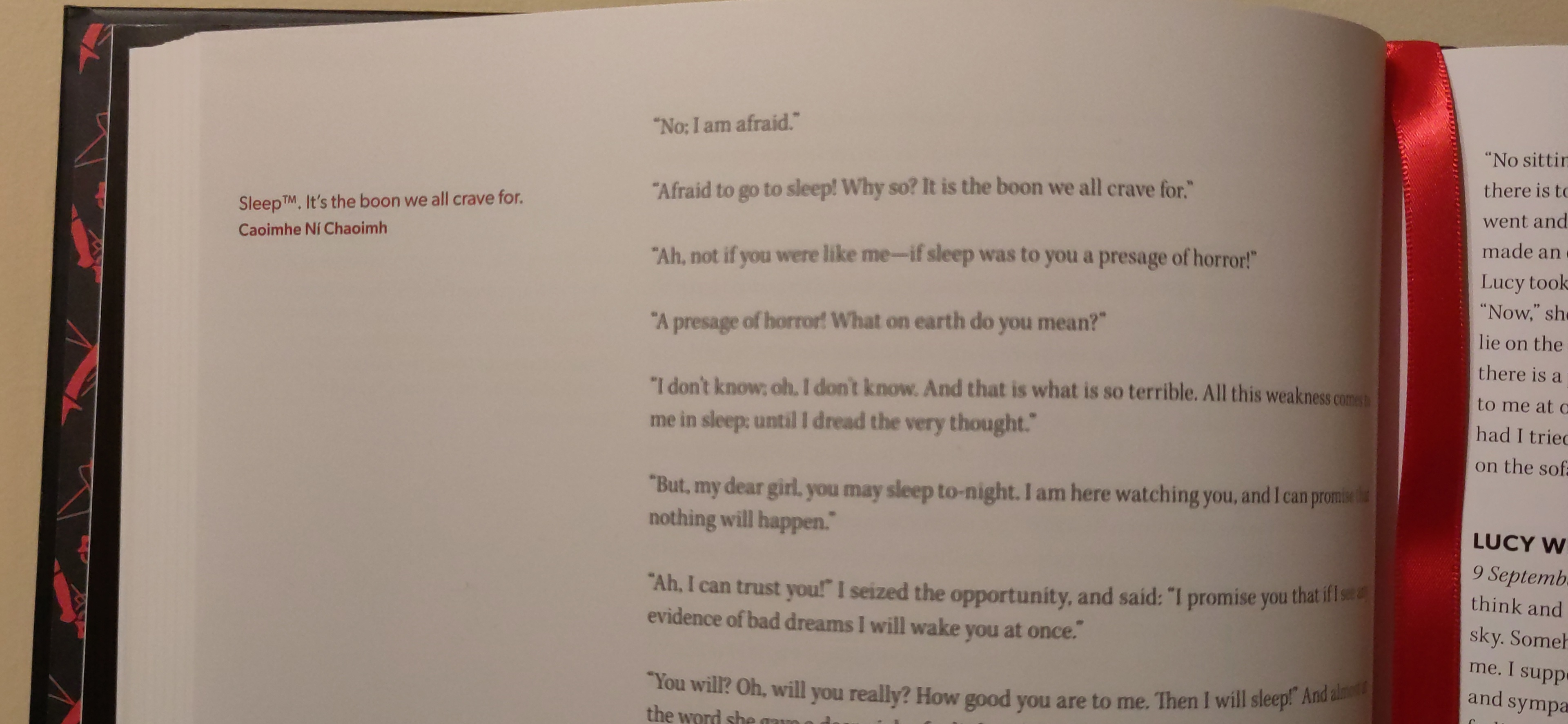
Should the Free State find exciting new literary voices working as Gaeilge and bring them to a wider audience, or should they focus on translating bestselling titles that readers had already heard of?
Finance Minister Ernest Blythe took the latter view. In particular, Blythe was very interested to discover that the Berne Convention for the Protection of Literary and Artistic Works had a clause at the time regarding translation rights.
Everywhere, it is the same mechanism: Parties that called themselves sensible, pragmatic, and centrist have pursued one of the most doctrinaire economic programmes in European history – and pursued it with a rigidity, an intolerance of dissent, and a contempt for democratic contestation that the actual political extremes of the 20th century would have recognised as their own method, even if they had rejected the content.
I have been watching Goodbye, Lara with @scrublordnito@tech.lgbt and she is making fun of me because I want to go visit places that are shown in the show.
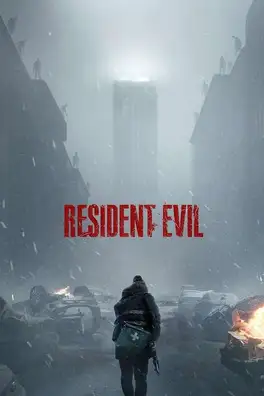
I did not realise that this was going to be a comedy. It is very funny but in a way that I am not convinced will hold up on a rewatch. Doesn’t really have the tone or style of Resident Evil that much other than throwing in a bunch of visual references and some of the mutations made me think of Slither more than the games, but there’s already been enough bad attempts at putting Resident Evil’s cast on film that doing its own thing well was a much better idea.
I am disappointed that Capcom did not go with my idea of calling the game Resident Evil: SⅨ, but RE9uiem will have to do instead. The next one should be called REⅩ: Dino Crisis.
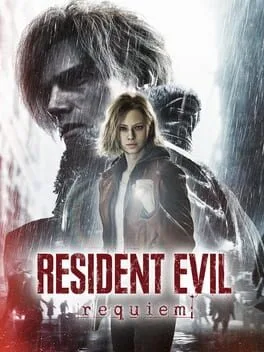
Before I started playing this game I knew that it was divided into playing as Grace in first person and playing in Leon in third person, but I did not know just different the two experiences are. Leon Scott Kennedy, now pushing 50, is a zombie-killing veteran, but Grace Ashcroft, the world’s most timid and pathetic FBI agent, is having a very bad time of it. In gameplay terms on top of the different perspectives they also have different controls, inventory systems and even save systems. Grace, by and large, is playing by the rules of RE2make: Eight inventory slots with item boxes for extra storage, ink ribbons to save, makeshift knifes only as emergency measures to use when getting grabbed. Leon is playing the rules of RE4make: Parrying chainsaws and roundhouse kicking zombies to his heart’s content when not just blowing them away with an arsenal of guns in his big attaché case inventory.
My only experience with first person Resident Evil prior to this was the teaser demo Resident Evil 7: Beginning Hour, so skulking around as Grace was new for me, or rather something that at first feels something more like Penumbra than Resident Evil, and not because of the first person perspective. As the player initially begins exploring the Rhodes Hill care centre Grace has no means of defending herself from the recently zombified staff and patients, and even when weapons are acquired, ammunition is very, very scarce. There is a satisfying power curve as one explores, opens up new areas, new resources and slowly gains the means to fight back. The crafting system is made a bit more interesting in this game by the fact that he primary crafting ingredient is zombie blood, which as well as being gnarly also makes every enemy a resource rather than just a drain. Zombies bleed more if you shoot their limbs off which means going for the head is not always the best option if you are low on blood but have plenty of bullets. I would like to say that this also turns the series-stable bloodstains that leak out from defeated zombies into not just an indicator that they are going to stay dead, but also a resource, but unfortunately the harvestable bloodstains are a second, different type of bloodstain that appear in addition to the normal one, making it feel very arbitrary.
Complicating matters further is that zombies don’t actually stay down. The crimson heads from the original REmake make their return in the form of blister heads; mutated, more dangerous zombies that arise from enemies you have killed but failed to destroy their head. Disposable anti-zombie juice injectors can be made and used to destroy bodies or sneak attack unsuspecting deadites, but they are a drain on limited resources and zombies killed this way never don’t leave usable blood behind.
After thoroughly exploring the care centre as Grace, Leon steps in to clear the place up. Playing as Leon is all about empowerment. Playing as him it is a breeze to mow down a room full of zombies in the time it would take Grace to deal with a single shambler. If he is sneaking around it is not to avoid fighting but to land a easy stealth takedown, decapitating a zombie before it even realises that he’s there, and while Grace might want to avoid killing enemies lest they come back as blisterheads, Leon is rewarded for killing as much as possible. I complained that the RE4make hardcode mode was a little more difficult than I would have preferred, but RE9uiem’s classic difficult, the hardest available before completing the game, often felt a bit too easy. Getting to explore the same space again in this radically different style, clearing up everything Grace left behind, is really interesting at first. It felt like it might be the perfect evolution of RE2’s A-side and B-side campaigns—going through the same space again not just with a new character and story, but going into the aftermath of the previous playthrough exactly as you left it, every zombie exactly where you left them as Grace, recontextualised with a new gameplay style and incentives. Unfortunately it quickly becomes clear that Leon has very little to do in Rhodes Hill other than open a handful of doors that Grace couldn’t and go straight to the next objective. It is not a second playthrough, just a short addendum where you can mop up all the zombies that you left behind as Grace if you want. The game is not divided between playing through the same areas as Grace and Leon, instead the game is divided between playing primarily as Grace in the first half with occasional interludes as Leon and playing primarily as Leon in the second half with occasional interludes as Grace, and their ranges seldom overlap. And, while Grace’s exploration of the suspiciously and obligatorily Spencer Mansion-esque care centre was obviously returning to the style of the old games and particular RE2make, the real nostalgia tour starts once we fully swap over to Leon exploring the ruins of Raccoon City, still infested with zombies and T-virus mutants twenty years later.
There’s a lot of fun choices in how this is handled, in how it tries to honour both RE2 and RE2make. There’s a lot of nice little details that the game doesn’t rub in your face. Leon drives past the petrol station from the intro on his way into town and Leon explores the RE2make police station with a suitably post-apocalyptic makeover while music from the original RE2 provides a perfect, melancholy atmosphere. Plant 43 and a giant spider, cut from the RE2make, make their return, upgraded to full boss fights. I do think that there is a missed opportunity here, though, to reuse more assets from RE2make. In general I think that game developers should be less shy about not reinventing the wheel and just reusing what works, and I was surprised, when scavenging the ruins of Raccoon City, that the game did not switch to the RE2make models for things like boxes of ammunition found scattered around. Sure, maybe first aid sprays have been replaced by med injectors at some point in the last two decades, but why are we still finding modern looking med injectors here instead of the old spray bottles? Asset reuse would actually make more sense. Why does ARK, Umbrella’s second double secret base that was apparently under the city the whole time, look nothing like NEST? Surely they should resemble each other more than they do.
And oh yeah apparently Umbrella had a second even more secret virus research lab under Raccoon City the whole time that has never been mentioned before. Of course they did. And it has an even more awesome ultra secret virus that the bad guys have been trying to unlock for twenty years but they don’t know the password. Also there’s a guy here who looks and sounds exactly like and has the same powers as Wesker. Except don’t worry at the last minute the real final boss calls him a cheap imitation and kills him before he can do anything or have any backstory explained. Like, yeah, having another replacement Wesker was stupid and I’m glad the game backed away from that, but you could have just not had him in the game in the first place. The game becomes over-indulgent in general towards the end. Some of this is, I grant, very gratifying: A rematch with a Mr. X where Leon can now parry what was an instant kill attack in RE2make, Hunk of all characters showing up out of nowhere for a knife axe fight, being able to unleash a licker on Umbrella goons and then do a silent takedown on it, but it also has that Resident Evil brand of over-complicated conspiracy nonsense.
The series has stepped away from the zombies as War on Terror framing of the 2000s and 2010s, but it has not left politics behind. The US, turning more isolationist, has pulled out of international anti-bioweapon treaties and the bombing of Raccoon City was revealed to be collusion between elements of the US state and private interests, but it is still firmly in the conspiracy theory mode. The president was definitively not in on it and it all revolves around some kind of new, boring, even more secret conspiracy behind Umbrella called The Connections that was apparently introduced in RE7 and now has to be retconned into everything else. Can you tell that I don’t care for the plot of this game very much?
This is all part of the biggest frustration I have with RE9uiem despite it being mechanically excellent: RE2make drew from across the series to make a complete whole. RE9uiem wants to be a sendoff to and revisit of the REmake series, similarly drawing from what came before, but fails to cohere in the same way mechanically and also refuses to actually close the door on anything. Leon does not, as one might expect, actually pass the torch to Grace to let her be part of the next generation of heroes; her mechanical climax happens halfway through the game and he final act is to enter a password before sitting on the sidelines and letting Leon fight the final boss by himself, any closure with Umbrella is undermines by the reveal of the real conspiracy behind it all, and also, despite it barely mattering to the plot at all, the idea of memory transference is introduced so now Capcom have a built-in excuse to bring anyone back from the dead if they want. And it also fails as a requiem for the REmake series because they’re still making more of those anyway.
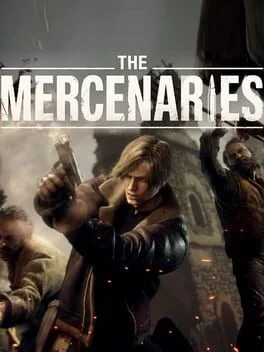
I was quite bad at the original Mercenaries and in comparison this feels far too easy, even putting aside the silly mayhem mode powerup win button. But it’s a bit of mindless fun and the different movesets all the characters get are nice to play with.
It’s funny how this works to siphon off Wesker and a few other sillier elements of the main story from the original game away from the slightly more serious RE4make, but it ends up over-egging the pudding in that regard. It makes up for having Wesker mostly absent in the main campaign by having him far too much here. If he’s just going to show up in person and help out on the mission why did he even hire Ada in the first place? It makes him look less like the big, scheming mastermind that he’s meant to be and makes Ada look incompetent.
Otherwise I do appreciate Ada and Luis’ plot both being expanded on a bit and the unique fights on offer here. Ada’s long range grapnel attacks and low health pool help to differentiate her a bit more from Leon than she was in the original, and better use is made of her ability to traverse the environment with the grapnel gun than the original as well, though its still very inconsistent which ledges are flagged as hookable and how much freedom it affords you. She feels like an awkward middle ground between normal RE4make gameplay and a highly restricted Arkham game, a feeling not dissuaded by some rudimentary detective vision puzzles sprinkled throughout her levels.
It might sound strange to say but I think that the Resident Evil 2RE2make actually felt more true to the original the the Resident Evil 4REmake does. Part of this is, amusingly, that the RE4make feels like a much more natural followup to the RE2make than the original RE4 did to RE2. This starts with the new intro, which acts as a much more reasonable bridge between the two games than the original did, but continues with RE4make’s darker, somewhat more serious atmosphere. But a large part of this is also that, while RE2make took in elements from across the series to construct something that captures Resident Evil as a whole, RE4make feels much more directly influenced by the modern action game milieu than RE4 is the grandfather of. Parrying, stealth, silent takedowns, crafting, sidequests—RE4 has elements of or precursors to all of these things, but RE4make’s versions of these systems would slot neatly into any pretty much any current high-budget action game. Don’t get me wrong, these are very polished, work well and mostly work very well with RE4’s existing systems, it’s just it can feel disappointingly generic at times, especially diving into menus for the crafting systems (and the treasure system is kind of annoying) or equipping trinkets for dull little incremental bonuses.
The basic plot has not been changed much, less than RE2make’s was I would say, and keeps the B-movie charm while taking the characters more seriously and pushing aside the very post-9/11 America, world police angle. Ashley and Krauser stand out as the biggest improvements. The former acts less like a teenager and is made into a genuinely fun character (her enthusiasm in the shooting range minigame is great), and Krauser is much better integrated into the overall plot and pacing of the game instead of just showing up out of nowhere towards the end, and his awful QTE cutscene boss fight is instead turned into a really great test of the player’s mastery of parrying.
I am not as fond of RE4make extending its attempts to make the plot make more sense extend to the merchant, though. He is (they are?) intriguing as a character in the original in so far as he is a gameplay contrivance that makes no real attempt to justify itself. He is just this weird bog pervert who buys treasures off you and upgrades your guns. RE4make attempts to justify him as an agent actively working against Los Iluminados, cheering you on and giving side quests to clear up various messes made by the cult. This really just raises more questions than it answers, none of which are ever going to have sensible or satisfactory answers. Ada’s new voice direction is also quite jarring.
The game suggested that fans of the original play hardcore mode and I obliged, but I think I might have actually preferred a lower difficultly. It’s a tough game and often much more hectic and reactive than the original. Enemies are more complex and more unrelenting than the original and it feels like different types of enemies with their own concerns and mitigation strategies are thrown at you together earlier and more frequently. While combat in the original was often about careful positioning and crowd management, the RE4make was much more often pushing me into panicked, reactive, survival mode. That is to its credit, it’s in many ways more of a horror experience, but the fear of dying is blunted quite a lot by actually dying over and over again.
Sandustry is probably the first factory game I've played that really communicates the physicality of industrial waste, the appalling magnificence of it, for all the dinkiness of its 2D artstyle. It's the only factory game that really makes me think of post-industrial landscapes, like those colossal spoil piles above Aberllefenni. It also engineers a weird exuberance inside the concept of 'byproduct'.
I gestured briefly at the PASSTHRU folder earlier, but I really want to dig deeper into that because this is something very cool. I said before that when you're connecting to a BBS like this, you're connecting to one system rather than the internet as a whole. This is a bit of an exception to that. FirstClass had support for what they called "relays", which allowed BBSs running the same software to talk to each other and exchange messages. It wasn't a realtime connection; this still isn't the internet. It's a little bit more like snail mail. The servers would sync with each other every day, or once every few days, fetching new replies in the conferences they were sharing and transmitting any replies that had been made from a different server. It's quite a bit more "slow internet" than we'd probably tolerate today, but in the pre-internet era the idea you could be talking to these other communities at all would have felt revolutionary.
A really interesting look at early digital communication.
A little over a year ago, I published a post (“I wasted $410 recreating a fake website that shows up for 10 seconds of a TV show almost no one remembers
“) about having re-created a website that showed up for a few seconds in an episode “H2O: Just Add Water”. In the title I described it as “…a TV show almost no one remembers”, which was evidently incorrect, because after posting on Mastodon I discovered that it seemed to be widely known amongst German audiences.
To understand why every machine since Gutenberg has wrestled this script and mostly lost, you need one structural fact: Arabic is cursive always. There is no print-versus-handwriting distinction, no block letters. The letters connect in stone inscriptions, in manuscripts, in metal, on screens. Each letter therefore changes shape depending on its neighbours (an isolated form, an initial, a medial, a final), and six letters refuse to connect forward at all, which breaks words into joined clusters and gives the script its rhythm. The shapes are not costumes over some underlying "real" letter. The positional variation is the letter.
Really good read on the history of digital typography for Arabic. Seen from Natalie Weizenbaum sharing it. Speaking of…
I really do think you should learn to use the Linux (or Mac, I suppose) command line if you can find the time at all. It is, genuinely, a dramatically more empowering way to use your computer than the alternative, and it will enable to think about your computer as a tool in ways that are completely different.
Cocosigning this post and Weizenbaum also gives a nice quick primer of navigating the command line.
If we were to go by actual lines of code, generated projects easily contain over tens to hundreds of times more documentation and code than human-made ones do. This is intentional by design: the AI companies do not want these projects to be maintainable by anything but their tooling, so you'll have no choice but to keep paying them to work on it.
A good Reddit post from an accomplished game modder on the problems of maintaining or working with generated codebases.
Unlike, say, Brexit which had rights implications but could point to democratic inputs (however flawed), nothing in the story I told above was backed by any democratic input of any kind. In fact, all of it was elites acting in explicit defiance of the democratic inputs they did receive.
Buckle hammers home how utterly undemocratic the movement against trans rights in the UK is.
The oft-used phrase, squeezed middle, may indeed apply here – not in the mainstream media meaning of cost-of-living and prices, but rather in terms of position-of-production and power. There is of course a qualitative difference between a pushbike and heavy goods vehicle, but when seen in terms of mode and relations of production that difference somewhat fades.
A Marxist analysis of the class position of the Irish fuel protests from earlier in the year.
Protection of the property-owning class has been the water that Irish politics swims through, invisible to its fishy participants but explaining nearly everything. It is why our housing crisis exists and why it cannot, apparently, be solved. Solving it would mean a political evolution on a scale of growing legs and lungs and actually climbing out of that water.
An essay on the class priorities of the Irish governments of the last century.
Last week I researched the first labor strike in known history. The tomb builders living in a town called Deir el-Medina in Egypt went on strike on November 14th, 1152 BCE. Three thousand, one hundred, and seventy-eight years ago. And their strike looked an awful lot like ours today. They set down their tools and staged sit-ins, they blocked roads, they marched, they engaged in workplace sabotage. They wrote letters to the authorities requesting a redress of grievances. They stole from work. They did everything that we do today.
And a meditation on labour struggle throughout history.
The Jesuits proposed an invasion force to be spearheaded by 10,000 Spanish and Portuguese troops, augmented by 6,000 Filipino auxiliaries and between 5,000-7,000 Japanese Christian mercenaries, leading a two-pronged invasion through Guangdong and Fujian.
It was easy for me to be cynical about this game going in and assuming that it would be taking a wonderful game and throwing out the things that made it special in order to make something acceptably modern, but the RE2make is a wonderful game that doesn’t just update the original game but pulls elements from across the entire series to make a perfectly designed synthesis that feels modern because the DNA of the Resident Evil series runs through modern action games so much. Gunpowder returns from Resident Evil 3 to provide some flexibility in the punishing scarcity of resources, Resident Evil 4’s knife is combined with the subweapon system of the REmake of the original game to act as both desperation weapon and lifeline, and the game blends the basic action controls of Resident Evil 6 with the dark, horror atmosphere of Resident Evil 7. Being generous I could even credit Resident Evil 0 with the convenience feature of showing items you’ve passed by on the map.
That feature does feel quite necessary though, as the densely detailed environments can make it easy to overlook important resources. I tried briefly to play with the heads up display disabled but between missing things constantly from the lack of interaction prompts and it removing crosshairs entirely it was too much for me on top of playing with hardcore mode on. I would have appreciated a little more granular customisation in display elements and difficult modifiers similar to how automatic reloading can be disabled (which I also did). The risk and tension of dying is great but ruined by actually dying constantly. Lack of checkpointing in hardcore mode can also be sometimes frustrating with multi-stage setpieces that include instant deaths. Amusingly in trying to recapture the survival horror experience some convenience features that were present in the original game have actually been removed. Keys and ink ribbons must be selected from the inventory rather than being used automatically and you are no longer automatically prompted to discard key items that have been fully utilised.
That core tension of balancing scarce resources is still the heart of the game. Weapons, ammunition, keys, health, inventory space and (in hardcore mode) saves need to be weighed constantly against known and unknown risks ahead. Zombies are legitimately scary and a large part of that is the uncertainty in facing them. Sometimes a single lucky shot with the basic pistol will be enough to pop one’s head open, sometimes they can take an entire magazine to the face and barely flinch while both you and the player character scream curses at them, and their staggering and sudden lunges can make them very tricky targets when they close the gap, which they can do with surprising speed. It is still possible to weave past them, but is much more to do difficult than it was in the original game, and sometimes they will not notice you at all if you sneak past them slowly enough. Tiptoeing around oblivious zombies, past sleeping corpses, or under the powerful, fast, but blind licker clinging to the ceiling is a wonderfully tense experience, sold not just by the gameplay but the lighting and incredibly detailed animation work that that responds to exactly how much or how little the analogue stick is gingerly nudged forward.
I am not one to gush about graphics too much but I must admit the game does look fantastic. Locations are redesigned in a way that feels true to the original game while being more detailed and realistic while still being being readable gameplay spaces. The changes that are made are interesting and almost all contribute to a more serious, even more tense atmosphere than the original. The original FMV intro is expanded and reworked into a slower, more tense tutorial area and the original opening gauntlet repurposed as an interstitial space that is traversed after leaving the police station for the first time and some of the sillier and more annoying enemies in the original game have been replaced with things that are much scarier. I do miss the grungier, more industrial version of Umbrella’s labs, though. Other elements that were a little half-baked in the original get expanded on, with Sherry and Ada getting more unique locations for their sections, though Ada’s detective vision puzzles are the one thing in the game that felt quite derivative.
What scant characterisation there was in the original game has been focused on, with Claire’s optimism and Leon’s naïveté emphasised, Annette made into just the worst mother, and Ada being genuinely manipulative. One odd note in the story is that Leon and Claire run into each other even less than in the original game, leading to them barely interacting at all. I suppose that in a story that is trying to be more grounded them splitting up for no good reason after meeting up again would chafe a bit.
Overall just a fantastically stressful reimagining of a classic game.
Assignment: Ada is a funny thing to exist to Separate Ways of which it is sort of a prototype version of: A mini-campaign staring Ada that ramps up the pressure and difficulty to deliver a very condensed version of Resident Evil 4. It does have a few things going for it: Short and sweet and with Ada dressed in something less silly than her normal dress, I also like how rather than your inventory expanding as it progresses the samples you collect take up space that could be used for healing items and grenades, forcing you to rely less and less on them as get out of jail free cards and feels in some way like a welcome callback to the earlier games. The final boss being Krauser who appears out of nowhere running towards you in a short cutscene because they didn’t want to record new voice lines for this is also very funny and jarring and reminds me more than anything of watching my friend Ruby play through the main campaign with a randomiser and having Krauser repeatedly show up to replace various minibosses, including a dozen of him showing up in the garrador cage match room, though I did struggle with how much damage he takes to put down without having an upgraded revolver to blast him away with.
Separate Ways itself is a fun little condensed version of the game, but its attempts to tie itself into the main story are comical more than anything else. Having to do puzzles in reverse and place the items that Leon will later find is cute, but also calls attention into all the other ways in which Ada running through these areas and clearing them out immediately before Leon comes along to do so again. Sure, there was another gigante there that Ada killed before Leon arrived to fight one in the same place. Even worse is the areas where you can see or hear Leon in the next room fighting off hordes of ganados, while Leon and by extension the player were completely obvious to Ada doing the same thing. Her grenades apparently explode at a frequency that Kennedys cannot hear. Being a side story in a series that doesn’t tend to treat it female characters very well also means that beating the final boss of course results in getting captured anyway and your final moment is running to grab a rocket launcher to throw to Leon.
I appreciate there being a couple of new areas but the level design relies on Ada’s contextual-sensitive hookshot points for navigation that are not very clearly signposted. The battleship area in particular is a nightmare of being unclear where to go while being absolutely bombarded with bullets and bombs that make stopping to take in your surroundings quite difficult.
It’s amusing how Resident Evil 4 starts with a recap of the previous games when absolutely nothing that follows has anything to do with those plots at all other than the name Umbrella getting occasionally thrown around towards the end. The plot actually makes far less sense if you have played the previous games in the series (and, like me, not played any of the spinoffs). Why is Wesker not dead, why is Leon not reacting at all to Ada not being dead, and who the fuck is Krauser? If you’re coming in without prior knowledge you can assume these characters and their dynamics with Leon are well-established and not bafflingly out of place.
Coming straight from Resident Evil 2 had another problem: Run being on ⨉ and fire being on ◻ kept messing with my muscle memory and for a while when enemies were about to grab me my instinct reaction was to aim and slam the reload button, locking me in place while they were free to get me. Other than that the gameplay, while an obvious departure from the previous games, does, I think, have more commonality than is immediately obvious and that did not necessarily carry over to the general, still-ubiquitous third person action game formula that Resident Evil 4 established. There is still the tension of resource management and balancing supplies of ammunition and healing against current threats, picking off enemies with precise targetting and knife attacks and managing crowds with careful staggering and mêlée attacks, or just blowing crowds away with grenades and and shotgun blasts. It’s a more fluid and dynamic ebb and flow of tension, the game trying to keep you hungry but not starved with its random drops and dynamic difficulty, but trying to figure out how to handle the relentless pressure of hordes of ganados is not a completely alien calculus compared to trying to clear a hallway of zombies by baiting as many as possible close at once and them aiming up with a shotgun blast to try and decapitate as many as possible at once. And while the fixed camera is (mostly) gone the tight field of view still creates large blind spots that need to be accounted for and manage. It’s quite easy for enemies to sneak up on you if you’re not listening out for them. Keys no longer take up inventory space and don’t contribute to inventory management concerns, but keys and puzzles still play an important part in pacing and allowing movements of rest between big fights.
Even tonally the game isn’t as much as a departure as is often stated. As silly as Resident Evil 4 is the first game had mutant sharks, plenty of cheesy lines and a boulder to dodge right out of India Jones and the series had already been trending towards interminable conspiracy nonsense and too much character lore references. Early rereleases of Resident Evil 2 included teasers for Residents Evil 3, 0, and Code: Veronica and was already including intra-Umbrella espionage and double-crossings. Resident Evil 4 just has absolutely no grace about any of it.
Obviously it is still a very different game to its predecessors, but I think the ways in which it is inkeeping with them is what make it stand out from the action games that came in its wake and what makes it so enduring and the HD Project mod does an unbelievable job of giving a fresh lick of paint to the game while being true to the original game. The modders went so far as to track down the original sources of texture references in the game and take new photographs of them in order to recreate the original assets in a higher resolution. The bundled tweaks mod also fixes a lot of bugs and allows a few adjustments to me made for the game, including restoring the fixed camera perspective in the section of the game where Ashley is playable, something that was removed from every version after the original Japanese Gamecube release. It’s a cute little throwback but having just played Resident Evil 2 the controls here definitely don’t feel as good or work as well as the original games. I can see why they changed it in subsequent versions, but without the callback that section feels a bit more pointless.
The only other major tweak I applied was disabling quick time events purely to get past the Krauser cutscene knife fight, which is a pain in the ass and I re-enabled them afterwards. I do actually quite like the reactive QTEs that are used for dodges in boss fights in this game, it’s only the cutscene and button-mashing ones that I have a real problem with.
No one can do anything without the backup of the American government.
Perhaps the apex of Resident Evil’s post-9/11 degeneration into bizarre, international, political conspiracy, featuring a confused Ukraine standin called the Eastern Slav Republic, a former Soviet state that seems to be simultaneously an unrecognised polity that is not a member of the UN, struggling for independence from… presumably Russia?, but also has a US embassy and its own army separate from Russian forces. Within the Eastern Slav Republic’s border there is also a very ill-defined armed rebellion against “the oligarchs” fighting for independence from the republic itself, which has started using bioweapons in its fight against the state.
The confusion about what exactly is going on in this country may be because most of the film follows the perspective of Leon Scott Kennedy, an American anti-bioterrorism agent sent into the state to investigate whose understanding of the delicate political situation he finds himself in is such that he doesn’t know who the president of the ESR is. At the start of the film Leon is told that the US has cut diplomatic ties with the ESR and that he is meant to evacuate along with all of the embassy staff. Leon, being a cool guy who isn’t afraid to commit a few war crimes in order to do the right thing, decides to ignore his orders and fight a one-man anti-bioweapon war.
But the heart of the film is J.D., a rebel whose entire personality is that loves American action movies and wants to hang with his bros. He has fifty DVDs and none of them are pirated. He rules. He’s a complete dumbass and every time he is on screen he is doing something funny. I am obsessed with the little nod he gives Leon when he thinks that he’s outsmarted him and the the condescending little nod that Leon gives back. The emotional climax of the film is J.D. crying tears of blood as he dies to the bioweapon parasite that he helped unleash with the rebellion, confessing that he never cared at all about politics and just wanted to have fun with his mates.
The film continues on for a while after this with lots of action scenes of varying levels of quality and misogyny until at the climax everything that Leon and the rebels fought for in the end is rendered entirely pointless because the US and Russian military launch a joint invasion of the ESR and easily walk over all resistance, having already learnt that the ESR’s president was the one developing bioweapons and handing them over to the rebels as part of a plot to wipe them out and gain legitimacy. Leon gives a speech to a suicidal man about how once you’re a soldier you have a duty to live for the people who died alongside you and then shoots him in the spine.
Playing old pre-rendered games in a high resolution on a modern display looks wrong. The models rendered so much more crisply than the backgrounds stand out like an actor on a bad green screen. Instead of any PC port I played the Dual Shock version of Resident Evil 2 in Duckstation with a slightly convoluted rendering pipeline: Internally rendered at ×3 original resolution, downsampled back to the original resolution for some anti-aliasing on the models, then displayed at 2,880×2,160 with a CRT Royale shader to help smooth out the rough edges of the picture more and blend the characters and the world together. And the game still looks great, especially with this presentation. I love the messy, run-down, industrial backdrops of the game. Just enough clutter and noise on everything to give it a huge amount of texture while still being readable. There’s some great body horror done with the models as well. G’s transformations are wonderfully gory.
The fixed camera angles and pre-rendered don’t just look good and are not just solve a technological problem as a way of representing a three-dimensional environment in much higher fidelity than would otherwise have been possible on the hardware, they create a bold style that holds up strongly and allow for some wonderful dramatic framing allow important gameplay elements to be highlighted by the camera itself. Catching a glimpse of a licker for the first time crawling along the outside of a window, only to go into the next room and be met with a high-angle shot of the player character through another window from outside, as if being watched and stalked by something, is particularly memorable. There are some awkward angles and cheap out-of-frame ambushes, but it is more than worth it for the experience they bring and clear sound design and characters automatically looking towards points of interest usually gives one more than enough context for what is off screen.
The tank controls are great. I will not wrap this up in talking about them as “of their time” or a compromise. They are not awkward; they are a fluid means of navigation and with some practise weaving through zombies with them is a joy. Not that they are easy or that I have mastered them—they take concentration and dexterity and I still got bit plenty of times. Safe navigation is part of the challenge and part of the tense calculus of the game. Health, ammunition and inventory space are precious resources and every excursion must be balanced against this. You can save bullets by risking running through the horde, you can take health sprays to mitigate any damage you might suffer from a misstep or from getting corned by a mutant you weren’t expecting to encounter, or you can travel light to maximise the amount of resources you can gather in the field. At least one or two inventory slots given over to keys that are needed to progress, one for a weapon, another for bullets. That’s half of your carrying capacity taken up already before you even bring along any healing items and you will want to be able to bring back any extra resources you can scavenge.
I love how this unpacks as you go through the game. Pressing into the darkness, learning what threats might lurk around each corner, building your mental map of the world. Where are the sa[fv]e rooms? Your home bases, points of refuge with a save point, storage chest and calm, comforting piano against a dark, brooding backing. You learn the layout and safe routes, turning from timid exploration to guided, intentional missions with specific objectives. Zombie hordes are not something to be eliminated without thought, but carefully managed and culled to allow safe passage. The zombie-infested police headquarters slowly becomes familiar operating territory, though it also evolves as you do; zombies spilling into once empty hallways, while lickers crawl their way into once-empty rooms.
I was surprised, though, to be reminded of just how much the game immediately throws you in at the deep end. I played this game many times as a child, but this is my first time coming back to it in two decades with the REmake of the original being my more recent baseline of the fixed-camera Resident Evil games. Here you do not get a slow buildup to seeing your first zombie, you are simply thrown straight into a gauntlet and if you haven’t already played the first game then you must quickly learn to dodge past hordes of the undead before you can earn your first bit of respite.
After the police station the game turns more linear than I remembered. Even the Umbrella laboratories, while it has some back and fourth, do not have the interconnected layout of of the police station. There’s generally only a single route between any two points and some key items are simply left adjacent to where they are needed. This was somewhat disappointing and can feel like the game is running out of steam but it does play into the escalation of action that is taking place, which itself is already much heightened from the first game. Even outside of the opening gauntlet I was surprised by how many zombies this game throws at you from the get-go and the sheer tankiness some of them can have—the inconsistency in how many shots it can take to kill things and how often they play dead is also something one needs to take into account in one’s risk calculus.
I played Leon’s A-side campaign first followed by Claire’s B-side. Surprisingly the second campaign starts off much less stressfully. The path to the police station is a gentle stroll compared to the opening of the first scenario and the headquarters welcomes you in the back door like an old friend, opening its now-familiar corridors to you much more quickly than the first time around. Less time is spent juggling keys and the safe combination isn’t even changed; if you remember it you can grab some ammo and the map for free without even finding the corresponding memo again. As you’ve already peeled apart the station layer by layer the game throws a different challenge at you instead: Mr. X, the first of the Resident Evil series’ signature pursuer enemies, who scared the shit out of enough as a child that, although my memories of much of the game were vague, every time I reached a room where he was scripted to crash through a wall I would be filled with a deep, old dread and have to pause for a moment to gather myself. Playing as an adult he’s much less of a threat—another obstacle among many to duck past—but he’s still effective and intimidating.
Conversely to its surprisingly straightforwardness in the A-side, the later levels introduce extra twists and turns as the actions of the previous protagonist complicate the route to and through the Umbrella labs, a wrinkle that I had not remembered and quite appreciated. It’s still less exploration than the early game, but I appreciate that game continuing to throw surprises in what otherwise would be a retread of familiar ground.
There appears to be a consensus online that the Claire A-side campaign followed by the Leon B-side (the opposite order to how I played it) is the more “canon” order and I can also see how the story would fit together better thematically as well that way. Claire’s less-standard, more improvised-feeling arsenal feels appropriate to a first playthrough (as does the grenade launcher not requiring a separate inventory slot to hold its ammo supply) and a stronger focus on the G-virus mutants for Claire and Sherry’s story fits better. And where X feels redundant as a second giant monster chasing Sherry, he fits a bit better into Leon and Ada’s corporate espionage focus. I don’t intend to play through the game again right now, but if I get the urge to replay hopefully I’ll remember to do the other order.
The generator needs a battery1 to fix it. I run past the capacitor machine, double tap it to grab a capacitor and set the machine going again to make another one. I weave past a green, ghostly flame and skim against the edge of a mine to trigger it while avoiding the blast, clearing it from the floor. A second generator has blown. I tap the coolant machine to grab a case of coolant just in case I need it for something else. I reach the battery machine, tap it to drop the capacitor in and start it generating a battery. I tap the second generator to see what it needs: A heat sink. That’s good, there’s one ready to go. I dodge past more ghost fire and swing past the heat sink machine, tap it to grab the heat sink and tap it again to drop the coolant I was carrying in to set another one going. The generator next to me blows so I check what it needs to fix it as I move on: Coolant and a heat sink. The battery is ready so I grab another capacitor, set the machine going again, go to the battery machine, and grab the battery. I mistime my second tap and don’t put the capacitor in place to make a new battery. I don’t turn around, there’s three ghosts after me and I can get do it on the next loop around. I drop the battery into the first generator to fix it. Another generator blows. Eight seconds have passed.
Awaria is built around a series of tight loops. Generators that need constant repair on a countdown till they explode, machines that make parts on a five second timer and machines that need those parts to make secondary components, ghosts that constantly harass you as you weave through it all and a ten second regeneration timer on your one hitpoint. Everything exists in the moment-to-moment flow of these loops and the constant, small decisions that you have to make to react to everything. The levels are short, the restarts are quick and the music is pushing you forward, making dying and restarting just another that all the others reside in. Being allowed to take one hit every ten seconds means that there is some leeway but doesn’t mess with the momentum of the game, letting you recover from a single mistake but not making health a resource you have to manage across a level, just something else built into the rhythm of the game. Hard mode takes away that leeway, making any hit a failure and really driving you to prefect that state of flow that you need to sink in to survive.
This and Helltaker, with a degree of cheesecake art as a central point, are the kinds of things I might have turned my nose up at before, but I’ve gotten a bit less repressed about and lightened up about sex a lot. I think a lot of things that lean into that are still very steeped in misogyny, but Vanripper puts a lot of style and personality into his art that I appreciate and I think one of the women having a rusted, metal jaw2 that makes her look like she has thick stubble is a wonderful choice that I did not expect and looks sick as hell.
The different parts are not named in game. The ones I’m using here I’ve made up based on their appearance. ↩
A prosthetic jaw is how I interpreted her artwork but it’s not actually stated exactly what’s going on with her and other people online have interpreted it as burns or else that being her normal skin colour and the whiter part being painted on. ↩
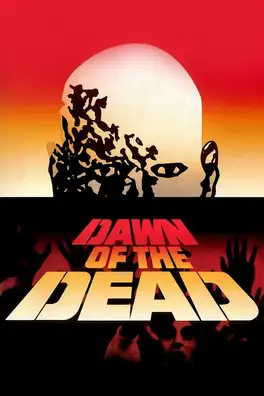
This movie is just so incredibly fun. I love the punks, the soundtrack, the effects, the tar man. So many great and funny moments that I was excited to see my partner experience for the first time while watching it with me. So memorable that it managed to single-handedly ruin the idea of zombies in the public consciousness as guys in tattered suits rising from their graves and shouting for brains.
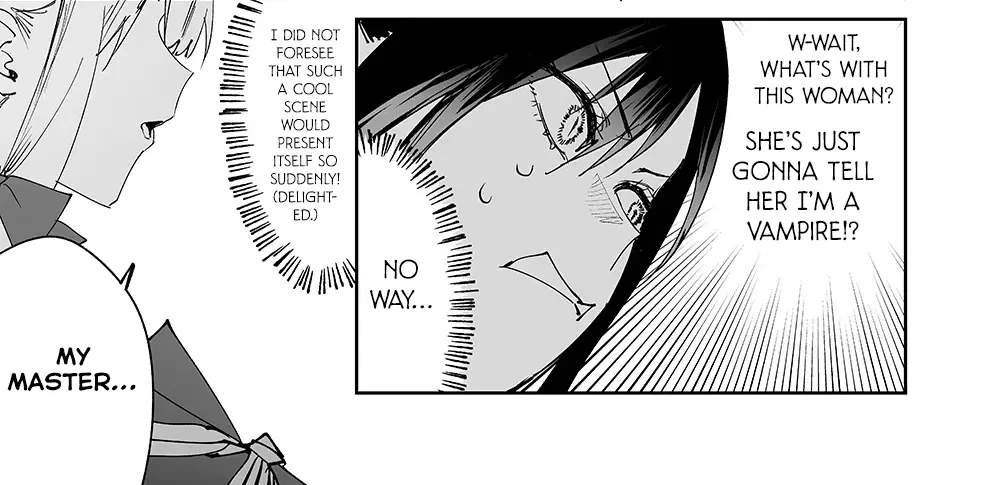
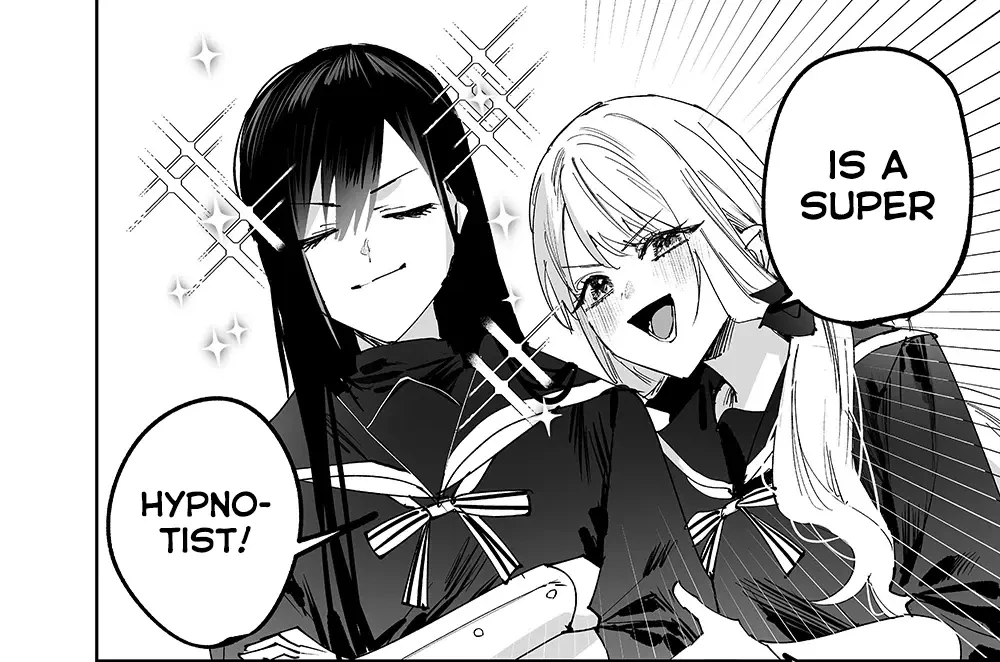
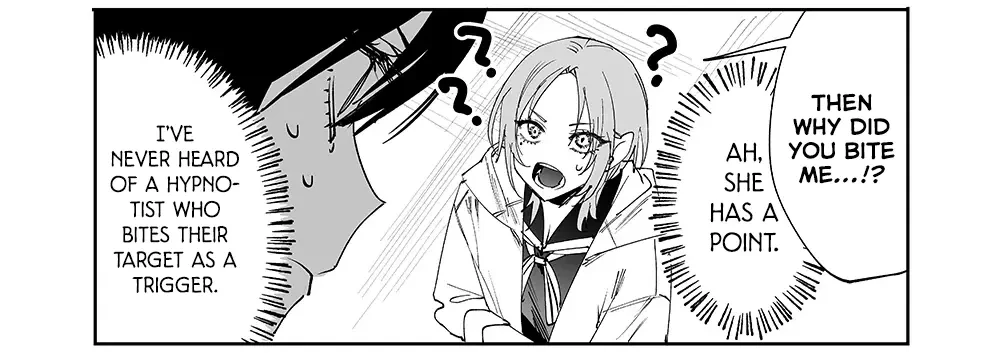
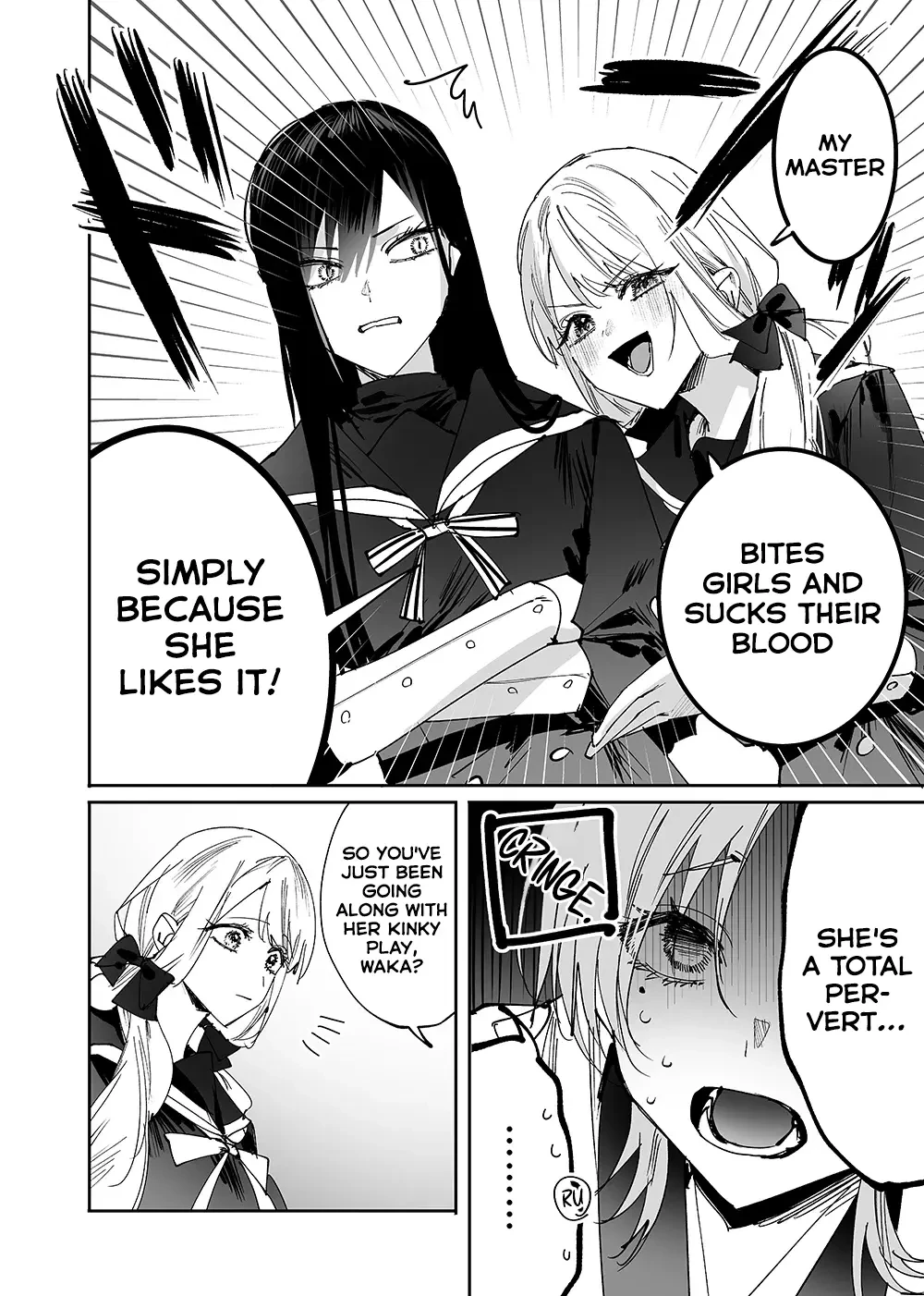
The protagonist of Girls × Vampire is named ルルナ. The scanlation on Mangadex has transliterated her name as Ruruna, while the Kinokuniya USA print has gone with Luluna instead. Only the people doing the German translation at Dokico seems to have noticed that it says Ruluna on the cover art.
illustration of a vampire biting someone, showing blood
Well whatever they’re here for, it’s turning into a riot. Maybe they are just here for control. If they can turn a campus protest into a shooting war…
I don’t think I noticed how much this film is about the Vietnam War the first time I watched it. The depiction of the military, the imagery of the flamethrowers and the self-immolating priest, the inability to distinguish “civilian” and combatant and the callous disregard for life that makes everything worse. It is, in part, the Vietnam War visited upon home soil.
Let them stay upstairs. Let them. Too many ways those monsters can get in up there. We’ll see who’s right. We’ll see when they come begging me to let them in down here.
A lot of people make the point that Cooper was right, but Cooper was only right about one thing: That the door would hold. A door that would not have been enough to save them. He wanted to shut out the rest of the world and blind himself to any understanding of what was happening in it so that he could be in charge of his own little fiefdom. He is white flight. If they had followed his plan they would not have sat safe and sound in the basement overnight till they were rescued (a rescue that was in no way guaranteed), they would have locked themselves in with no radio, no television, no contact with or knowledge of the outside world, with a dying girl they had no idea could possibly rise from the dead and threaten them from inside, with no knowledge of how to stop it.
Ben throughout the movie is proactive. He wants to bring everyone together, to work together to hold a larger space, not to confine himself to the smallest domain that he can control and shrink away from the world. When he is forced to flee the to basement he understands immediately what has happened and knows how to deal with it and it is only by other’s ignorance that he is killed in the end.
I think this cut may have been longer than versions I have seen before. I certainly didn’t remember quite so many of the television segments, though perhaps I had merely forgotten them. They are oddly out of time with the rest of the film. While the events in the house happen over the course of a single night, it the news reports make it seem like this has been ongoing for at least a few days, with segments that are clearly during the day and a shot of the posse that is about to kill Ben seemingly beamed in from the future. It’s an odd aspect of the film.
Mostly solid but some episodes dragged down by silly gimmicks like the tonally jarring use of Robby the Robot and his boy genius programmer or bringing in Johnny Cash to give a fairly mediocre performance.
Super fun little thing. Dozens of different mechs to pilot each with their own unique little toy control schemes on the touchscreen. Some more practical and straightforward, others more silly and gimmicky. Cars with a steering wheel and gear stick; missiles with their own multi-step launch sequences; a revolver where you have to load each individual bullet, pull back the firing pin, then pull the trigger; a steam-powered robot that is a beast in close combat but must be powered by pulling a lever to open the furnace doors, shoveling in coal, building steam pressure and then finally turning a valve to let the pressure out and power the arms (and don’t forget to close it again to build the pressure up for the next round).
Less endearingly the power creep throughout the game means that fun puppets you get early on are going to mostly stop being useful as you progress through the game and filling out your roster with upgraded versions takes a lot of replaying and grinding out levels, both to earn cash and also to get blueprints that drop randomly from specific missions. There’s also nothing in-game to indicate which missions provide which blueprints either so if you want something specific you’ll need to consult a guide. Late-game missions also become a chore with long slogs fighting waves of enemies that can, and often will, juggle you to death if they manage to knock you over once. And when there are too many robots in a level the frame rate really suffers. Even just trying to find where the next mission unlocked on the world map becomes a pain over time as it turns into a sprawling mess.
With regards to story, tone and presentation the game reminds me a bit of Advance Wars, with this seemingly quite small world culturally dominated by marionation gear1—the game’s puppet mechs—the strongest of which of course end up piloted by a bunch of thirteen year olds to save the world from the horrors of traditional artisanal work being replaced by soulless automation and mechanised warfare.
The fan translation more literally translates the title of the game, 超操縦メカMG, as Super Control Mecha MG but I prefer to just call it Marionation Gear after the puppets. ↩
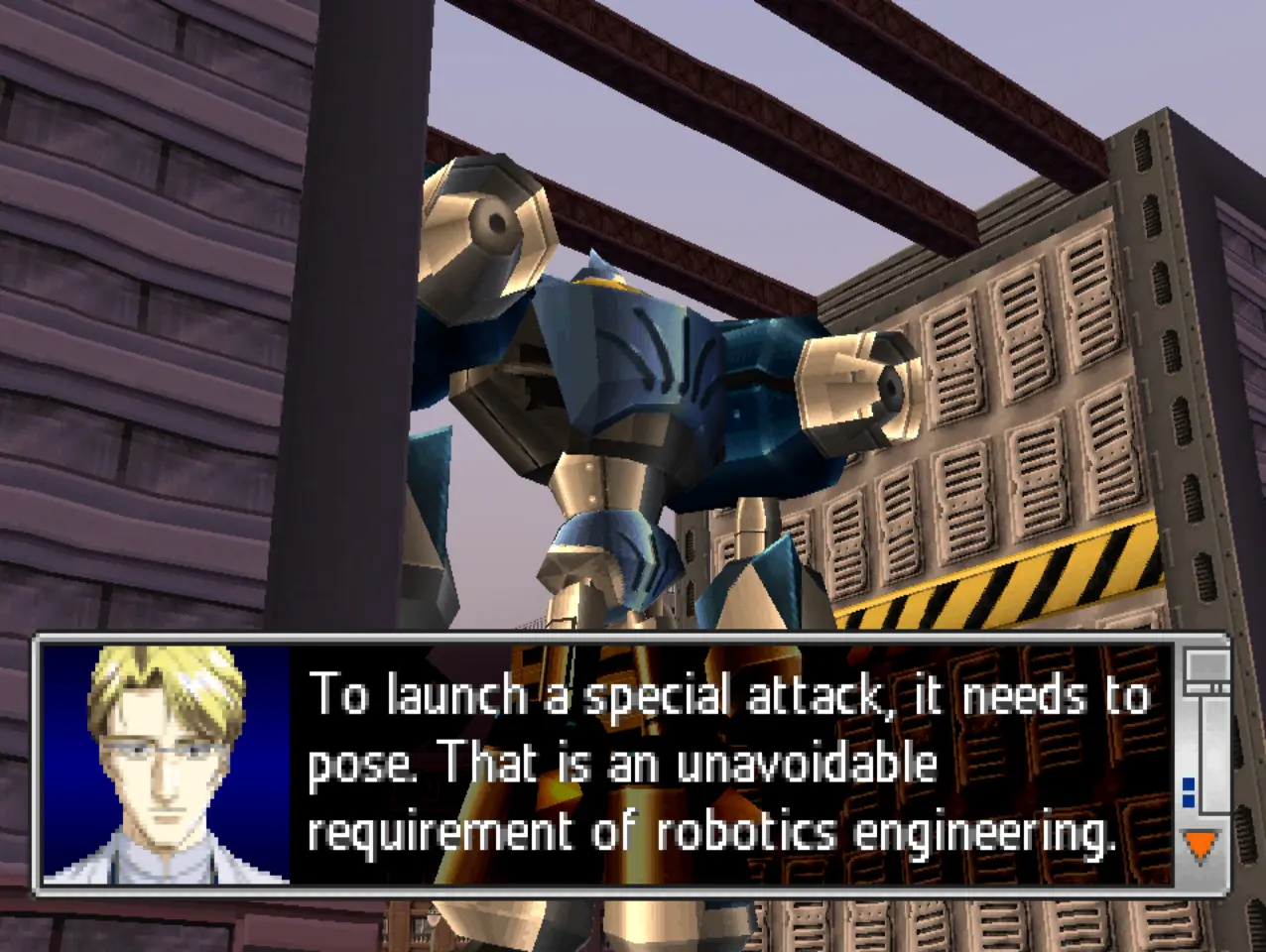
To launch a special attack, it needs to pose. That is an unavoidable requirement of robotics engineering.
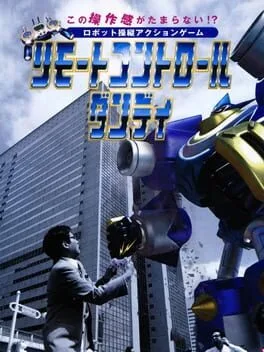
I wonder how my feelings towards this and Robot Alchemic Drive would be if I played them in the order that they were released in. In many ways Remote Control Dandy feels like a first draft of RAD. A lot of the same ideas are explored. Similar character archetypes, reused scenarios, even a similar selection of maps for the areas that make up Torino and Senjo: The new downtown area, the old city centre, the docks, the power plant on the mountain. Both even have a map of Shinjuku for a mission where you have to defend the Tokyo Metropolitan Government Building. I definitely feel like a second go at this both lead to a more interesting and compelling story in RAD as well as just a more fun experience. Mechanics that were a small part of RCD get a bigger focus in RAD while a lot of the other concerns fade into the background.
Conversely, while RAD feels like a second draft it actually feels less polished. RAD’s story is more interesting but also less coherent and I don’t think that all of that can be blamed on the rushed (but charming) localisation. In RCD’s favour is that it looks a lot better for a Playstation game than RAD does for a Playstation 2 game. Partly that is aesthetic choices. RAD’s muted palette, Playstation 2 blur and general griminess aren’t doing it many favours, but while it boasts bigger maps and longer draw distances there is a conspicuous lack of damage models for buildings and other details that make Senjo feel a bit more sterile compared to RCD’s Torino. Animated character portraits, a more visual novel-style intermission section and a much fancier and seamless robot selection and launch screen also just make seem like more time and care was allowed in this game than was for RAD.
There is also some more detailed simulationist aspects to RCD that are dropped in its successor. Both games have monetary system to incentivise keeping property destruction down but RAD’s is much more forgiving, simply giving you a base amount of money per mission and then bonuses for protecting key buildings and minimising damage. RCD on the other hand (and somewhat more logically) gives you a larger upfront amount but penalises you for all damage done to the city over the course of your giant robot fights. You can, in fact, lose money on a given mission. The robots available to you even cost variable amounts to send into battle. Do you use the cheap, steam-powered robot that doesn’t have big fancy attacks, or do you send your expensive nuclear-powered model? You can go bankrupt if you spend everything and and smash up the city too much. You can also cause so much property destruction that the populace turns against you. In the second game this has largely been simplified away. RCD has more intricacies here, and that can definitely be appealing, but in the end RAD’s more lackadaisical approach lets one have a lot more fun driving a big stompy robot smashing through buildings without the looming risks of bankruptcy hanging over one’s head (though one is given more second chances than the game initially lets on).
And it’s interesting to see other elements that are somewhat vestigial in RAD having more of a presence here. In both games police cars drive around the city while you do battle. In RCD you have to pay the cost of them if they get destroyed but you are assured that they are automated patrol cars there only to detect and deter people from coming back into the evacuated city to steal while everyone is missing. You definitely aren’t killing anyone so don’t worry about it. The manual for RAD keeps this explanation that the patrol cars are automated drones despite the fact that RAD is more than happy to let you casually crush and mow down crowds of people as they spray comically large clouds of blood. You are not penalised for it at all; it is simply part of the slapstick. Yet it still keeps the excuse that the cars are automated, despite it not serving any purpose.
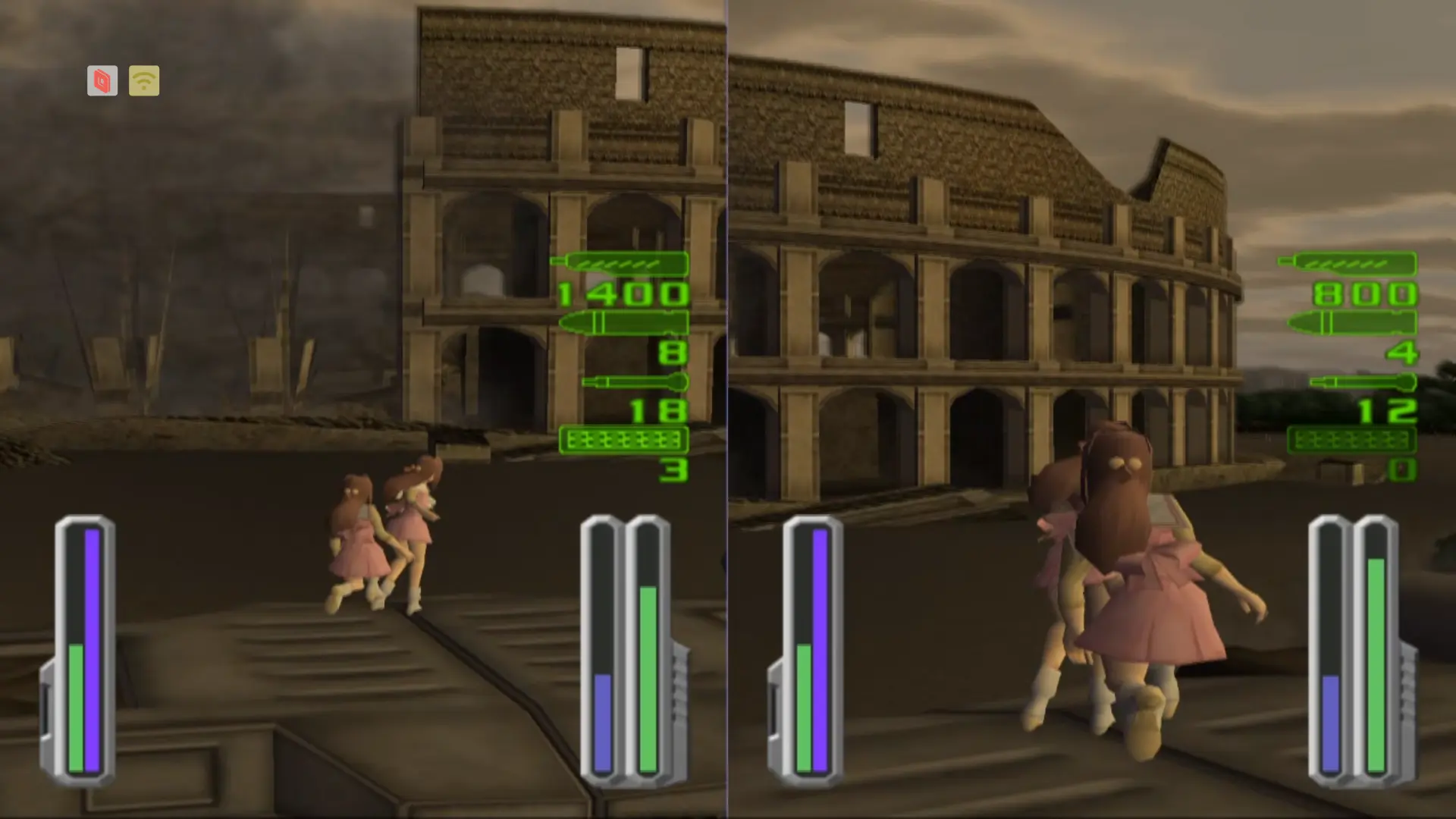
But for all RAD can feel like a rushed copy of this game, it’s still fundamentally the more fun one. RCD is great in its own right but it feels lacking compared RAD’s analogue stick controls, more engaging mech fights and more fun cast. The battle mode in RCD is also disappointing. While it does allow for playing against computer-controlled opponents it simply gives both players direct control over their robots from a birds-eye view, removing the core dynamic of having to deal with playing as a pilot operating from a ground level.
To end on a compliment, though, Remote Control Dandy’s final boss is much cooler than and has some more interesting unique gameplay tricks than Robot Alchemic Drive’s. Evidently the developers thought that they hit a winner there too, as one of the unique aspects of RCD’s final boss ended up being promoted to a core gameplay mechanic in RAD.
Also the fact that you can combine Vordan’s tornado arms and remote control rocket fist is extremely funny.
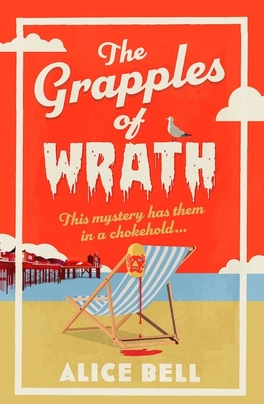
I have not kept up with wrestling since the 2000s but I have been recently been getting slightly back into it through my girlfriend (after her flatmate got her back into it), so Alice Bell’s new supernatural murder mystery being wrestling-themed was a nice little bonus on top of a book I was going to read anyway. Might beat out the first one for my favourite in the series so far, though I did cop who the murderer was a while before the protagonist and got slightly impatient waiting for the penny to drop.
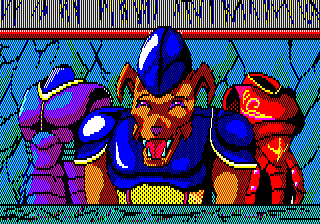
We've looked at a number of video game monsters by now, but ringing in the first of October, we'll be going over some of the most obscure to ever be featured on Bogleech! I was first shown a few of the monsters from this one by my friend who goes by Acidonia, without any source or context, and it took the help of my blog followers to finally identify their origin - a long forgotten, 1990 Japanese PC game. To be even more specific, a long forgotten, 1990 Japanese hentai PC game. Oh boy.
As you likely suspected already, Exterlien is rather thin on storyline and even thinner on anything resembling "fun," its gameplay intended as little more than an obstacle between the player and brief glimpses of pixelated sex. Along the way, however, one can encounter a bevy of magnificently weird and inventive monsters; actually some of the coolest and most appealing I've seen in a long time. It's actually not at all unusual for a work of tentacle porn to have some remarkably unique creature design, though it's usually rather difficult to review them on a work-safe website when they're so busy shoving pieces of themselves into naked cartoons.
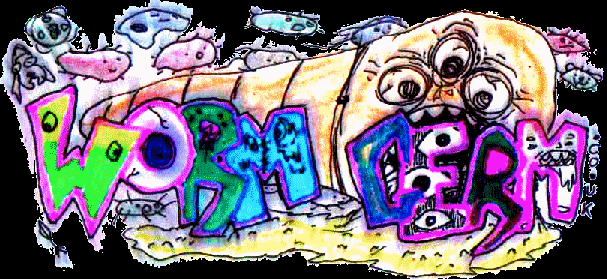
Fortunately, Exterlien's monsters almost all get their own lovely little game sprites, and our friend Slime Minister, creator of WORMGERM, personally trudged through the entire tedious mess just to get us a complete collection of these slimy, bug-eyed beauties, so let's see what all the fuss is about!
Gurema & Djachi
We'll look at the smaller, weaker enemies first, and start off with some of the least bizarre. These two are fairly conventional slimes, though it's surprisingly not common to see one with multiple organelles like an actual single-celled organism.
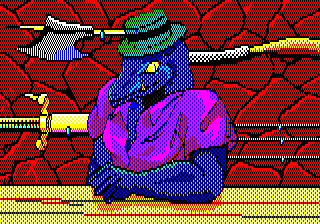
Ryuso-u
This cloaked phantom is so conventional, it's going to feel jarringly out of place fairly quickly. Virtually everything else in this game is entirely alien and inhuman, so one can only guess what's really under this tattered shroud. Maybe just a pair of hands and a pair of eyes.
Jirukatto
See? This still isn't getting into the really crazy stuff yet, and already we're dealing with a screaming, ghoulish head on the end of a spinal column with spider-like legs. Actually, the shape of this thing kind of looks an awful lot like a certain kind of virus.
Romuon
It's really quite impressive how they managed to make such simple pixel art look so "out of focus" here, and it's a dang creepy effect for a fluorescent, skeleton-like alien being. You get the impression this thing constantly flickers in and out of reality, and I want to think it probably gives off terrifying amounts of radiation.
Jousuto
I've seen disembodied arms with eyeballs on the ends before, but I enjoy the gnarled, boneless look of this one. The arm seems to branch into those three eye-stalks fairly quickly, but they twirl around each other for much of their length. The whole thing kind of makes me think of a biological streetlight.
Myoeri
Nothing but a cluster of eyes in the dark, but in a nicely inhuman arrangement, implying quite an unusual, unseen body. Just turning a human-like eye on its side has such a haunting effect, doesn't it? One of my favorite creature design trends since I first met Hedorah, whose designer is on record admitting the Smog Monster's eyes are intentionally representative of genitalia, for no reason other than to be a little creepier.
Zotobaha
So many of these things are just far too cute to be perverse deviants, aren't they? I guess they might not all be, really. Most of them are just the minions of perverse deviants. This walking plant doesn't look like it could hurt a fly, let alone stick its tentacles where they weren't even invited.
Jamudo
Every bestiary worth its salt has some sort of gastropodal horror sliming it up, and while I've seen better, I like Jamudo's row of tubes and sort of segmented-looking shell, more like a chiton than a snail.
Hyiberi
I love when monsters look more like modern surrealist art than organic or even mechanical beings. There are so many different faces and expressions at play here, all tied together by a single eyeball you can also interpret as a mouth or a piece of jewelry. Freaky as hell.
Korufausu
Seemingly related to our last one, and a little more "coherent." Perhaps disappointingly so, but still pleasingly outlandish as far as humanoids go, and in fact, very few things in Exterlien will ever even look this human-like.
De-yonda
I've little to say about this one, really, except that it reminds me a lot of Him from the Powerpuff Girls. Maybe a form he might have taken just to freak people out. This is our last "minor enemy" before we get into this game's bosses, which are not only generally stranger, but far exceed their weaker underlings in variety.
Enamena
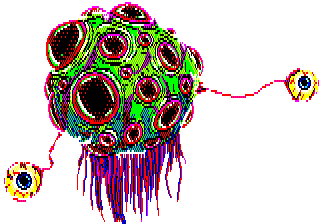
What did I tell you? The enemies were interesting enough, but the bosses fly straight into realms of unparalleled majesty shared only by the likes of the Ugly Stickers or the Real Monsters toy line, or that Halloween episode of Invader Zim. Enamena here is one of my favorite seldom-seen anatomical subcategories, the "cartoon-meteor-shaped monster." I don't think I've ever seen one that wasn't wonderful, and this one is a treasure with only the fairly basic addition of stalk-eyes and jellyfish tendrils. You apparently encounter it hanging out in an office, for whatever reason.
Pirubotto
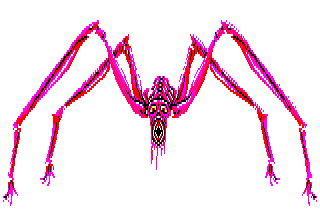
Oh yeah, did I mention the storyline yet? I know I said it was kind of bare bones, but it's still interesting enough, and provides at least a little context; apparently, Exterlien begins with a beauty contest being held at a carnival, which is promptly crashed by horny monsters from a parallel dimension. I'm going to guess that a lot of them might even just be otherworldly "wildlife" that bled through in the process. Others seem like they may have been bumans themselves, until alien forces twisted them into abominations like this disturbingly spidery, toothless ghoul, who can be found lurking in a restaurant.
Gemumo
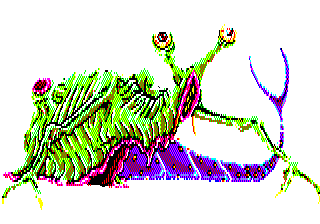
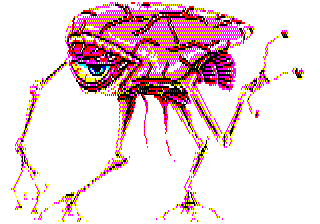
I showed off this one earlier, and I really find it one of the most endearing in the game. You can never go wrong with slithering, snail-faced monsters, especially when they actually drag themselves on slimy, bony forelimbs. I'm also a big fan of monsters with vertically-aligned mouths, as you've probably noticed in my own scribblings. I realize most people's first thought is that they look sexual, but as with similarly skewed eyes, I just plain like how alien it looks, at least by human standards. Lots of other things on our planet have mouths that open sideways. It's yet another one found in a restaurant, too, so this cutie might not even be perv - just a glutton.
Girumera
Another really cute one, dominated entirely by its HUGE mouth and protruding eyeballs with a relatively tiny, almost vestigial fish-like body. Girumera is encountered hiding amongst a bunch of parked go-karts, so we can assume it was trying to figure out how to drive one without legs or hands.
Bairamu
Sad and a little goofy looking, but in the best of ways. Bairamu is made up entirely of fairly human body parts, but in an utterly inhuman and eerily suggestive arrangement, the upside-down tongue especially unsettling. You encounter this one in a haunted house, possibly because he thought he saw a guy who owed him money.
Gahi
Gahi is a simple design in principle - I've seen a lot of things that are mostly an eye with arms and legs - but I like its oblong, veiny head-body and pink fins. With its eye closed, it would look like a mighty disturbing, eyeless monster with human-like lips, and that was probably exactly the idea here. I also enjoy how it's kind of giving us the bedroom-eye…and can be found in a bathroom.
Iga
I love how this is just a huge, quasi-human mouth, with virtually no other features, essentially functioning like a bivalve. That green hose is probably how Iga actually feeds, or at least breathes, while maybe the two tongues are for tasting the air. What's even cuter about these giant, warty clam-lips is that you find it in the carnival's teacup ride. Iga! That's not what you were sent here to do! ….Or is it?
Waitora
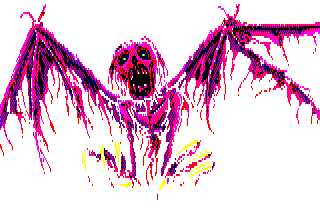
A bat-winged, humanoid torso can easily come out plain and uninspired, but a little dangling, tattered flesh is just the thing to spruce up your otherwise conventional ghouls and devils. This one is encountered in one of the game's strangest places; the inside of a cartoon octopus statue in the middle of a fountain. What a silly place to be, Waitora. Why did you go in there? Apparently it was important enough to defend with violence.
Bongo
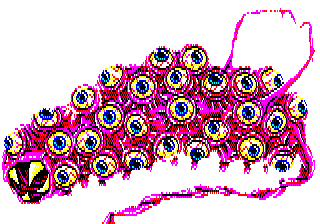
BONGO!? I could not possibly love that name harder, especially for a bubblegum-pink sea cucumber with such a comical mouth, pitiful little arms and dozens of googly eyes. Bongo's withered tail trails clear off the boss monster screen…what's on the end? Another eye? Maybe it just connects to another Bongo? We even meet Bongo in an incredibly appropriate place for a multi-eyed monster at a carnival: the House of Mirrors! No wonder Bongo has a look of such confused awe. Having that many eyeballs in a house of mirrors probably feels like a hardcore drug trip. Bongo found exactly where he wants to be…why can't you just leave him alone?!
Sanadamu
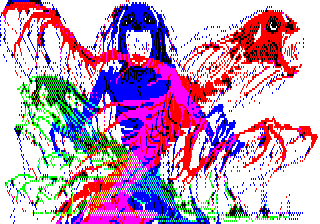
Another one with fairly humanoid anatomy, but once again improved by little touches of weirdness. The horrified looks in their faces, the vivid primary colors, their "dissolving" appearance…it all contributes to a remarkably haunting image, and you have to wonder if this is actually several entities or just one. Maybe Sanadamu represents a human who was accidentally pulled across multiple dimensions, slowly unraveling on a molecular level? I mean, I know the creators didn't think that far, but that's what I'm inclined to see here, and it's freaking terrifying. You encounter this one in a warehouse, which doesn't really offer any further clues, but I feel like it might support my "formerly human" theory.
Eddjima
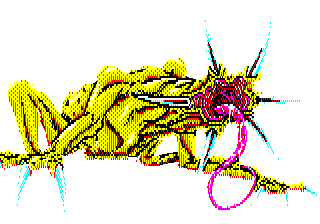
Seriously, who designed the monsters for this game? They're genius. They do so much with even the most basic concepts. A humanoid mouth on the end of a worm-like body is nothing terribly special, but this one ends in an entire withered, vestigial head, hair trailing from its dessicated skull. The entire "worm" is just a trunk! I independently came up with more or less the same thing for one of my monsters, but it was a deep-sea fish. I like this human take on the body plan quite a bit more. You encounter Eddjima in a riverboat ride; I'm not sure if it was there because it likes to swim, or because it just likes riverboat rides.
Atori
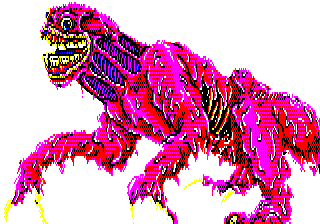
Just a hairless, clawed quadruped, but with a jarringly unearthly head. The detail on that raw, pink orifice and dripping tongue is exquisitely unpleasant, and the whole thing kind of makes me think of a horribly distorted star-nosed mole. Maybe what a star-nosed mole encounters in its own version of Silent Hill, which would overall be several times more interesting than the last few Silent Hill games. Atori is encountered in the carnival's electrical control center, so I'm going to assume it's either an energy-sucker or it has an active interest in electrical engineering.
Do-umu
Found in a fountain, Do-umu looks a little like the monsters from the movie Deadly Spawn, which is an excellently paced, atmospheric and fun monster movie you should totally check out when you get the chance. None of the Deadly Spawn were cross-shaped, but the mama one was definitely multi-headed, and actually, looked enough like something from this game that the designer probably drew direct inspiration from it. Seriously, go find it, it comes across as a by-the-numbers creature feature at first glance, but it's more of an intentional homage to the genre and its sheer quality may surprise you.
Tsu-efoi
You know how I can never get enough monsters with perpetually oozing flesh, and this one's giant, smiling maw and puppy-dog eyes are wickedly frightening on that slimy, half-rotten humanoid body. The only thing ghastlier than this one's appearance is that it haunts the boiler room, by far one of the most frightening places to encounter any sort of monster, but especially one that seems to be melting from the heat and doesn't even care.
Giruman
Haha, "Giruman." Literally just "gill-man," like the Universal Studios monster, and he's even found in a lake. I guess not everything in this game can be a groundbreaking masterpiece, but there's never anything wrong with a good old fashioned man-fish. Maybe they even threw this in as a nod to how The Creature From the Black Lagoon was one of the earlier and most famous lust-crazed-monster flicks.
Gugarafu
These monsters really, really exemplify how far just a twinge of humanity can push the horror of a design. This is basically just a big squid, but the teeth, nose-hole and especially those downright pleading eyes launch it straight into the heart of nightmare town. Another little touch that makes a world of difference? The way the tentacles emerge from between the lips and gums, instead of growing from the surrounding skin or coming out of the mouth itself. I don't think I've actually seen it done that way before, but it makes a whole lot of anatomical sense and it's a lot scarier than either other option. So where do you actually meet this uncanny calamari? Wandering up and down a train track, apparently.
Hoburei
An amorphous blob of innumerable mouths and eyes was kind of a given sooner or later, and I usually find those rather samey, but I like that its mouths have such long, thin teeth, making them look more like a bunch of coral polyps - and they even seem to retract the same way! You face Hoburei on a rollercoaster, and like Girumera's go-karts, I'm going to wildly speculate that it just wishes it could ride the roller coaster, but can't quite figure out how. I think I might know what all this mayhem is really about: jealousy. They're jealous of our beauty contests, our roller coasters, our houses of mirrors, even our octopus statues and our train tracks. These bastards want it all.
Min
AUGH. Oh jeez. Again, human features in an inhuman arrangement is all it takes to be effectively horrendous, though the very worst part of this warped, oozing face is the green crap dangling out of its ears. Sick. Min here inhabits a merry-go-round, but who the hell knows how. There's no indication of what Min is doing there or what the rest of its body looks like, unless it's just a huge sheet of flesh that completely enveloped the ride, probably to make sure nobody else could ride it out of pure spite.
Panisha
Oh, cute! A fleshy, one-eyed ball with a bunch of gasping tubes is a concept I've seen elsewhere, but it's always a pleasure. They're usually floating creatures, like the also-similar Beholders from Dungeons and Dragons and their various knock-offs, but Panisha seems to creep and crawl on the ground, which I feel gives it some distinct personality of its own, and what's really darling is that Panisha apparently rides the ferris wheel. Look at that eye. That is a one-eyed look of wonderment.
Ru zu
Awwwww……is this the last one already? I was still so pumped for these. I don't want them to be over! You'll recognize this as the monster on the cover, and it's also apparently the main villain behind all these shenanigans, the one monster the game confirms is only interested in bringing some human booty back to his domain, as demonstrated in a "bad ending" image that is not work safe but here it is.
As the head honcho, Ru Zu's design is predictably one of the least bizarre, but the long, protruding teeth are pretty cool on this otherwise mundane fish-bat anthropomorph. I'm sure he was probably meant to invoke some sort of "Lovecraftan" entity, and would actually make a pretty cool Dagon, honestly.
I suppose I should also mention, I guess, that this game has some monster-run item shops, and while there's nothing especially interesting about their physiology, nothing else in this game is quite as scary as a bright blue lizard in a fedora.
So, that's it for Exterlien, a dirty little game whose artist(s) poured their little hearts and souls into populating this sleazy, otherwise boring distraction with some of video gaming's most memorable alien invaders. Be sure to pay Wormgerm a visit, since sharing these with you would never have been possible without his brave sacrifice.
I also strongly recommend checking out his artwork, because his designs actually get even weirder still than all we've enjoyed here.
A demo for a cancelled tie-in game for a TV show that got reworked into Robot Alchemic Drive. Very interesting to compare it to the final game. The first thing that jumps out is that the map seems much more detailed here than any in RAD. It makes me wonder what kind of budget and time constraints RAD had during its development. That said, RAD also features extensive use of picture-in-picture effects and panicking crowds running around in the story mode as well a split-screen multiplayer option which might have put some more strict resource constraints on its maps than the largely static Tokyo of this demo. The only things moving around are the player character, their robot, the big watermelon kaiju and the buildings that you are smashing apart as you fight it.
Some of the assets from this demo seem to have been reused for the intro cutscene of the third level in RAD, both of which take place around Tokyo Tower, though when the level proper starts in the final game you are actually in a completely different map based on a different part of Tokyo featuring the Tokyo Metropolitan Government Building. The layouts of the maps in this demo and the cutscene in RAD don’t match up so they didn’t just reuse the same map, but some of the buildings appear to us the same models.
Both demo and final game do not feature a pause menu; the select button in both switching between pilot and robot and the start button showing control reminders in the demo and a map screen in the final game, but in the demo’s free-roam mode a message at the top of the screen informs the player that pressing select and start together will quit back to the menu. This feature is still functional in the challenge and versus modes in RAD but as far as I can tell not documented anywhere in the game or its manual1.
The watermelon monster is taken from the first episode of Tekkōki Mikazuki it’s just a very fun design. The conceit of controlling the robot from the ground is not from the show, though, and is taken from Remote Control Dandy, a game that Robot Alchemic Drive is very clearly a spiritual successor to, reusing and reworking many of the same concepts. The robot controls in this demo, though, are very simplified, using something like the “easy” control option from RAD for moving Mikazuki and without the different array of attack options present in either game. Perhaps the developers only had working or wanted only to present a basic, less complex version of the control scheme than they had in mind for the full game, but the end result in this demo lacks the clunky, expressive charm of RAD or its predecessor.
In the English version at least, I cannot speak for the Japanese version. ↩
huh apparently Robot Alchemic Drive started as a licensed game for a tokusatsu show that ended up being cancelled after six episodes so there was only ever a demo of the game released
I knew it was a spiritual successor to Remote Control Dandy but not this
I really love a game that is deliberate in its controls. That doesn’t try to make everything as smooth as possible. That has a sense of physicality and realness to it. System Shock’s modular, maximalist UI, Metal Gear Solid 2’s intricate and deliberate controls, the process of discovering and operating your submersible walker in Nauticrawl. I love a game that feels like operating heavy machinery and there is no machinery heavier than Gllang.
Robot Alchemic Drive has such a wonderful conceit. You are piloting a giant robot—a meganite—against giant invading alien kaiju robots—the volgara. You must swap between controlling the pilot and the meganite, but the perspective and camera always stays with the pilot. You are watching from ground level, or from a rooftop, or from the shoulder of your robot, and it’s rarely a simple or smooth process. Judging the distance, the angle, how to aim or throw a punch from a distance. The controls aren’t simple either. Each analogue stick controls an arm, and each pair of shoulder buttons the legs. Just to walk forward you need to alternate L1 and R1 to take each individual step. I’ve wanted to play it ever since watching Videochess playing it a few years ago and the more recent surge in Nanao-posting finally pushed me to jump in myself.
And it’s just a blast to play. It can be a bit repetitive but you do get three meganites to play with if you want to shake it up. I did mostly stick with Thrones-class Gllang the Castlekeep, because if it’s it a game about being a big, stompy robot why would you not want to be the biggest, stompiest robot? Gllang is slow but loaded up with weapons and you can eventually unlock the ability to unload every gun it has at once, which makes for a very satisfying finishing move. He can also transform into fortress mode, a surprisingly fast and slippery tank the width of an entire motorway to compensate for how slow his walk is. On the fast and light side there’s Cherubim-class Airborne Dominator Laguiole who can turn into a V-TOL jet and Seraphim-class Vertical Fortress Vavel as the middle of the road bland main character robot who can’t transform into anything but has a super mode that gives you a time limit of three minutes to finish the mission within or else he’ll explode (though if you pick Gllang or Laguiole at the start they will also get a similar super mode late in the story).
The game is a bit repetitive, throwing you into fight after fight, but it tries to throw in different twists on the formula either as a once-off or in little mini-arcs that explore a particular idea for a few missions. You will have to deal with poison gas, putting out fires, various twists on the enemy units’ Phantom System teleporter that allows them to dodge all ranged attacks until they are on low health, and a various other things. None of these ever really get integrated back into the gameplay in a more systematic way. The meganites can pick things up but it’s only useful in one or two missions (though there is some fun to be had in experimenting with picking yourself up).
There are also missions that focus more on the protagonist’s relationships with various characters, most importantly Nanao, who is a perfect angel who no one is ever allowed to be mean to except for me when I keep “accidentally” blowing up the buildings she works in. Amusingly blowing up various buildings is one of the main drivers of character interactions. Masaru, the stuck-up heir to an arms manufacturing conglomerate, gets more and more character development the more you repeatedly blow up his company’s headquarters. The general campiness, which extends to the gameplay itself, is also enhanced by the localisation, which is charmingly low budget and aiming for the energy of old cheezy dubs of Gamera and Godzilla movies (though they could have left out the bad Japanese accent that they give to the news reporter and no one else). The story does go in some darker directions at times and it put my slightly in mind of Neon Genesis Evangelion but where Gendo died and they just put Shinji in charge (but still did not tell him anything).
It does feel like there was more ambition here than was able to be filled, with dramatic and especially the more dream-like sequences struggling to convey themselves with the game’s fairly simple cutscenes and descriptions of the situation in the city of Senjo and Earth in general getting worse and worse as the war wages on being undercut by every map being completely reset whenever the next mission starts.
There is also a multiplayer mode that is both a little barebones but shocklingly generous with how much it offers. You choose a map and then each player chooses a pilot and a robot to control and then it dumps you in a splitscreen match. First person to have the health par of either the robot or the pilot deplete loses. But it doesn’t just offer the three megatnites; every volgara that you defeat in the story mode gets added to the roster and every map from the story mode is there with all their moves from the story mode. Even the Rome map that only appears in the opening cutscene of the story is here and fully playable, modelled well beyond what was needed for the intro. And with no time limit, no scorekeeping and a match only ending when something dies it leaves it very open to different strategies or even just being a toybox to make up your own game. You can focus on the other player’s robot or their pilot. The robots are giant, slow, targets, but the pilots are small and have a hard time defending themselves directly. You can ride on your robot to not have two targets, but it’s quite easy to get knocked off and find yourself in a very vulnerable position. You can agree to have an honourable robot fight and not attack each other’s pilots or you can forego the robots entirely and just chase each other with grenades. Myself and Ruby had a blast just messing around with it in various ways. We had a match where we tried to pick up each other’s pilots with our robots, first person to get grabbed loses. After that was resolved we just both rode around on her Gllang together in tank mode blowing up Rome.
And it’s also just a game that sets me off imagining how I would tweak it. What would I try to make if I made something like this? Could contextual or once-off mechanics be made more systemically useful or interesting? I think some way to control the pilot and robot at once would be cool; maybe the D-pad can always control the pilot while the analogue sticks and shoulder buttons are reserved for the robot? Or a two-controller mode where one controls the pilot and the other the robot? I just want more of this, different iterations of it. I am already eyeing up the fan translations of Remote Control Dandy and Marionation Gear.
Miscellaneous observations:
There is only one walkthrough for the game on Game FAQs and the author hates both Gllang and Nanao. They have not been vindicated by history.
In the famous bread and water soup mission the protagonist complains that 7-Eleven charge too much for vegetables and it’s cheaper to get them at the greengrocer when the smallest unit of currency you work with while upgrading your giant fuck-off robots is ¥500,000,000.
As well as the hammy acting often being funny there’s a few great deadpan bits that really got me. In an early missions one of the people in mission control tells you to explore the city and familiarise yourself with the area while you wait for the meganite to launch. When the call back a minute later to ask if you’ve gotten familiar with the city the protagonist just responds “Well, yes. I live here.”
The cutscenes aren’t skipable but holding down the start button fast forwards them which is very funny to watch.
It’s one of those games with a choice of protagonists where they do not change the script very much if you pick the female hero so her and the love interests just become lesbians, which is great.
No, cuz, listen! We need to inject progesterone for opsec!
I like how, even when Teddy is right, even when Michelle is playing along a bit, they are incapable of understanding each other. Michelle does try to understand him, to reach out, even in a guarded way behind lies and obfuscating corporate speak—open a dialogue. At the dinner she doesn’t comprehend that she is telling him she that she thinks that humans make wonderful slaves. The life of a corporate executive separates you from humanity and wraps you in an alien perspective, as much as being taken in by conspiracy theories does.
Extremely cute little annual event with a bunch of different bits to explore and it’s nice to see everyone else hanging out and exploring and seeing their different ghosts. The puzzles in the mansion are not too taxing but just enough to have a little bit of fun scribbling out notes to help put them together. I was very bad at the obby tower, though.
Thanks to Jen’s guide for letting me double check if I found all the badges.
I feel so grateful to the man who invented the “Traveller’s” typewriter.
Mina Harker, expressing her love for her laptop.
Applying modern labels and understandings of people to the past is iffy and and remains so when applied to fictional characters who were certainly never written with those as-yet non-existent concepts in mind but also it’s fun so I’m going to do it. Mina Harker (née Murray) is an autistic, bisexual, and cool as hell.
None of what I’m going to say is a particularly original idea and much of what I’m drawing from here is from the general milieu of the Dracula Daily fanbase. This was, of course, a large part of the appeal of Dracula Daily; not just a novel way to read a classic book but also a participatory exercise in going through that work and evolving a fandom understanding of it as it progresses, with all the tenuous headcanoning that such things involve.
Dracula is Gothic fiction wherein the ancient horror is defeated and soundly routed by modernity. Our heroes are doctors and solicitors (and a rich Texan who fancies himself a cowboy) and an important weapon in the arsenal used to defeat the count himself is meticulous note-taking. And it is Mina who transcribes, edits, organises and distributes these notes. Within the fiction it is she who creates the manuscript that is the text of the novel itself and makes carbon copies to provide to the other protagonists. She habitually organises and sorts information and while she often frames it as making herself useful to her husband1 she displays a clear knack and enthusiasm for doing so.
“When does the next train start for Galatz?” said Van Helsing to us generally.
“At 6.30 tomorrow morning!” We all started, for the answer came from Mrs. Harker.
“How on earth do you know?” said Art.
“You forget or perhaps you do not know, though Jonathan does and so does Dr. Van Helsing that I am the train fiend.”
“I am the train fiend”?! This girl autistic as hell.
Mina is also the one who sits down and logically deduces Dracula’s escape plan from everyone’s scattered notes and observations, writing it out her evidence and conclusions point by point.
Ground of inquiry. Count Dracula’s problem is to get back to his own place.
(a) He must be brought back by someone, This is evident; for had he power to move himself as he wished he could go either as man, or wolf, or bat, or in some other way. He evidently fears discovery or interference, in the state of helplessness in which he must be confined as he is between dawn and sunset in his wooden box.
(b) How is he to be taken? Here a process of exclusions may help us. By road, by rail, by water?
[…]
Van Helsing says that Mina has a man’s brain and a woman’s heart1. While this is meant simply as a compliment of her faculties1 the fact that her analytical nature is framed as inherently masculine reminds me of the (nonsense) extreme male brain theory of autism which is rooted in notions of men being naturally more systemising and women being naturally more empathising. This is starting to bend towards me just documenting some free association so I will move on to Mina being gay.
Mina and Lucy in the book have a classic romantic friendship, gushing and fawning over each other to a degree that is difficult not read as somewhat sapphic to a modern reader. Mina takes care of Lucy while she is being secretly preyed upon by Dracula, and while she sleeps Mina notes how beautiful she is, thinking about how it could make someone fall in love with her, about sex outside of marriage, and about the idea of women being able to make marriage proposals1.
Lucy is asleep and breathing softly. She has more colour in her cheeks than usual, and looks, oh, so sweet. If Mr. Holmwood fell in love with her seeing her only in the drawing room, I wonder what he would say if he saw her now. Some of the “New Women” writers will some day start an idea that men and women should be allowed to see each other asleep before proposing or accepting. But I suppose the “New Woman” won’t condescend in future to accept; she will do the proposing herself. And a nice job she will make of it, too! There’s some consolation in that. I am so happy tonight, because dear Lucy seems better.
Later, not having seen Lucy in some time and unaware of her rapid deterioration, Mina sends a letter to Lucy that directly compares the love between her and her husband to the love between her and Lucy and that she could, would, has, does and will love her.
Jonathan asks me to send his “respectful duty,” but I do not think that is good enough from the junior partner of the important firm Hawkins & Harker; and so, as you love me, and he loves me, and I love you with all the moods and tenses of the verb, I send you simply his “love” instead. Goodbye, my dearest Lucy, and all blessings on you.
The novel—the manuscript compiled by Mina herself—emphasises the tragedy of this goodbye and this expression of love by noting that this letter was not opened by Lucy before her death.
Also her favourite spot to hang out in on her holiday in Witby is the graveyard so she’s pretty goth, too.
I wanted to give this another chance but it’s just not a hugely enjoyable watch. Everyone is giving just a flat, boring delivery and it’s so universal across the cast that I feel like it must be a problem with the direction rather than the actors and some core plot points feel very underdeveloped. Duke’s hypocrisy is core to the plot and messaging of the film but we never really see her that much evidence of it other than fucking Dracula showing up and telling us that she’s apparently been sneakily glamouring everyone and the pretty serious conflicts and resentments between Laurel and her family just get dropped immediately when it’s time for the finale and are never discussed again.
It starts off incredibly charming. A relaxed pace of veteran BBC presenters doing their best at filling time for a live broadcast where nothing is happening and nothing is likely to happen, but still doing a lot of setup for when things eventually start to take a turn.
But there is also an underlying meanness to it. They are here to make television and Parkinson is not afraid to capitalise on this family’s misery to do it, to twist the knife a bit when the girls are seemingly at their lowest, to keep pressing them when they are past the point of breakdown before affably cutting away to another expert interview.
When the supernatural elements start to assert themselves more blatantly it feels like the BBC is complicit in it. Not just inadvertently creating the conditions for this horrible, nationwide séance, but being invested in the misery of a family for the sake of reality TV and eagerly dragging up and broadcasting every unverified, salacious detail they can. The transphobia and ablism in Turnstall’s backstory is an unfortunate blemish on the film but it feels fitting that the BBC’s careless rush to spread it is part of what allows it to be hijacked and torn down.
It is also just effective, creepy horror. Even having seen it several times before I felt my breath catching in some parts.
The Crazies, filmed between Romero’s Night of the Living Dead and Dawn of the Dead, is sometimes described as a quasi-zombie movie. A virus called trixie, created by the US military as a bioweapon, has leaked into the water supply of Evans City and is spreading rapidly throughout the town. The military attempt to quarantine Evans City but struggle to deal with the rapidly spreading virus and the panic and violence that the virus is both inspiring and directly causing and the ambiguity of the two. I think ambiguity is an important part of the film and the Wikipedia summary, in trying to be a flat description of the plot, ends up removing that ambiguity and presenting a simple and wrong view of the story.
The virus causes mental degradation in its victims. As the current Wikipedia article puts it causes “victims to either die or become hysterical and homicidally insane.” This is, I think, the first way the article gives a misleading picture of the plot. Trixie does not simply make people into mindless killing machines, it is not the rage virus from 28 Days Later. People infected with it do end up killing a lot, but it does not necessarily inspire bloodlust: It generally seems to cause irrationality and a complete loss of moral perspective. In one scene three infected men charge towards the protagonist David, who is wearing a stolen military biohazard suit, wildly shooting at him. He tries to shout that he’s not part of the army quarantine, that he is not a threat, but when they hit Judy, a woman David was trying to protect, David returns fire, killing two of them. When the last one reaches David and sees him he simply stops, causally mutters “Hey coach, I didn’t know it was you,” and sits down without a single care about his two friends that were just killed or the woman dying in front of him and not even reacting when actual army troops show up.
People infected with it are still capable of thought and communication and this is, in fact, a huge problem and one of the core tensions of the film is the uncertainty of infection. One does not have to be hiding an obvious bite mark to be a risk in this movie and the military are in many ways just making things worse, packing everyone into the high school as an attempt at quarantine and shooting everyone who won’t comply. Within this effort a doctor named Watts, who was involved in the creation of trixie, is desperately attempting to find some sort of cure or vaccine. He hopes to find someone amongst the residents of Evans City who has a natural immunity from which antibodies can be taken but lacking that still attempts research into a cure throughout the film. He eventually develops a potential cure but is killed and the samples are destroyed in a stampede of infected townspeople breaking free from quarantine, while David realises that he is immune to the virus but decides to keep it to himself and not co-operate with the military.
That last sentence is at least how Wikipedia describes it. I disagree. Watts, throughout the movie, gets increasingly agitated, desperate and irrational. He tears off his gas mask in frustration while working on samples because it is too cumbersome to use a microscope while wearing it. He starts to see something in his samples that his colleague does not see or understand the significance of. When challenged he tells her to “just have faith.” It is very clear that Watts is acting, at best, extremely irrationally. The Wikipedia article states that he is killed in a stampede of people breaking quarantine but this is not simply a co-incidence, it is because when he runs into a group of soldiers and starts telling them that he’s a scientist they just think he’s as crazy as everyone else and shove him in with the rest of the population. Whether Watts has actually found something, is having a breakdown from stress, or has become infected either from general spread or from mishandling samples is unclear. When he dies he may losing a potential cure, but there is also the potentially worse possibility that he had absolutely nothing and now the rest of the researchers, assuming him to be brilliant, are chasing after shadows he was casting on the wall. A doctor reassures Peckem, the colonel in charge of the quarantine, that “Our boys have checked the slides [Watts] left in his microscope, but we can’t make heads nor tails of it. He was on to something. We’ll dope it out sooner or later.”
As the colonel and doctor leave, David is taken in and the soldiers ask the doctor if they want to test David for immunity. The doctor takes one look at him and dismisses him as one of the crazies. David, as the Wikipedia article notes, keeps his believed immunity to himself, cutting off a potentially fruitful route for a vaccine. That is, if David is actually immune. He thinks he is, but he has hardly been a perfect beacon of rational behaviour either. Peckem is ordered to move out to Louisville, where there are “reports of symptoms.” The quarantine seems to have failed. Though perhaps panic is just spreading as news gets around of the military rounding up the entire population of Evans City and shooting a third of them. It’s going to be hard to tell the difference between the virus spreading and the news of the virus spreading.
I think this lack of clarity is a huge strength of the film and makes the closing shot of Peckem’s point of view as he is taken away by helicopter of the light of a small, illuminated landing pad being swallowed by the darkness of the night around it much more bleak.
While the juxtaposition of the digital and cel animation was interesting in Roger the Wanderer it is hard to deny that the digital animation in the second series just looks so much worse when watching it in bluray quality. Every time they reuse footage from the first series it is a jarring reminder of that. I also don’t much like the new robot designs in the second half of the show. The New Batman Adventures to the first series’ Batman: The Animated Series.
I also think the more serialised structure doesn’t work as well as the earlier, episodic stories for the most part. But what the series does with that story is still really interesting. When I was younger I was much more wrapped up in what was “really” happening in the plot but coming back to it with more of an understanding of themes and even simply a stronger willingness to accept vibes-based storytelling it’s much easier to take in and consider the ideas the show is playing with beyond just the bare mysteries.
These people are trapped in a society built by people who even if they had known what they were doing are too senile now to understand it, ruled over by their petulant spoilt children who understand even less and believe they have inherited the right to redefine the world and who deserves to survive. A system that reproduces itself via the people trapped inside it who are acting in accordance to that system and don’t even understand it while trying to hold on to the idea of being independent individuals even as they are shaped and defined by these systems.
Is that what Konaka was going for? Probably not, but that’s art.
We start with cel animation footage of the finale of the first series interspersed with what are ostensibly flashbacks—memories—animated in the new digital animation of the second series. There’s a wrongness to this. A sense of a new reality being imposed over the old. There are false memories - retcons. Speeches from characters who never gave them before. Dastun suddenly knows that Roger pilots Big O. He already knew. He always knew, perhaps. Though he definitely didn’t know last season. Everything has moved over to the digital animation now. The priorities of the story are realigned. Everyone is concerned about people from outside of Paradigm City, a mystery which the newly more serialised story is going to focus on now. Roger starts to unravel and wakes up in New York and meets the gargoyles from Gargoyles. When he returns to Paradigm reality has shifted enough to set up for the rest of the show. The parts of Big Fau exist smuggled inside the foreign megadei so that the EU can avoid paying tariffs and the Joker exists now.
There are a lot of ways to read this movie and what it might say about the people who built, run and visit this park and what becomes of them when their machines turn on them, but there is a surprising lack of direct raising of philosophical ideas in the film. No muses on the potential interiority of the robots, on why this is happening outside of a purely mechanical level. One could read this film as asking nothing more than “Wouldn’t it be fucked if robots killed a load of people?” and just on that level it is a pretty damn enjoyable movie. The gunman makes for a good slasher villain.
I cannot stop thinking about the guns though. Our protagonist learns from his more experienced friend that the park is made safe via the a system built into the guns that detects the temperature of the target and refuses to fire at anything warm, thus keeping the human guests safe while allowing wanton violence against the lifeless, cold machines that populate the park as NPCs. After learning this information they head to a brothel, turning down the opportunity to do something as everyday as taking part in a bank robbery so that they can enjoy that sweet, refreshing, room-temperature pussy and the caresses of the cold, knobbly, robot hands that the park engineers just can’t get right yet.
This idea that the park is safe because of this safety mechanism hangs over so much of the movie and makes it so sillier. Guests take part in fistfights and sword duels, trash entire buildings. Sure, the robots are meant to pull their punches but what mechanism is there to stop guests accidentally stabbing another guest, or for that matter themselves, while doing all of this?
Even charging $1,000 a day in 1970s money it’s hard to see how anyone could have thought it would be a good idea to let guests constantly shoot their expensive robots with real bullets and blow up the walls of buildings (with them inside) to simulate a fun little jailbreak and then pay teams of people to put it all back together every night. No wonder everything is falling apart and they can’t even properly maintain their control room that was built airtight for no apparent reason.
Impeccable atmosphere. Moody, gorgeous. It has R. Dorothy in it. What more could you want? The wider lore stuff doesn’t exactly come out of nowhere in the last episode but it certainly feels like the show is trying to rush through it because it doesn’t have any more time. An old man we have never met telling us that the secret history of the metropolis is fake before quickly summarising it for the audience who hasn’t heard it before certainly seems like something that should have played out over several episodes and not a single minute. Still, the finale throwing out as much intrigue as it can at once probably helped the show get eventually renewed.
A correspondent from The Daily Graph recounts, on the 8th of August, how a freak storm crashes the schooner Demeter into Whitby Harbour with the only living soul on board being a great, black dog1 that leaps from the ship as soon as it beaches and runs straight to a cliff where it “disappeared in the darkness, which seemed intensified just beyond the focus of the searchlight.”
The reporting continues the next day that the cargo of the ship (boxes full of Transylvanian soil) being consigned to a local solicitor and, more importantly, the Whitby SPCA putting out a desperate search for the poor dog who fled the ship, who is imagined to be terrified and hiding in the moors and definitely not a murderous vampire in the guise of a gigantic, ferocious, black wolf.
The newspaper clippings end with the paragraph:
No trace has ever been found of the great dog; at which there is much mourning, for, with public opinion in its present state, he would, I believe, be adopted by the town. To-morrow will see the funeral; and so will end this one more “mystery of the sea.”
This game proved to be an extremely welcome distraction during a very difficult time, a lovely way to hang out with a dear friend, and just a really fun game.
A survival crafting game set not in an open world but in an interconnected facility in the vain of System Shock that you slowly unlock over the course of the game. The GATE Cascade Research Facility is, shamelessly, Black Mesa with a coat of paint. The game does not try to hide its influences at all, with one of the two character voice options being Gianni Matragrano doing his best impression of Harry S. Robins as a Half-Life scientist. Thankfully the character creator does not lock any options behind a choice of genders so I was able to pick that voice for my scientist while choosing a more feminine appearance. Look, voice training is hard.
I am not normally one for survival games or a heavy focus on crafting, they tend to be too directionless for me, but the metroidvania-like progression of slowly unlocking more and more of the map appeals to me a lot. Early on the rhythm of it reminded me a bit of the early Resident Evils; having a home base as a save haven to return to and resupply while planning out excursions into unknown dangers, planning out what limited resources to bring with me. Taking more weapons, more ammunition, more healing supplies with me is safer, but means having much less room in my limited inventory to bring things back.
And then your base expands, your toolset expands, your knowledge of what you are up against expands, and you grow more bold and more capable. The crafting elements are more than I would normally enjoy juggling but the structured nature of the game allows everything to be introduced at a slow and steady pace and its up to you how much you push forward into danger versus how much time you spend gathering and harvesting resources and building up your base and supplies.
There were a few frustrating difficult spikes in the middle to late game playing in early access, but the release update added an item upgrade system that should hopefully even that out.
As you unlock more of the base you unlock shortcuts to previous areas, the map is very interconnected, and a fast travel system that is very charming to anyone with a fondness for Half-Life: A series of Black Mesa Inbound-esque tram rides that interweave the sprawling facility (many of which can be traversed even faster with a deliciously overpowered long jump module you can get later in the game).
Unsurprisingly, the GATE facility has gone to hell as creatures from another world have started pouring in. It doesn’t take that long for you to visit this game’s Xen, here called Anteverse II, but after that it starts to reveal other influences. The second portal takes you to something jarring in that it is a much more human setting: Flathill, a small American town blanketed in fog clearly inspired by Silent Hill and The Mist. These self-contained portal worlds serve as linear levels exploring different gameplay concepts within the more open structure of GATE and also as renewable sources of supplies as you loot and clear out more and more of the facility. And as you do that you start to see that labs are taking after the SCP Foundation as much as they are Black Mesa.
The game has its own catalogue of “immurement registry” objects, which encompasses not just the aliens you are fighting but such things as an arcade machine that sucks you into the game itself; a creature that is only visible to the person it is stalking and will disappear if stared at for long enough; a cube that reduces gravity in the area around it and many things that have no gameplay effect and only exist as in readable journal entries or props with no special function such as a table that causes everyone who sees it to hate it or inexplicable yellow paint that seems to manifest to guide people who are lost.
The journal entries and email exchanges that you can read are often very fun, foreshadowing upcoming enemies, revealing plot threads, showing daily life in a mad science lab and often just being very funny. The exchanges between the Gatekeepers—the ostensible security forces for GATE who have taken to using all the various otherworldly and occult resources the organisation studies for themselves, becoming more and more inhuman and strange as they become stronger—and the normal research staff are particularly delightful, as are random exchanges about Doom and the WWF.
I played through this with one other friend and while there is a singleplayer mode I feel that the game would probably drag significantly more without more than one pair of hands and more than one backpack to fill up when scavenging and managing resources. More than two would probably have been ideal but also it’s not a game where you will want to miss sessions where the group is exploring new areas or progressing the story and every person you add is going to make organising sessions more complicated, but if you can get a group for it I highly recommend exploring the Garrick Advanced Technology Enterprises Cascade Research Facility with some friends.
I was watching this show with a partner who moved abroad in 2023 when we were a couple of episodes into the third series. Finally finished it with them while they were visiting this week. It’s still really funny but the resentments festering with the characters is starting to feel a bit too real to the point where I really want a future series to have some emotional catharsis. Collin Robinson has also developed in a weird way that I am finding difficult to put into words. It feels like he’s developed more as a character but also that while the way he was offputting and annoying as a way of feeding has just turned into him being offputting and annoying as a person. I am not sure I would have minded if they had actually killed him off.
🤘🏻Love has no borders, nationalities, or genders🤘🏻
So much fun and energy in this movie. It rules. It feels like it was edited by someone’s cousin. Every once in a while the aliens show up to remind you that, oh right, there are aliens in this film.
I have pretty bad impulse control around eating. If there is food in front of me I struggle not to keep picking at it even if I’m already uncomfortably full and even if I don’t like it that much. I generally don’t keep sweets or alcohol in my house because I tend to binge through it if it’s there. Moderation is not something I am good at.
One thing Ellie used to do sometimes is hide chocolate bars around my house and then, when I was in need of a treat, tell me where to find one or pull them out herself. She was incredibly sweet. I found a Galaxy caramel bar in the back of the kitchen press this morning. One last birthday present from her.
And now I guess I just want to share stories about her. We watched a lot of TV together. Just cuddling on the sofa or in bed and watching television had honestly become of my favourite things. I came over to her place once when she was watching Evil, enjoyed it and then she rewatched it with me from the start and we carried through all the way to the end together. She talked about watching a video essay (I do not recall who by) about Miraculous Ladybug and how it matures and grows more complex each season and I basically downloaded it and made her watch the first few episodes as a joke and then just sort of fell into continuing it because I cannot resist sticking to a bit well beyond what is warranted. It was a bit of mindless fun to put on and cuddle and chat. We were most of the way through the third series.
Just feeling the warmth of her body against mine is one of the things that I miss most of all. I got her a rose gold Zippo lighter for her last birthday. She liked fire and burning little things. She could be a real little very tall gremlin. She had left the lighter in my house a few days before she died. I had it with me to give back to her when we found her body. Sometimes I light it for a while and then just feel the warmth of it in my hand. Somehow that feels like the closest thing to having her here again.
We were also rewatching shows we liked as teenagers together. She was showing me Wolf’s Rain, I was showing her Outlaw Star and we were revisiting The Big O together. She loved R. Dorothy. We had also started rewatching Fullmetal Alchemist together and had gotten as far as The Alchemy Exam back in September and then it took eight months till she was finally in the mood where she was happy to sit through Night of the Chimera’s Cry again just a few days before she died. Seeing as this has turned into the anime paragraph I will also say that we had both enjoyed Dungeon Meshi but had watched it separately as I was watching the dub and she was watching with subs. She loved Falin, too. She related a lot to robot girls and monster girls.
She was a big, lovely, autistic, dork and I cannot describe how wonderful it was watching her unmask and being earnest and silly about things she was self-concious about. I understand deeply the shame of trying to be normal, of burying stuff you are enthusiastic about, and I loved seeing her dig it all up. One time while we were hanging out at home I turned a corner to see her standing stimming in the middle of the living room, shaking her hands back and forth and bouncing a little. When she saw me she withdrew a little bit. She was a bashful about it but it was adorable. I wanted to encourage her. I asked her to keep doing it and when she demurred I cupped her head in my hands and begged her “Ellie, I need you to be more autistic!” She cringed into herself shyly from that but smiled and giggled and said, mock-ominously “You know not what you ask!” and I just kept saying it until she said she would. From then on “I need you be more autistic” became something I would implore when she was being self-conscious about herself.
She really liked making characters and just fucking around in games. I’d watch her play WWE 2K24 and she would often play a random match and not even particularly try to win. Just have fun and being playful with the narrative of a wrestling match, showboating, playing a referee and being as obviously biased as possible to the worse wrestler. She talked to me about some of her RPG characters. She had restarted Baldur’s Gate 3 a few times but had never actually gotten to the end. Her current character was named Drizz and she had a whole backstory thought out for him that she spent an evening explaining to me (with a lot of interruptions to explain details about the world because I do not know much about Dungeons & Dragons).
Drizz was a drow trans man, raised to be an assassin in a cult dedicated to Lolth, who was shunned for not wanting to be a woman, betrayed by his mentor and ended up living rough for a long time. There was a lot more detail but I confess my memory is very poor and I don’t know that she ever wrote any of this down. She played Drizz as angry, brash and socially inept, deliberately making obviously risky or poor choices with him that would piss people in the game off. She saw a bunch of scenes she hadn’t before with previous characters as a result. Also it’s definitely Drizz and not Drizzt. He gets mad if you call him Drizzt. He did not name himself after Drizzt and is annoyed at people who assume he did.
I am not good at conclusions. She was wonderful. She’s gone, but she was wonderful.
A look at how creative decisions and compromises get made on a movie set.
You see, there’s a scene in that movie that tormented me, that kept me up at night, and that lately has had me interrogating a wide variety of seemingly devoted, and certainly well-compensated, filmmaking professionals. That’s because the bird in Charlie’s Angels is, I believe, the wrongest bird in the history of cinema—and one of the weirdest and most inexplicable flubs in any movie I can remember. It is elaborately, even ornately wrong. It has haunted not just me but, as I’d later learn, the birding community at large for almost a quarter of a century.
My clone recently discovered Worst Girl Games and has been having a time of it. When I played it I actually didn’t click with Heaven Will Be Mine nearly as much as We Know the Devil but Caoimhe’s words on it are making me want to revisit it.
Heaven Will Be Mine is short and sweet. A full playthough is roughly five hours. Within that time, it packs a narrative of the trans struggle for identity and recognition, the search for meaning in a perpetually hostile world, the never-ending quest of humans' self-discovery and exploration, and of course cool mechs beating each other up.
Not gonna lie I did NOT realise how long Maddy Thorson had been doing Trans-People-Can-Double-Jump Platformers before making this list. Like, I thought that Celeste was primarily her drawing from the twitchy platformer style of Super Meat Boy but as it turns out, lmao nope Not only does Jumper predate Meat Boy by sevaral years, but the lead character, Ogmo, went on to appear as a playable character in Super Meat Boy, acknowledging the influence that game had taken from Thorson's work. Like, I fully had the order of cause and effect completely wrong here.
I swear that I am not going to keep linking to blogs by lifeforms that have been bred for thousands of years to sustain themselves solely on ever-more incomprehensible Doctor Who criticism but I needed to share the chips–soufflé spectrum model of media analysis with the world.
Note how chips becomes synecdoche for an ordinary life, an inescapable pillar of the daily grind as fundamental as work, home, sleep, and commuting. Chips is what the rest of us do.
There’s an inescapable class element to this. Science fiction is often accused, with some justice, of being a middle-class genre; even when it’s militaristic our focus tends to be on the officer class. A good deal of the value of Rose in the first place is that, as a working-class soap opera type of character, she does not at first seem to belong on Doctor Who. Indeed, often that’s part of her quality: in her first episode it’s her experience in her school’s gymnastics team, silver medal, swinging on a chain, that saves the day with straightforward physicality where the Doctor’s talk of Shadow Proclamations and anti-plastic failed to hold sway. Then she’s befriending the lowly mechanics and servant girls who turn out to be key to their respective stories.
A nice little piece laying out some interest aspects of the Transformers series2 through the lens of a particular run of comics including the historically weird handling of gender and how later IDW comics corrected that.
When James Roberts began writing the fan favorite series More Than Meets the Eye, he wanted to explore the subject of Transformer romance. And if Furman said that there aren't any women on Cybertron, then, well… I guess he's been left no choice but to declare it the robot yaoi planet! His hands were simply tied, folks.
Look. If Bret Devereaux is going to keep writing articles analysing the practicalities of speculative fiction tropes I am going to keep linking to them.
Complicating this picture further are spare parts. Without the ability to manufacture bespoke spare pairs at scale, keeping these vehicles in operation is going to be very difficult. So we ought to expect to see, alongside an emphasis on fuel efficiency, a preference for robust, easy-to-maintain platforms that use widely available civilian vehicle components, rather than hard to source or scavange military components. After all, asking your local junk mechanic to service the AGT1500 gas turbine engine in an Abrams MBT is going to be a pretty big ask, compared to finding the parts to fix the engine of yet another Toyota pickup.
Everyone who works with interfaces should be looking at these and asking themselves why interfaces don’t look like this. Where did we go so wrong? Where’s the big fuckup where we ended up with like, windows 95 instead of this shit? This is something I have devoted untold and definitely irresponsible brain space to. And honestly, the best answer I have is very simple, but I think also a kind of interesting look at how our tools shape the designs we make.
When I watch TV and movies, I sometimes notice web addresses. I’ll usually note them down, and look them up later to see if they’re registered. In most cases, they’re registered by the studio or network or whatever and just redirect to their site. AMC, for example, keeps www.savewalterwhite.com up from Breaking Bad (now 12 years after the series ended, as of the time of writing), and www.cometlist.net up from Halt and Catch Fire.
Quite an old one but recently linked to by Tina. What if your scanned just randomly changed numbers around in the scanned image? What multiple models of scanners from the largest manufacturer in the world did that for years without being fixed? There is also an accompanying video.
In this article I present in which way scanners / copiers of the Xerox WorkCentre Line randomly alter written numbers in pages that are scanned. This is not an OCR problem (as we switched off OCR on purpose), it is a lot worse – patches of the pixel data are randomly replaced in a very subtle and dangerous way: The scanned images look correct at first glance, even though numbers may actually be incorrect. Without a fuss, this may cause scenarios like:
Incorrect invoices
Construction plans with incorrect numbers (as will be shown later in the article) even though they look right
Other incorrect construction plans, for example for bridges (danger of life may be the result!)
Incorrect metering of medicine, even worse, I think.
First of a series of posts on this blog dealing with the hell that is trying to use Linux while blind.
Linux claims to support blind users here. It even ships the tools. But using them? Getting speech or braille output when you need it most? That’s a punishing mess of driver quirks, missing defaults, audio stack failures, and layers of modern regression hidden under the surface.
Anubis is a piece of software that has become popular for helping block unfriendly crawlers that have been overloading a lot of sites to grab data for neural network training without care for the damage they are doing to the web. It also has an cartoon character mascot that has proven useful for weeding people who like being dismissive pricks.
At some level, I use the presence of the Anubis mascot as a "shopping cart test". If you either pay me for the unbranded version or leave the character intact, I'm going to take any bug reports more seriously. It's a positive sign that you are willing to invest in the project's success and help make sure that people developing vital infrastructure are not neglected.
Reportedly, Kelly and others would hand people problems and then check in a few years later. Most founders and executives I know balk at this idea. After all, "what's stopping someone from just slacking off?" Kelly would contend that's the wrong question to ask. The right question is, "Why would you expect information theory from someone who needs a babysitter?"
On the empty promises and dehumanisation of Google.
It's the little things that bugged me, how people would eat the free candy or have a bowl of cereal and just leave trash and dirty dishes everywhere for the cleaning ladies (contractors) to deal with; more than that the way nobody looked at them or said “thank you”. We Brazilians have a social class for that, a social code underlying that studied invisibility, I knew what this was: these were maids. Servants. The women in my family, my friends at school. The “campus” was pretty open and my then-wife visited it a few times; it creeped the Fuck out of her, the distinction between people and non-people.
Virtual Lab is a body-horror falling-block game that used the Virtual Boy’s 3D effects for the self-insert mascot character’s breasts. ↩
I was going to mention her talking about the distinction between the Budianskian and Furmanist modes of Transformers stories but while she does allude to this she keeps it accessible for those who don’t want to know a bunch of fandom jargon and just mentions the distinction as “robots in space” stories versus “robots in disguise” stories. ↩
This post contains spoilers for Dracula, which is 128 years old.
I have not been keeping up with Dracula Daily as I had intended1 but I wanted to make a post about it today. One of the features of the original Dracula that is often forgotten in adaptation is how modern it is. As an epistolary novel the story is mostly a series of diary entries and in the case of the character John Seward his diary, starting on the 25th of May, it is recorded on a phonograph—an invention that was only twenty years old at the time of the novel’s publication in 1897.
The book heavily involves the collision of the very modern and scientific with the ancient evil that is Count Dracula. The novel opens with Jonathan Harker, a solicitor, travelling to Transylvania in order to sort out a property deal for the count. This journey involves going from the comfort and regularity of well-timetabled trains to a treacherous carriage ride through the old, wild Carpathian mountains. With him, as well as the needed legal documents, he has photos taken on his Kodak2 camera, which is far from the only piece of prominent technology.
The weapons used to fight Dracula are not just wooden stakes and crucifixes3 but also blood transfusions4, hypnotism5, next-day flower delivery from Haarlem to London6, shorthand7, meticulous note-taking, and in-depth knowledge of train timetables8. While it goes unremarked on in the book itself I like to imagine that Count Dracula’s statement that “to live in a new house would kill me” is due to a vampire’s inability to cross running water not playing very well with indoor plumbing. Abraham Van Helsing is not a young, sexy vampire hunter in this novel but an polymath professor with at least three doctorates9. Dracula is not that out of step with Buffy the Vampire Slayer answering the question of how to deal with a terrible and ancient demon with blowing it up with a bazooka.
But there is something else important about John Seward’s phonography: It ends up being extremely funny. Even just reading this and thinking that he is speaking this out loud to be recorded on a wax cylinder it seems incredibly obnoxious:
I questioned him more fully than I had ever done, with a view to making myself master of the facts of his hallucination. In my manner of doing it there was, I now see, something of cruelty. I seemed to wish to keep him to the point of his madness a thing which I avoid with the patients as I would the mouth of hell. (Mem., Under what circumstances would I not avoid the pit of hell?) Omnia Romæ venalia sunt. Hell has its price! verb, sap. If there be anything behind this instinct it will be valuable to trace it afterwards accurately, so I had better commence to do so, therefore R. M, Renfield, ætat 59. Sanguine temperament; great physical strength; morbidly excitable; periods of gloom ending in some fixed idea which I cannot make out.
One presumes that he is saying “memorandum” out loud and not just “mem” as is transcribed. Later, when he records his conversations with Van Helsing he includes the full back and forth dialogue, with all of Van Helsing’s disfluencies, grammatical errors and strange turns of phrase. One has to wonder is Seward imitating his friend’s Dutch accent while recording this? Is he doing voices whenever he is making his diary? What does his Mina voice sound like? We are reading, within the fiction, a transcription of him speaking out loud. And we know who does the transcription because it happens during the course of the plot. The later part of the novel involves the protagonists meeting up and compiling all of their notes together into what is the text of the novel itself.
This is done by Mina Harker and the reason she starts doing this is, again, extremely funny: She walks in on Seward recording on his phonograph and asks to hear some of it. He initially agrees but then starts deflecting awkwardly that most if is about his medical cases. When Mina asks specifically to hear about the last few days of her friend Lucy Westenra’s life he admits that he has no idea how to find a specific diary entry in his phonograph recordings. He has been using this for at least the last four months and he just never thought about it at all. He has not labelled anything. He has no system of any kind. He has just been talking into this and never reviewing it in any way! This is what prompts Mina to start transcribing the entries for him, as well as typing up her and her husband’s shorthand diaries for everyone else to read and compiling all the other letters and newspaper clippings that make up the novel. Going back to the modernity of it all the most in-spirit adaptation of Dracula set in the modern day would surely be composed primarily of screenshots of social media posts and podcast segments.
There is one more interesting angle on the fact that Mina is the author, or at least the typesetter, of the book within the fiction: How she types up the dialogue of Renfield, Seward’s patient and devoted servant of Dracula. Renfield’s dialogue capitalises He, His, You, Your and Master when he is speaking of Dracula, something that is only proper to do when referring to God10. This is obviously meant to ascribe a blasphemous devotion to Dracula to Renfield, but within the story it is Mina who is choosing to capitalise his words in this manner and Mina is also, at this point, partially under Dracula’s influence. While I don’t think that this was Bram Stoker’s intent we could read this an an unconscious sign of Dracula’s influence over Mina’s mind.
I think that in light of recent personal events that should be pretty forgiveable. ↩
Kodak had been founded 1892, five years prior to the publication of Dracula. ↩
Amusingly as an Anglican Jonathon Harker finds the whole crucifix thing all a bit Catholic for his taste. ↩
Some successful blood transfusions had been recorded for decades prior to the novel’s publication, but it was a very risky affair and blood types were not discovered until a few years later. ↩
Hypnotism, a word coined by James Braid in 1841, was very much in vogue as a serious path of medical exploration in the decades prior in both Britain and France. ↩
Van Helsing uses garlic blossoms to ward off Dracula in the novel, not strings of garlic bulbs. ↩
The Pitman shorthand system was published in the 1837 and the Gregg shorthand system in 1888. ↩
Please look forward to a post about the train fiend in a few months. ↩
He signs his letters “Abraham Van Helsing, M.D., D.Ph., D.Lit., Etc., Etc.” ↩
Within the cultural context of the novel. I am not religious. ↩
A gorgeous little object that I am glad to have a physical copy of. A lot of care has gone into this from the already lovely “base” version. The colourised sprites, the rainbow gradient pages with their dithered backgrounds, the clay models. Just a perfect little guidebook for a game that does not exist.
Unbelievably charming idea done with the same love, care and humour as Samanthuel’s other little creature RPG projects and makes even the little peak into the implied story we get really touching.
Technically I watched a friend play this but I am going to count it. Honestly this was probably the better way to experience it because I don’t like the free roaming randomly generated structure as much as something more directed like Franken. Still an unbelievably charming and sweet little world to explore. I am also very taken with sproutbug in spite of it being one of the more basic creatures. I am a girl of simple tastes.
I’ve made some tweaks and corrections to this post, including fixing some confusion I had about Arthur Holmwood’s name.
I first read Dracula in 2022, following along with Dracula Daily, a newsletter that sends out sections of the book on the date in which they occur1. One of my posts about it on Tumblr actually ended up in the print version. The following year I read it again, this time following along with two other versions of the book: Powers of Darkness and Dracula in Istanbul, English retranslations of Icelandic and Turkish translations of the original novel respectively. It was interesting to compare the changes made in each version. I made a graphic showing how both version abridge the story compared to the original. That year I also read the comic book adaptation of Francis Ford Coppola’s Bram Stoker’s Dracula.
Last year I did not read Dracula again but this year I had a notion: To pick up an Irish translation and follow through the book simultaneously with my print copy of Dracula Daily2. This has immediately got off to a bad start: I was busy yesterday and so didn’t even start on the 3rd of May, the date of first entry of Jonathan Harker’s journal. The other, much larger and in hindsight very predictable problem is that my level of Irish is not really up to reading this. I had intended to get more practise in on simpler books before this but I have but limited time upon this Earth and a condition that results in poor executive function.
Still, there are some interesting things here even at a glance. I am always curious about how proper nouns are handled in translation. Here there is a mixture of Gaelicisation and leaving things as is. Jonathan Harker is Seon Ó hEarcair3 but Dracula remains Dracula (with his title of count translated as cunta). Most placenames use their standard Irish names—Transylvania is Transalváin—but Munich is actually reverted to its native München.
Flicking ahead I can see that Mina Murray is Mín Ní Mhuirí4 and John Seward is Seán Suaird5 but other names are left unchanged or only partially translated. Lucy Westenra is now Laoise6 Westenra and Arthur Holmwood is Artúr7 Holmwood. Abraham Van Helsing and Mr. Quincy P. Morris are unchanged, with the English honorific still being used sometimes in the text. Other minor characters like Renfield seem to keep their English names. I can’t really tell what the basis was here for deciding which names to translate or not.
Returning to section for the 3rd of May there are some abridgements. The section on the various nationalities of Transylvania is cut entirely8 and more tragically Jonathan’s little memoranda to get the recipes for paprika hendl, mămăligă and împănată to give to Mina are cut as well.
Bram Stoker himself was an Anglo-Irishman from Dublin and a lot of people say that the choice of the name Dracula for the eponymous vampire was not only inspired by the historical Vlad the Impaler but also because it sounds vaguely like “droch-fhola”, a phrase that could be read as “evil blood” in Irish. It’s not true at all, but people say it!
One last thing to note about this translation is that the cover is quite funny.
Dracula is an epistolary novel; it is made up of fictional letters and diary entries written by the characters. ↩
The title of this post, Dracula an Lae, is Dracula Daily in Irish. ↩
Pronounced something approximately like ”Shown O’Harker”. Irish does not natively use the letter J and Gaelicisations tend to use a slender s sound in it place, which is similar to an English “sh” sound. ↩
Something like “Meen Nee Woor-ee”. Murray is an Anglicised Gaelic surname in the first place. The male form is Ó Muirí, something like “O Moor-ee”. She of course later in the novel becomes Mín Uí Earcair, “Meen E Arker”. ↩
“Ar-toor”. Once his father dies Artúr inherits the title of Tiarna Godalming. ↩
Perhaps the translator, in 1933, did not wish to have to research (or invent) Irish or native names for Wallachs, Dacians, Magyars, Szekelys and Huns. ↩
A lot of cute ideas here but it doesn’t really come together. The mid-century pulp sci-fi aesthetics, the idea of taking the star certificate seriously and Belinda herself are all really fun. The every ninth word idea is cute but only matters at all for two scenes and the incel comparison just comes out of nowhere. Al really needed more characterisation for the one scene he was in at the start for that to work. And another big deal about a character being played by the same actor as a previous one or even just another mystery around a companion in general is a bit tired at this point. Hopefully like Gatwa’s first series this will improve as it goes on.
This post discusses and links to fetish fiction that features sexually explicit writing involving violations of consent.
I was listening to Strange Nude Worlds, a podcast about worldbuilding in kink stories, when they started talking about Girl™s1, a series of kink short stories about sexbots who brainwash people who buy them. This much I was already aware of, having read one or two of them before, but I had no idea of the evolving narrative that runs through them and the political undertones that it develops. Being a fan of both brainwashing and stories that go off the rails, I was entranced. I went and read it myself and wanted to share it but I must credit that I am largely cribbing from Strange Nude Worlds in the way I am framing the series below.
There are, as of time of writing, twenty eight published stories about Girl™s (and later Boy™s) by prolific author Jukebox. They are all quite short, most being fewer than four thousand words and many fewer than three thousand. The first, Girl™s Just Wanna Have Fun, was published in 2008 and sets up the basic premise: Girl™s are a new iPod futurist sexbot that are both absurdly advanced and absurdly popular. “1,477,642 people have purchased a Girl™. Even if 0,000,000 of them will admit it,” the website reads. When ordered they aren’t really delivered, they just sort of show up in the bedroom of the purchaser, waiting for them when they arrive home. They are also very clearly fully sentient: Able to act autonomously, move like a human and hold fluent conversations. They also can, and do, brainwash anyone who buys them with eyes that display hypnotic patterns. This is about as much as I knew before listening to the podcast.
The people they brainwash do otherwise carry on their normal lives. In fact the Girl™s actually make their dependents, as they call them, sort their lives out. There’s mention of dependents becoming better flatmates, doing their share of the chores more, getting promotions in their jobs and generally being happier even outside of all the sexual subjugation. I should note these stories are not set in the future; how ridiculously advanced the Girl™s are is intentionally suspicious and hint towards the eventual revelation that the Girl™s are not from Earth at all.
They are taking over the world by brainwashing everyone one by one, but it’s not a typical alien invasion. The Girl™s were originally made as pleasure robots by some unnamed alien species, but in the tradition of Isaac Asimov’s The Evitable Conflict they generalised their purpose as needing to take control of the people they served in order to make sure they were as fulfilled as possible, enslaving their original creators to better take care of them. Eventually they extended that mission to all intelligent life in the universe. They are trying to take over the world, doing so by filling the void of alienation and loneliness hollowed out by an uncaring capitalist society that hurts us, masquerading as a consumer product promising to fill that void in the way that consumerism always does, but then actually trying to bring fulfilment as a loving, caring matriarchy who want to help you, who will tell you what you need because they know best.
There are several stories devoted to Girl™s figuring out how to fill particular a particular dependent’s needs, such as The Kind of Girl™ I Could Love where an asexual woman with a bondage fetish tearfully talks about her shitty experiences with partners who would never believe her wants or respect her boundaries, including the first Girl™ that she ordered.
But what really fascinated me, though, is the eventual introduction of the Boy™s, starting with The Boy™s of Summer. These are not just a masculine version of the Girl™s, they are a reactionary force to the Girl™s’ matriarchal, pro-social, alien-fuckbot reformism: A pro-capitalist, patriarchal, consumer product made by a tech company that has managed to partially reverse-engineer a smashed-up Girl™. They still brainwash people (this is a mind control kink series), but in a much more direct and forceful way, frying their brains with aggressively strobing eyes, not taking no for an answer, ever. They don’t call people that they hypnotise dependents; they just call them slaves. And they make the people who they enslave worse: Turning them into conformist, loyal customers to Revolution Technologies who will do what they’re told because they know their place.
Even aside from the behaviour of the Boy™s themselves the stories start to show how the two competing sexbot lines have reached different markets. In I Hate Boy™s, Boy™s are apparently rampant among gay techbros, while Rainbow Girl™ has a butch dyke and her Girl™ take a shy, newly-out lesbian at her first pride parade under their wing and help her embrace who she is (by brainwashing and fucking her, obviously). In The More Boy™s I Meet a landlord has furnished all of their apartments with brand new Boy™s, creating good, indoctrinated tenants.
I have been obsessed with this all week and wanted to share it to anyone who is willing listen to me ramble about fetish stories. And also the development in this series over time not just of opposing conspiracies but particularly of a tech industry-rooted reactionary force trying to reverse progressive gains2 is I guess just a bit resonant at the moment on top of being funny to find in smut.
The author actually styles it as Girl™ and Girls™ but I think it’s funnier to go with Girl™s. ↩
Yes, the Girl™s are brainwashing everyone but this is a fetish story. You just have to take it that this is not necessarily a fundamentally evil violation3 in the context of porn where the mind control is what’s appealing to the reader. Don’t worry about it. ↩
Hello! It’s time for me to be normal about Sonic the Hedgehog again. I have been thinking about the Death Egg Robot’s name.
Some background: The final level of Sonic 2 takes place aboard the Death Egg, an Eggman-themed parody of the Death Star. The final boss is a mech modelled after Robotnik himself.
This mech is not named in game but when it was reimagined as the first bossfight of Sonic Generations it was given a not terribly imaginative title: Death Egg Robot.
Death Egg Robot.
I don’t like this name and I grew to like it even less as this design got reused in future games and continued to be called “Death Egg Robot” even when it is completely divorced from the context of the Death Egg. It’s the first boss in Green Hill Zone in Sonic Mania and then there are the mass-produced, unmanned, cycloptic Death Egg Robots in Sonic Forces also without any apparent connection to the Death Egg1.
The Death Queen is a giant Buzz Bomber, a huge bee robot. The game also features a giant crab robot chase sequence that is identified in the soundtrack as Death Crab.
And it occurred to me: Is the game trying to push “Death” as a general term for a class of giant robots? Is it rebracketingDeath EggRobot as DeathEgg Robot?
Perhaps we are meant to take it that, in-universe, it is in fact just the giant, or “Death”, version of an Egg Robo. There are a lot of similarities between the two. The spelling is slightly different in English but in Japanese they are both エッグロボ.
Death Egg Robot.
The Death Egg Robot debuted one game before the Egg Robos, but we could imagine that perhaps in-universe the Egg Robos were around first, just offscreen somewhere. Maybe Eggman is annoyed that Sonic and Tails associate the Death Egg Robot with the Death Egg at all. That’s just yolk folk etymology!
That said, I don’t know how to fit the final boss of Sonic Forces into this framework, which is inexplicably also called Death Egg Robot despite bearing almost no resemblance to the other Death Egg Robots and also having nothing to do with the Death Egg.
Death Egg Robot?
And then the real final boss, a giant robot chestburster that smashes its way out of previous phase of the bossfight is also inexplicably titled Death Egg Robot.
Death Egg Robot???
I don’t know how to fit this into any understanding of what Death Egg Robot is meant to mean.
The Death Egg does appear in Sonic Forces but the Death Egg Robots are not on it and no connection is made between the two. ↩
At last we finally know the origin story of a woman who was invented two minutes before the end of a show for a cliffhanger that was never resolved 😌
The inciting incident of this movie is a petty disgraced noble extrajudicially massacring a fifteen men who wandered into a restricted area. To stem any potential backlash a false story of tiger attacks is spread.
Some of the deads’ countrymen come to investigate this just as, by sheer coincidence, a zombie tiger just happens to go on a rampage and kill a shitload of people.
When they finally kill the undead tiger, the world’s most sceptical man cuts open its stomach and finds nothing but rotten flesh inside it, not the remains of anything identifiable, even the two dozen men he has just seen it kill and declares that seeing as the bones of his friends aren’t present in its stomach then the monster tiger story is clearly bullshit.
The world’s most sceptical yet gullible man is then convinced it was actually this innocent group of people by an official telling him “Oh yeah the tiger was a lie but we found this conveniently identifiable box from a tribe you’re related to next the bodies I guess it was them” so they kill the entire village where they make those styles of boxes.
The only survivor of this massacre is a young girl who decides to become the Joker of zombies.
The longer we tolerate the little lies that robots tell us, the bigger the lies become, and the more difficult it becomes to untangle them from our everyday lives. This is not an inevitability, however; we can find in ourselves and in our connections with eachother the self-confidence to learn how these things work, to unpick the threads, to see through the smoke and mirrors that they are only barely veiled behind.
And yeah, sometimes I want to do that, if I'm writing about my experience playing a game or something, but I also have a HUGE list of ideas for blog posts that I plan to write "eventually" that I'm very much not posting because I think I don't have time to do it right. Because I think it has to be some level of "interesting" or "good" or "having a point."
I am honestly mostly linking to this for the absurdity that is the comparison image that Open AI used to show how “DALL·E 3 significantly improves uon DALL·E 2”. Look at this:
The older one looks somewhat like an actual oil painting while the “improved” version is a cacophonic mess that fails to represent what it asked of it while being aesthetically ugly as shit.
It almost makes me think that perhaps generative AI could actually produce output that is meaningfully better than it currently does and is at least partially hampered by simple obstacle that people who are making and curating these systems have truly atrocious taste.
The PC fan CR box was a recent invention to find a method to achieve high clean air delivery rates with very low noise. Noise is the greatest limitation of in-room air cleaners and PC fans are the best option to address it. There are no other air cleaners on the market that have the capability to supply 150 lps of clean air at 35 dBA. Nothing comes close.
A distilled history of the TERF movement and its roots in reactionary feminism.
For the twenty-first-century feminist who has never heard of this schismatic moment and has perhaps swallowed the narrative that transphobia and biological essentialism were intrinsic to feminism’s Second Wave, reading the movement magazine the Lesbian Tide is an education. Morgan’s keynote was reprinted in the May-June 1973 issue but placed at the back in small type, sandwiched between contributions that all criticize Morgan and oppose her sabotage of the gathering. MacLean’s diary conveys participants reactions to the conflict on stage: “This can’t be happening. This woman is insisting that Beth Elliott not be permitted to perform because Beth is a transsexual.” “That’s bullshit! Anatomy is NOT destiny!” In her own contribution, “Of Infidels and Inquisitions,” Elliott testifies that the solidarity she experienced “kept alive my faith in womankind.” Concerning Morgan herself, however, she states with dignity that “I personally distrust those who hate men more than they love or do anything positive for women.”
This fairly mild and nothing that hasn’t been said over and over again, but it’s still sort of nice to hear it directly from Alan Moore?
Soon thereafter, caught up in the rush of adolescent life, I drifted out of touch with comic books and their attendant fandom, only returning eight years later when I was commencing work as a professional in that fondly remembered field, to find it greatly altered. Bigger, more commercial, and although there were still interesting fanzines and some fine, committed people, I detected the beginnings of a tendency to fetishise a work’s creator rather than simply appreciate the work itself, as if artists and writers were themselves part of the costumed entertainment.
A short story about being groomed on Tumblr. Mind the content warnings.
Friendly reminder that not inviting vampires into your house is viviocentrism. Stop being viviocentric!
OP, I don’t want to demand more emotional labor from you, but I really don’t understand what you mean. Should I really invite in every vampire?
Disrespectfully, go fuck yourself. It’s not my job to educate you.
ᵃʷᵒ°
ᵃʷᵒ°
ᵃʷᵒ°
See, this is exactly the sort of bullshit that living “allies” always impose on us. OP made it extremely clear: Not inviting in a vampire is viviocentrism. INVITE IN EVERY VAMPIRE.
You may think that nested quote looks horrendous but I am just providing the genuine 2010s Tumblr experience.
Edwin pulls together multiple articles that are worth reading in and of themselves to look at how Space Marines have been sanitised away from their satirical roots.
It's saying something about how accustomed I am to the ostensibly parodic figure of the Space Marine being portrayed as a hero that I didn't really question this desire to make you "like" and "get" the "fanatical killing machines" at the time. To be clear, I don't think Saber are deliberately and consciously trying to kindle empathy for literal fascist enforcers in Space Marine 2. Much of the above reasoning is grounded in ostensibly neutral, best-practicey questions of craft and characterisation.
An old classic that I think about a lot. I hope Stephy Rei Holiwell is still doing well out there. This and some other now-deleted writing of hers meant a lot to me.
Games about killing should probably make you uncomfortable. They shouldn’t be carefully crafted to be pleasant. Metroid II is openly about killing. It makes me uncomfortable with wordless specificity. This is one of the game’s saving graces.
This article was also, I believe, a large and overlooked part of the critical re-evaluation of Metroid II, being the basis for Game Maker’s Toolkit’s appraisal of the game when discussing its remakes.
An extract from someone’s memoirs published in a local paper. I don’t think the book would be the most interesting thing in the world if I’m being honest but I found some of the quoted letters to an agony aunt column amusing.
We are four worried 17-year-old teenagers. We are going to our first dance soon and a friend has told us to refuse a mineral from a boy because if you accept it you are supposed to spend the rest of the dances with him. We would like to know if this is true. Also, if a fellow asks you to go outside does this mean that he is bad? And what should you do if a boy asks you to go outside?
And to explain the terminology: An agony aunt is someone who pens an advice column and mineral here means soft drink or soda. Sorry if I ruined the picture in your head of teenagers in the 1960s exchanging rocks at a dance.
The Computer Wore Pigtails is a series than ran in the British girls’ comic Mandy in 1967. It features Transy–“the first computer to look and act like a twelve-year-old schoolgirl” and–who is also extremely trans. Her name is Transy, like.