

Goodbye, Lara ★★★★☆
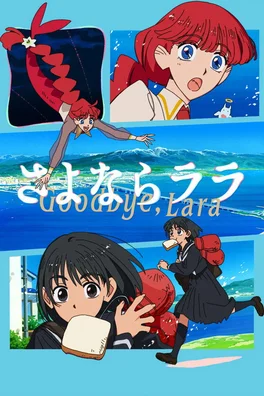
In the opening scene, when Lara is being born, her sisters already know that she’s going to be a princess, but argue about if she will be a blue or red, as if mermaid gender is colour-based, and her father seems like the only clearly male mermaid around. Grace, witch, social outcast, is both red and blue, and in fish form she appears to be a male betta fish and while the show can’t use anything owned by Disney, Grace’s heavy makeup feels suggestive of Ursula, famously based on a drag queen Divine. Even the name is suggestive of a connection. And similarly, Kota, judging from his size, appears to be a female anglerfish, while being very small as a human. It’s not really textual, but there are strong trans undercurrents flowing through the story. And that’s not even to mention the obvious parallels of suitors being disgusted when they find out the biology that Lara and Grace were born with, and learning to be vulnerable and open yourself to love despite fear of hurt and hatred and defiance of what the world says that you should be.
The show in general is gorgeous, funny and sweet. I really love Lara and Mari. I was expecting the ending to be much more harsh considering some comments I’ve seen about it, though I must admit it was strangely flat compared to what came before it, refusing to give the straightforward happy ending that was obviously being promised. Lara rejecting having to be defined by orthodox ideas of “true love” does make sense for her, but as Mari herself points out it’s a strange turn for Lara to say all that cringe shit about wanting to live in a world with her and then just fuck off to find herself afterwards instead. The final tension is never really resolved, just left to sit until we cut to black, with the audience feeling as lost as Mari is, with her own heart having been pierced through with neither the closure of the love being fully consummated nor having her heart completely torn out.