
I have been watching Goodbye, Lara with @scrublordnito@tech.lgbt and she is making fun of me because I want to go visit places that are shown in the show.
I have been watching Goodbye, Lara with @scrublordnito@tech.lgbt and she is making fun of me because I want to go visit places that are shown in the show.
Vols.: Ⅰ, Ⅱ, Ⅲ, Ⅳ, Ⅴ, Ⅵ, Ⅶ, Ⅷ, Ⅸ, Ⅹ, Ⅺ, Ⅻ, ⅩⅢ, ⅩⅣ, ⅩⅤ
I find myself feeling rather inarticulate this afternoon as I sit down to write this, so my comments on each piece shall be brief.
Sandustry is probably the first factory game I've played that really communicates the physicality of industrial waste, the appalling magnificence of it, for all the dinkiness of its 2D artstyle. It's the only factory game that really makes me think of post-industrial landscapes, like those colossal spoil piles above Aberllefenni. It also engineers a weird exuberance inside the concept of 'byproduct'.
It’s been added to my Steam wishlist.
I gestured briefly at the PASSTHRU folder earlier, but I really want to dig deeper into that because this is something very cool. I said before that when you're connecting to a BBS like this, you're connecting to one system rather than the internet as a whole. This is a bit of an exception to that. FirstClass had support for what they called "relays", which allowed BBSs running the same software to talk to each other and exchange messages. It wasn't a realtime connection; this still isn't the internet. It's a little bit more like snail mail. The servers would sync with each other every day, or once every few days, fetching new replies in the conferences they were sharing and transmitting any replies that had been made from a different server. It's quite a bit more "slow internet" than we'd probably tolerate today, but in the pre-internet era the idea you could be talking to these other communities at all would have felt revolutionary.
A really interesting look at early digital communication.
A little over a year ago, I published a post (“I wasted $410 recreating a fake website that shows up for 10 seconds of a TV show almost no one remembers “) about having re-created a website that showed up for a few seconds in an episode “H2O: Just Add Water”. In the title I described it as “…a TV show almost no one remembers”, which was evidently incorrect, because after posting on Mastodon I discovered that it seemed to be widely known amongst German audiences.
There’s one more fake website that appears in H2O: Just Add Water: greekmythicalcreatures.com
This is just very cute.
To understand why every machine since Gutenberg has wrestled this script and mostly lost, you need one structural fact: Arabic is cursive always. There is no print-versus-handwriting distinction, no block letters. The letters connect in stone inscriptions, in manuscripts, in metal, on screens. Each letter therefore changes shape depending on its neighbours (an isolated form, an initial, a medial, a final), and six letters refuse to connect forward at all, which breaks words into joined clusters and gives the script its rhythm. The shapes are not costumes over some underlying "real" letter. The positional variation is the letter.
Really good read on the history of digital typography for Arabic. Seen from Natalie Weizenbaum sharing it. Speaking of…
I really do think you should learn to use the Linux (or Mac, I suppose) command line if you can find the time at all. It is, genuinely, a dramatically more empowering way to use your computer than the alternative, and it will enable to think about your computer as a tool in ways that are completely different.
Cocosigning this post and Weizenbaum also gives a nice quick primer of navigating the command line.
If we were to go by actual lines of code, generated projects easily contain over tens to hundreds of times more documentation and code than human-made ones do. This is intentional by design: the AI companies do not want these projects to be maintainable by anything but their tooling, so you'll have no choice but to keep paying them to work on it.
A good Reddit post from an accomplished game modder on the problems of maintaining or working with generated codebases.
Unlike, say, Brexit which had rights implications but could point to democratic inputs (however flawed), nothing in the story I told above was backed by any democratic input of any kind. In fact, all of it was elites acting in explicit defiance of the democratic inputs they did receive.
Buckle hammers home how utterly undemocratic the movement against trans rights in the UK is.
The oft-used phrase, squeezed middle, may indeed apply here – not in the mainstream media meaning of cost-of-living and prices, but rather in terms of position-of-production and power. There is of course a qualitative difference between a pushbike and heavy goods vehicle, but when seen in terms of mode and relations of production that difference somewhat fades.
A Marxist analysis of the class position of the Irish fuel protests from earlier in the year.
Protection of the property-owning class has been the water that Irish politics swims through, invisible to its fishy participants but explaining nearly everything. It is why our housing crisis exists and why it cannot, apparently, be solved. Solving it would mean a political evolution on a scale of growing legs and lungs and actually climbing out of that water.
An essay on the class priorities of the Irish governments of the last century.
Last week I researched the first labor strike in known history. The tomb builders living in a town called Deir el-Medina in Egypt went on strike on November 14th, 1152 BCE. Three thousand, one hundred, and seventy-eight years ago. And their strike looked an awful lot like ours today. They set down their tools and staged sit-ins, they blocked roads, they marched, they engaged in workplace sabotage. They wrote letters to the authorities requesting a redress of grievances. They stole from work. They did everything that we do today.
And a meditation on labour struggle throughout history.
The Jesuits proposed an invasion force to be spearheaded by 10,000 Spanish and Portuguese troops, augmented by 6,000 Filipino auxiliaries and between 5,000-7,000 Japanese Christian mercenaries, leading a two-pronged invasion through Guangdong and Fujian.
A part of colonial history that I had no idea of.
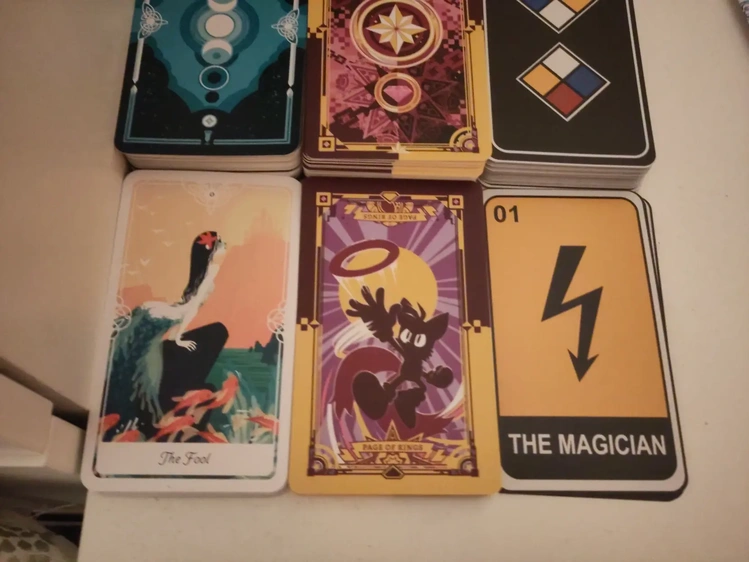
I have started doing tarot to gather my thoughts in the morning. I have three decks.
Vols.: Ⅰ, Ⅱ, Ⅲ, Ⅳ, Ⅴ, Ⅵ, Ⅶ, Ⅷ, Ⅸ, Ⅹ, Ⅺ, Ⅻ, ⅩⅢ, ⅩⅣ, ⅩⅤ
Your musical entertainment:
A look at how creative decisions and compromises get made on a movie set.
You see, there’s a scene in that movie that tormented me, that kept me up at night, and that lately has had me interrogating a wide variety of seemingly devoted, and certainly well-compensated, filmmaking professionals. That’s because the bird in Charlie’s Angels is, I believe, the wrongest bird in the history of cinema—and one of the weirdest and most inexplicable flubs in any movie I can remember. It is elaborately, even ornately wrong. It has haunted not just me but, as I’d later learn, the birding community at large for almost a quarter of a century.
My clone recently discovered Worst Girl Games and has been having a time of it. When I played it I actually didn’t click with Heaven Will Be Mine nearly as much as We Know the Devil but Caoimhe’s words on it are making me want to revisit it.
Heaven Will Be Mine is short and sweet. A full playthough is roughly five hours. Within that time, it packs a narrative of the trans struggle for identity and recognition, the search for meaning in a perpetually hostile world, the never-ending quest of humans' self-discovery and exploration, and of course cool mechs beating each other up.
Cute little list and led me to this fun interview from Bad Games Hall of Fame with Rebecca “Burger” Heineman and to revisit this interview with Megumi, the programmer of Virtual Lab1 that I had read before.
Not gonna lie I did NOT realise how long Maddy Thorson had been doing Trans-People-Can-Double-Jump Platformers before making this list. Like, I thought that Celeste was primarily her drawing from the twitchy platformer style of Super Meat Boy but as it turns out, lmao nope Not only does Jumper predate Meat Boy by sevaral years, but the lead character, Ogmo, went on to appear as a playable character in Super Meat Boy, acknowledging the influence that game had taken from Thorson's work. Like, I fully had the order of cause and effect completely wrong here.
I swear that I am not going to keep linking to blogs by lifeforms that have been bred for thousands of years to sustain themselves solely on ever-more incomprehensible Doctor Who criticism but I needed to share the chips–soufflé spectrum model of media analysis with the world.
Note how chips becomes synecdoche for an ordinary life, an inescapable pillar of the daily grind as fundamental as work, home, sleep, and commuting. Chips is what the rest of us do.
There’s an inescapable class element to this. Science fiction is often accused, with some justice, of being a middle-class genre; even when it’s militaristic our focus tends to be on the officer class. A good deal of the value of Rose in the first place is that, as a working-class soap opera type of character, she does not at first seem to belong on Doctor Who. Indeed, often that’s part of her quality: in her first episode it’s her experience in her school’s gymnastics team, silver medal, swinging on a chain, that saves the day with straightforward physicality where the Doctor’s talk of Shadow Proclamations and anti-plastic failed to hold sway. Then she’s befriending the lowly mechanics and servant girls who turn out to be key to their respective stories.
A nice little piece laying out some interest aspects of the Transformers series2 through the lens of a particular run of comics including the historically weird handling of gender and how later IDW comics corrected that.
When James Roberts began writing the fan favorite series More Than Meets the Eye, he wanted to explore the subject of Transformer romance. And if Furman said that there aren't any women on Cybertron, then, well… I guess he's been left no choice but to declare it the robot yaoi planet! His hands were simply tied, folks.
Look. If Bret Devereaux is going to keep writing articles analysing the practicalities of speculative fiction tropes I am going to keep linking to them.
Complicating this picture further are spare parts. Without the ability to manufacture bespoke spare pairs at scale, keeping these vehicles in operation is going to be very difficult. So we ought to expect to see, alongside an emphasis on fuel efficiency, a preference for robust, easy-to-maintain platforms that use widely available civilian vehicle components, rather than hard to source or scavange military components. After all, asking your local junk mechanic to service the AGT1500 gas turbine engine in an Abrams MBT is going to be a pretty big ask, compared to finding the parts to fix the engine of yet another Toyota pickup.
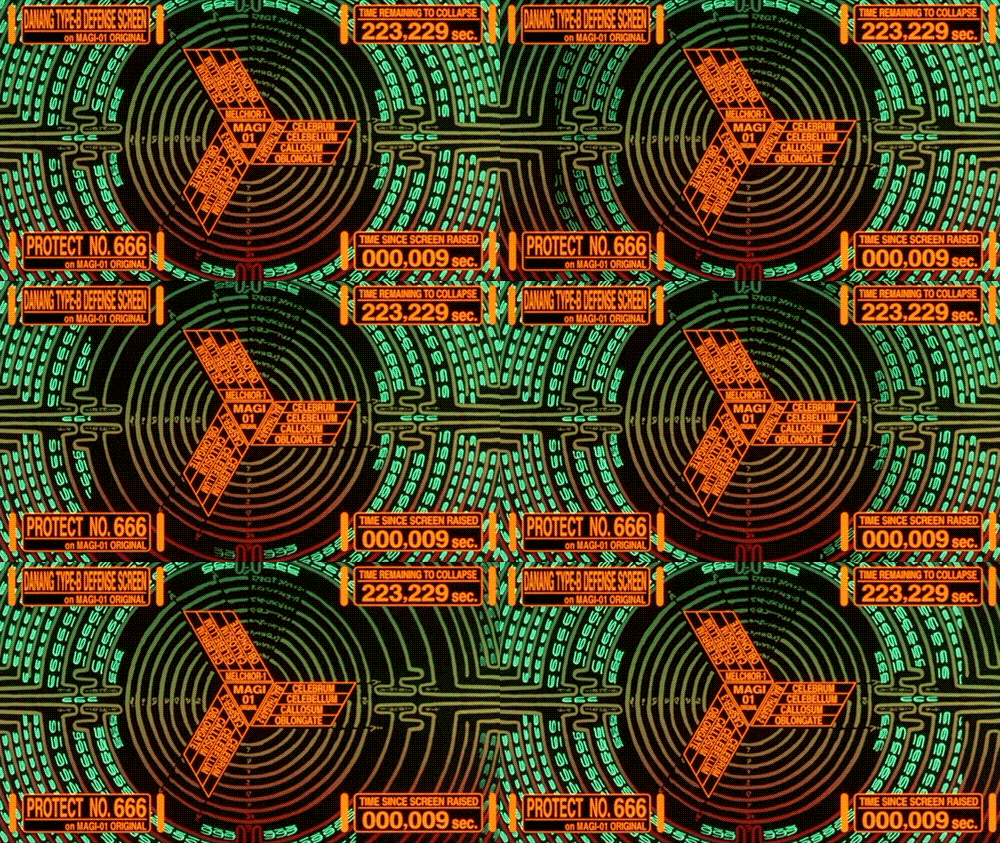
Damn now I want a vector-based display again.
Everyone who works with interfaces should be looking at these and asking themselves why interfaces don’t look like this. Where did we go so wrong? Where’s the big fuckup where we ended up with like, windows 95 instead of this shit? This is something I have devoted untold and definitely irresponsible brain space to. And honestly, the best answer I have is very simple, but I think also a kind of interesting look at how our tools shape the designs we make.
Wijers doing an extremely important job 🫡
When I watch TV and movies, I sometimes notice web addresses. I’ll usually note them down, and look them up later to see if they’re registered. In most cases, they’re registered by the studio or network or whatever and just redirect to their site. AMC, for example, keeps www.savewalterwhite.com up from Breaking Bad (now 12 years after the series ended, as of the time of writing), and www.cometlist.net up from Halt and Catch Fire.
Quite an old one but recently linked to by Tina. What if your scanned just randomly changed numbers around in the scanned image? What multiple models of scanners from the largest manufacturer in the world did that for years without being fixed? There is also an accompanying video.
In this article I present in which way scanners / copiers of the Xerox WorkCentre Line randomly alter written numbers in pages that are scanned. This is not an OCR problem (as we switched off OCR on purpose), it is a lot worse – patches of the pixel data are randomly replaced in a very subtle and dangerous way: The scanned images look correct at first glance, even though numbers may actually be incorrect. Without a fuss, this may cause scenarios like:
- Incorrect invoices
- Construction plans with incorrect numbers (as will be shown later in the article) even though they look right
- Other incorrect construction plans, for example for bridges (danger of life may be the result!)
- Incorrect metering of medicine, even worse, I think.
First of a series of posts on this blog dealing with the hell that is trying to use Linux while blind.
Linux claims to support blind users here. It even ships the tools. But using them? Getting speech or braille output when you need it most? That’s a punishing mess of driver quirks, missing defaults, audio stack failures, and layers of modern regression hidden under the surface.
Anubis is a piece of software that has become popular for helping block unfriendly crawlers that have been overloading a lot of sites to grab data for neural network training without care for the damage they are doing to the web. It also has an cartoon character mascot that has proven useful for weeding people who like being dismissive pricks.
At some level, I use the presence of the Anubis mascot as a "shopping cart test". If you either pay me for the unbranded version or leave the character intact, I'm going to take any bug reports more seriously. It's a positive sign that you are willing to invest in the project's success and help make sure that people developing vital infrastructure are not neglected.
Seen via a post by Fabio Manganiello going further into Bell’s treatment of people compared to what companies and academia both demand of them now, shared by Xerz and boosted by Jennifer Glauche which also inspired the next post by Elilla.
Reportedly, Kelly and others would hand people problems and then check in a few years later. Most founders and executives I know balk at this idea. After all, "what's stopping someone from just slacking off?" Kelly would contend that's the wrong question to ask. The right question is, "Why would you expect information theory from someone who needs a babysitter?"
On the empty promises and dehumanisation of Google.
It's the little things that bugged me, how people would eat the free candy or have a bowl of cereal and just leave trash and dirty dishes everywhere for the cleaning ladies (contractors) to deal with; more than that the way nobody looked at them or said “thank you”. We Brazilians have a social class for that, a social code underlying that studied invisibility, I knew what this was: these were maids. Servants. The women in my family, my friends at school. The “campus” was pretty open and my then-wife visited it a few times; it creeped the Fuck out of her, the distinction between people and non-people.
Virtual Lab is a body-horror falling-block game that used the Virtual Boy’s 3D effects for the self-insert mascot character’s breasts. ↩
I was going to mention her talking about the distinction between the Budianskian and Furmanist modes of Transformers stories but while she does allude to this she keeps it accessible for those who don’t want to know a bunch of fandom jargon and just mentions the distinction as “robots in space” stories versus “robots in disguise” stories. ↩