

Dawn of the Dead ★★★★☆
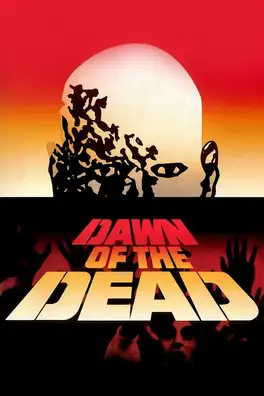
I think that I’ve seen this film too many times to even have thoughts about it anymore.
I think that I’ve seen this film too many times to even have thoughts about it anymore.
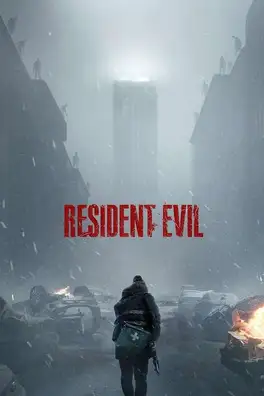
I did not realise that this was going to be a comedy. It is very funny but in a way that I am not convinced will hold up on a rewatch. Doesn’t really have the tone or style of Resident Evil that much other than throwing in a bunch of visual references and some of the mutations made me think of Slither more than the games, but there’s already been enough bad attempts at putting Resident Evil’s cast on film that doing its own thing well was a much better idea.

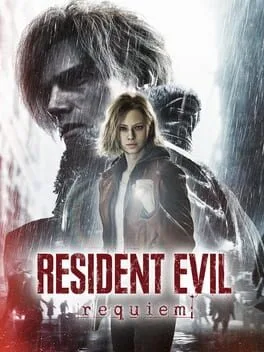
I am disappointed that Capcom did not go with my idea of calling the game Resident Evil: SⅨ, but RE9uiem will have to do instead. The next one should be called REⅩ: Dino Crisis.
Before I started playing this game I knew that it was divided into playing as Grace in first person and playing in Leon in third person, but I did not know just different the two experiences are. Leon Scott Kennedy, now pushing 50, is a zombie-killing veteran, but Grace Ashcroft, the world’s most timid and pathetic FBI agent, is having a very bad time of it. In gameplay terms on top of the different perspectives they also have different controls, inventory systems and even save systems. Grace, by and large, is playing by the rules of RE2make: Eight inventory slots with item boxes for extra storage, ink ribbons to save, makeshift knifes only as emergency measures to use when getting grabbed. Leon is playing the rules of RE4make: Parrying chainsaws and roundhouse kicking zombies to his heart’s content when not just blowing them away with an arsenal of guns in his big attaché case inventory.
My only experience with first person Resident Evil prior to this was the teaser demo Resident Evil 7: Beginning Hour, so skulking around as Grace was new for me, or rather something that at first feels something more like Penumbra than Resident Evil, and not because of the first person perspective. As the player initially begins exploring the Rhodes Hill care centre Grace has no means of defending herself from the recently zombified staff and patients, and even when weapons are acquired, ammunition is very, very scarce. There is a satisfying power curve as one explores, opens up new areas, new resources and slowly gains the means to fight back. The crafting system is made a bit more interesting in this game by the fact that he primary crafting ingredient is zombie blood, which as well as being gnarly also makes every enemy a resource rather than just a drain. Zombies bleed more if you shoot their limbs off which means going for the head is not always the best option if you are low on blood but have plenty of bullets. I would like to say that this also turns the series-stable bloodstains that leak out from defeated zombies into not just an indicator that they are going to stay dead, but also a resource, but unfortunately the harvestable bloodstains are a second, different type of bloodstain that appear in addition to the normal one, making it feel very arbitrary.
Complicating matters further is that zombies don’t actually stay down. The crimson heads from the original REmake make their return in the form of blister heads; mutated, more dangerous zombies that arise from enemies you have killed but failed to destroy their head. Disposable anti-zombie juice injectors can be made and used to destroy bodies or sneak attack unsuspecting deadites, but they are a drain on limited resources and zombies killed this way never don’t leave usable blood behind.
After thoroughly exploring the care centre as Grace, Leon steps in to clear the place up. Playing as Leon is all about empowerment. Playing as him it is a breeze to mow down a room full of zombies in the time it would take Grace to deal with a single shambler. If he is sneaking around it is not to avoid fighting but to land a easy stealth takedown, decapitating a zombie before it even realises that he’s there, and while Grace might want to avoid killing enemies lest they come back as blisterheads, Leon is rewarded for killing as much as possible. I complained that the RE4make hardcode mode was a little more difficult than I would have preferred, but RE9uiem’s classic difficult, the hardest available before completing the game, often felt a bit too easy. Getting to explore the same space again in this radically different style, clearing up everything Grace left behind, is really interesting at first. It felt like it might be the perfect evolution of RE2’s A-side and B-side campaigns—going through the same space again not just with a new character and story, but going into the aftermath of the previous playthrough exactly as you left it, every zombie exactly where you left them as Grace, recontextualised with a new gameplay style and incentives. Unfortunately it quickly becomes clear that Leon has very little to do in Rhodes Hill other than open a handful of doors that Grace couldn’t and go straight to the next objective. It is not a second playthrough, just a short addendum where you can mop up all the zombies that you left behind as Grace if you want. The game is not divided between playing through the same areas as Grace and Leon, instead the game is divided between playing primarily as Grace in the first half with occasional interludes as Leon and playing primarily as Leon in the second half with occasional interludes as Grace, and their ranges seldom overlap. And, while Grace’s exploration of the suspiciously and obligatorily Spencer Mansion-esque care centre was obviously returning to the style of the old games and particular RE2make, the real nostalgia tour starts once we fully swap over to Leon exploring the ruins of Raccoon City, still infested with zombies and T-virus mutants twenty years later.
There’s a lot of fun choices in how this is handled, in how it tries to honour both RE2 and RE2make. There’s a lot of nice little details that the game doesn’t rub in your face. Leon drives past the petrol station from the intro on his way into town and Leon explores the RE2make police station with a suitably post-apocalyptic makeover while music from the original RE2 provides a perfect, melancholy atmosphere. Plant 43 and a giant spider, cut from the RE2make, make their return, upgraded to full boss fights. I do think that there is a missed opportunity here, though, to reuse more assets from RE2make. In general I think that game developers should be less shy about not reinventing the wheel and just reusing what works, and I was surprised, when scavenging the ruins of Raccoon City, that the game did not switch to the RE2make models for things like boxes of ammunition found scattered around. Sure, maybe first aid sprays have been replaced by med injectors at some point in the last two decades, but why are we still finding modern looking med injectors here instead of the old spray bottles? Asset reuse would actually make more sense. Why does ARK, Umbrella’s second double secret base that was apparently under the city the whole time, look nothing like NEST? Surely they should resemble each other more than they do.
And oh yeah apparently Umbrella had a second even more secret virus research lab under Raccoon City the whole time that has never been mentioned before. Of course they did. And it has an even more awesome ultra secret virus that the bad guys have been trying to unlock for twenty years but they don’t know the password. Also there’s a guy here who looks and sounds exactly like and has the same powers as Wesker. Except don’t worry at the last minute the real final boss calls him a cheap imitation and kills him before he can do anything or have any backstory explained. Like, yeah, having another replacement Wesker was stupid and I’m glad the game backed away from that, but you could have just not had him in the game in the first place. The game becomes over-indulgent in general towards the end. Some of this is, I grant, very gratifying: A rematch with a Mr. X where Leon can now parry what was an instant kill attack in RE2make, Hunk of all characters showing up out of nowhere for a knife axe fight, being able to unleash a licker on Umbrella goons and then do a silent takedown on it, but it also has that Resident Evil brand of over-complicated conspiracy nonsense.
The series has stepped away from the zombies as War on Terror framing of the 2000s and 2010s, but it has not left politics behind. The US, turning more isolationist, has pulled out of international anti-bioweapon treaties and the bombing of Raccoon City was revealed to be collusion between elements of the US state and private interests, but it is still firmly in the conspiracy theory mode. The president was definitively not in on it and it all revolves around some kind of new, boring, even more secret conspiracy behind Umbrella called The Connections that was apparently introduced in RE7 and now has to be retconned into everything else. Can you tell that I don’t care for the plot of this game very much?
This is all part of the biggest frustration I have with RE9uiem despite it being mechanically excellent: RE2make drew from across the series to make a complete whole. RE9uiem wants to be a sendoff to and revisit of the REmake series, similarly drawing from what came before, but fails to cohere in the same way mechanically and also refuses to actually close the door on anything. Leon does not, as one might expect, actually pass the torch to Grace to let her be part of the next generation of heroes; her mechanical climax happens halfway through the game and he final act is to enter a password before sitting on the sidelines and letting Leon fight the final boss by himself, any closure with Umbrella is undermines by the reveal of the real conspiracy behind it all, and also, despite it barely mattering to the plot at all, the idea of memory transference is introduced so now Capcom have a built-in excuse to bring anyone back from the dead if they want. And it also fails as a requiem for the REmake series because they’re still making more of those anyway.
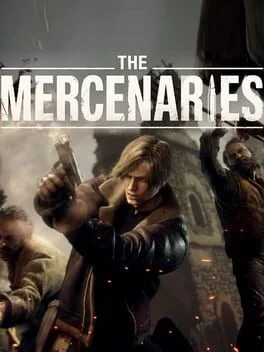
I was quite bad at the original Mercenaries and in comparison this feels far too easy, even putting aside the silly mayhem mode powerup win button. But it’s a bit of mindless fun and the different movesets all the characters get are nice to play with.
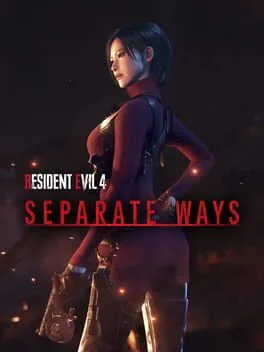
It’s funny how this works to siphon off Wesker and a few other sillier elements of the main story from the original game away from the slightly more serious RE4make, but it ends up over-egging the pudding in that regard. It makes up for having Wesker mostly absent in the main campaign by having him far too much here. If he’s just going to show up in person and help out on the mission why did he even hire Ada in the first place? It makes him look less like the big, scheming mastermind that he’s meant to be and makes Ada look incompetent.
Otherwise I do appreciate Ada and Luis’ plot both being expanded on a bit and the unique fights on offer here. Ada’s long range grapnel attacks and low health pool help to differentiate her a bit more from Leon than she was in the original, and better use is made of her ability to traverse the environment with the grapnel gun than the original as well, though its still very inconsistent which ledges are flagged as hookable and how much freedom it affords you. She feels like an awkward middle ground between normal RE4make gameplay and a highly restricted Arkham game, a feeling not dissuaded by some rudimentary detective vision puzzles sprinkled throughout her levels.
It might sound strange to say but I think that the Resident Evil 2 RE2make actually felt more true to the original the the Resident Evil 4 REmake does. Part of this is, amusingly, that the RE4make feels like a much more natural followup to the RE2make than the original RE4 did to RE2. This starts with the new intro, which acts as a much more reasonable bridge between the two games than the original did, but continues with RE4make’s darker, somewhat more serious atmosphere. But a large part of this is also that, while RE2make took in elements from across the series to construct something that captures Resident Evil as a whole, RE4make feels much more directly influenced by the modern action game milieu than RE4 is the grandfather of. Parrying, stealth, silent takedowns, crafting, sidequests—RE4 has elements of or precursors to all of these things, but RE4make’s versions of these systems would slot neatly into any pretty much any current high-budget action game. Don’t get me wrong, these are very polished, work well and mostly work very well with RE4’s existing systems, it’s just it can feel disappointingly generic at times, especially diving into menus for the crafting systems (and the treasure system is kind of annoying) or equipping trinkets for dull little incremental bonuses.
The basic plot has not been changed much, less than RE2make’s was I would say, and keeps the B-movie charm while taking the characters more seriously and pushing aside the very post-9/11 America, world police angle. Ashley and Krauser stand out as the biggest improvements. The former acts less like a teenager and is made into a genuinely fun character (her enthusiasm in the shooting range minigame is great), and Krauser is much better integrated into the overall plot and pacing of the game instead of just showing up out of nowhere towards the end, and his awful QTE cutscene boss fight is instead turned into a really great test of the player’s mastery of parrying.
I am not as fond of RE4make extending its attempts to make the plot make more sense extend to the merchant, though. He is (they are?) intriguing as a character in the original in so far as he is a gameplay contrivance that makes no real attempt to justify itself. He is just this weird bog pervert who buys treasures off you and upgrades your guns. RE4make attempts to justify him as an agent actively working against Los Iluminados, cheering you on and giving side quests to clear up various messes made by the cult. This really just raises more questions than it answers, none of which are ever going to have sensible or satisfactory answers. Ada’s new voice direction is also quite jarring.
The game suggested that fans of the original play hardcore mode and I obliged, but I think I might have actually preferred a lower difficultly. It’s a tough game and often much more hectic and reactive than the original. Enemies are more complex and more unrelenting than the original and it feels like different types of enemies with their own concerns and mitigation strategies are thrown at you together earlier and more frequently. While combat in the original was often about careful positioning and crowd management, the RE4make was much more often pushing me into panicked, reactive, survival mode. That is to its credit, it’s in many ways more of a horror experience, but the fear of dying is blunted quite a lot by actually dying over and over again.
It was easy for me to be cynical about this game going in and assuming that it would be taking a wonderful game and throwing out the things that made it special in order to make something acceptably modern, but the RE2make is a wonderful game that doesn’t just update the original game but pulls elements from across the entire series to make a perfectly designed synthesis that feels modern because the DNA of the Resident Evil series runs through modern action games so much. Gunpowder returns from Resident Evil 3 to provide some flexibility in the punishing scarcity of resources, Resident Evil 4’s knife is combined with the subweapon system of the REmake of the original game to act as both desperation weapon and lifeline, and the game blends the basic action controls of Resident Evil 6 with the dark, horror atmosphere of Resident Evil 7. Being generous I could even credit Resident Evil 0 with the convenience feature of showing items you’ve passed by on the map.
That feature does feel quite necessary though, as the densely detailed environments can make it easy to overlook important resources. I tried briefly to play with the heads up display disabled but between missing things constantly from the lack of interaction prompts and it removing crosshairs entirely it was too much for me on top of playing with hardcore mode on. I would have appreciated a little more granular customisation in display elements and difficult modifiers similar to how automatic reloading can be disabled (which I also did). The risk and tension of dying is great but ruined by actually dying constantly. Lack of checkpointing in hardcore mode can also be sometimes frustrating with multi-stage setpieces that include instant deaths. Amusingly in trying to recapture the survival horror experience some convenience features that were present in the original game have actually been removed. Keys and ink ribbons must be selected from the inventory rather than being used automatically and you are no longer automatically prompted to discard key items that have been fully utilised.
That core tension of balancing scarce resources is still the heart of the game. Weapons, ammunition, keys, health, inventory space and (in hardcore mode) saves need to be weighed constantly against known and unknown risks ahead. Zombies are legitimately scary and a large part of that is the uncertainty in facing them. Sometimes a single lucky shot with the basic pistol will be enough to pop one’s head open, sometimes they can take an entire magazine to the face and barely flinch while both you and the player character scream curses at them, and their staggering and sudden lunges can make them very tricky targets when they close the gap, which they can do with surprising speed. It is still possible to weave past them, but is much more to do difficult than it was in the original game, and sometimes they will not notice you at all if you sneak past them slowly enough. Tiptoeing around oblivious zombies, past sleeping corpses, or under the powerful, fast, but blind licker clinging to the ceiling is a wonderfully tense experience, sold not just by the gameplay but the lighting and incredibly detailed animation work that that responds to exactly how much or how little the analogue stick is gingerly nudged forward.
I am not one to gush about graphics too much but I must admit the game does look fantastic. Locations are redesigned in a way that feels true to the original game while being more detailed and realistic while still being being readable gameplay spaces. The changes that are made are interesting and almost all contribute to a more serious, even more tense atmosphere than the original. The original FMV intro is expanded and reworked into a slower, more tense tutorial area and the original opening gauntlet repurposed as an interstitial space that is traversed after leaving the police station for the first time and some of the sillier and more annoying enemies in the original game have been replaced with things that are much scarier. I do miss the grungier, more industrial version of Umbrella’s labs, though. Other elements that were a little half-baked in the original get expanded on, with Sherry and Ada getting more unique locations for their sections, though Ada’s detective vision puzzles are the one thing in the game that felt quite derivative.
What scant characterisation there was in the original game has been focused on, with Claire’s optimism and Leon’s naïveté emphasised, Annette made into just the worst mother, and Ada being genuinely manipulative. One odd note in the story is that Leon and Claire run into each other even less than in the original game, leading to them barely interacting at all. I suppose that in a story that is trying to be more grounded them splitting up for no good reason after meeting up again would chafe a bit.
Overall just a fantastically stressful reimagining of a classic game.
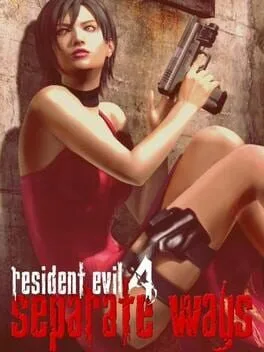
Assignment: Ada is a funny thing to exist to Separate Ways of which it is sort of a prototype version of: A mini-campaign staring Ada that ramps up the pressure and difficulty to deliver a very condensed version of Resident Evil 4. It does have a few things going for it: Short and sweet and with Ada dressed in something less silly than her normal dress, I also like how rather than your inventory expanding as it progresses the samples you collect take up space that could be used for healing items and grenades, forcing you to rely less and less on them as get out of jail free cards and feels in some way like a welcome callback to the earlier games. The final boss being Krauser who appears out of nowhere running towards you in a short cutscene because they didn’t want to record new voice lines for this is also very funny and jarring and reminds me more than anything of watching my friend Ruby play through the main campaign with a randomiser and having Krauser repeatedly show up to replace various minibosses, including a dozen of him showing up in the garrador cage match room, though I did struggle with how much damage he takes to put down without having an upgraded revolver to blast him away with.
Separate Ways itself is a fun little condensed version of the game, but its attempts to tie itself into the main story are comical more than anything else. Having to do puzzles in reverse and place the items that Leon will later find is cute, but also calls attention into all the other ways in which Ada running through these areas and clearing them out immediately before Leon comes along to do so again. Sure, there was another gigante there that Ada killed before Leon arrived to fight one in the same place. Even worse is the areas where you can see or hear Leon in the next room fighting off hordes of ganados, while Leon and by extension the player were completely obvious to Ada doing the same thing. Her grenades apparently explode at a frequency that Kennedys cannot hear. Being a side story in a series that doesn’t tend to treat it female characters very well also means that beating the final boss of course results in getting captured anyway and your final moment is running to grab a rocket launcher to throw to Leon.
I appreciate there being a couple of new areas but the level design relies on Ada’s contextual-sensitive hookshot points for navigation that are not very clearly signposted. The battleship area in particular is a nightmare of being unclear where to go while being absolutely bombarded with bullets and bombs that make stopping to take in your surroundings quite difficult.
It’s amusing how Resident Evil 4 starts with a recap of the previous games when absolutely nothing that follows has anything to do with those plots at all other than the name Umbrella getting occasionally thrown around towards the end. The plot actually makes far less sense if you have played the previous games in the series (and, like me, not played any of the spinoffs). Why is Wesker not dead, why is Leon not reacting at all to Ada not being dead, and who the fuck is Krauser? If you’re coming in without prior knowledge you can assume these characters and their dynamics with Leon are well-established and not bafflingly out of place.
Coming straight from Resident Evil 2 had another problem: Run being on ⨉ and fire being on ◻ kept messing with my muscle memory and for a while when enemies were about to grab me my instinct reaction was to aim and slam the reload button, locking me in place while they were free to get me. Other than that the gameplay, while an obvious departure from the previous games, does, I think, have more commonality than is immediately obvious and that did not necessarily carry over to the general, still-ubiquitous third person action game formula that Resident Evil 4 established. There is still the tension of resource management and balancing supplies of ammunition and healing against current threats, picking off enemies with precise targetting and knife attacks and managing crowds with careful staggering and mêlée attacks, or just blowing crowds away with grenades and and shotgun blasts. It’s a more fluid and dynamic ebb and flow of tension, the game trying to keep you hungry but not starved with its random drops and dynamic difficulty, but trying to figure out how to handle the relentless pressure of hordes of ganados is not a completely alien calculus compared to trying to clear a hallway of zombies by baiting as many as possible close at once and them aiming up with a shotgun blast to try and decapitate as many as possible at once. And while the fixed camera is (mostly) gone the tight field of view still creates large blind spots that need to be accounted for and manage. It’s quite easy for enemies to sneak up on you if you’re not listening out for them. Keys no longer take up inventory space and don’t contribute to inventory management concerns, but keys and puzzles still play an important part in pacing and allowing movements of rest between big fights.
Even tonally the game isn’t as much as a departure as is often stated. As silly as Resident Evil 4 is the first game had mutant sharks, plenty of cheesy lines and a boulder to dodge right out of India Jones and the series had already been trending towards interminable conspiracy nonsense and too much character lore references. Early rereleases of Resident Evil 2 included teasers for Residents Evil 3, 0, and Code: Veronica and was already including intra-Umbrella espionage and double-crossings. Resident Evil 4 just has absolutely no grace about any of it.
Obviously it is still a very different game to its predecessors, but I think the ways in which it is inkeeping with them is what make it stand out from the action games that came in its wake and what makes it so enduring and the HD Project mod does an unbelievable job of giving a fresh lick of paint to the game while being true to the original game. The modders went so far as to track down the original sources of texture references in the game and take new photographs of them in order to recreate the original assets in a higher resolution. The bundled tweaks mod also fixes a lot of bugs and allows a few adjustments to me made for the game, including restoring the fixed camera perspective in the section of the game where Ashley is playable, something that was removed from every version after the original Japanese Gamecube release. It’s a cute little throwback but having just played Resident Evil 2 the controls here definitely don’t feel as good or work as well as the original games. I can see why they changed it in subsequent versions, but without the callback that section feels a bit more pointless.
The only other major tweak I applied was disabling quick time events purely to get past the Krauser cutscene knife fight, which is a pain in the ass and I re-enabled them afterwards. I do actually quite like the reactive QTEs that are used for dodges in boss fights in this game, it’s only the cutscene and button-mashing ones that I have a real problem with.
No one can do anything without the backup of the American government.
Perhaps the apex of Resident Evil’s post-9/11 degeneration into bizarre, international, political conspiracy, featuring a confused Ukraine standin called the Eastern Slav Republic, a former Soviet state that seems to be simultaneously an unrecognised polity that is not a member of the UN, struggling for independence from… presumably Russia?, but also has a US embassy and its own army separate from Russian forces. Within the Eastern Slav Republic’s border there is also a very ill-defined armed rebellion against “the oligarchs” fighting for independence from the republic itself, which has started using bioweapons in its fight against the state.
The confusion about what exactly is going on in this country may be because most of the film follows the perspective of Leon Scott Kennedy, an American anti-bioterrorism agent sent into the state to investigate whose understanding of the delicate political situation he finds himself in is such that he doesn’t know who the president of the ESR is. At the start of the film Leon is told that the US has cut diplomatic ties with the ESR and that he is meant to evacuate along with all of the embassy staff. Leon, being a cool guy who isn’t afraid to commit a few war crimes in order to do the right thing, decides to ignore his orders and fight a one-man anti-bioweapon war.
But the heart of the film is J.D., a rebel whose entire personality is that loves American action movies and wants to hang with his bros. He has fifty DVDs and none of them are pirated. He rules. He’s a complete dumbass and every time he is on screen he is doing something funny. I am obsessed with the little nod he gives Leon when he thinks that he’s outsmarted him and the the condescending little nod that Leon gives back. The emotional climax of the film is J.D. crying tears of blood as he dies to the bioweapon parasite that he helped unleash with the rebellion, confessing that he never cared at all about politics and just wanted to have fun with his mates.
The film continues on for a while after this with lots of action scenes of varying levels of quality and misogyny until at the climax everything that Leon and the rebels fought for in the end is rendered entirely pointless because the US and Russian military launch a joint invasion of the ESR and easily walk over all resistance, having already learnt that the ESR’s president was the one developing bioweapons and handing them over to the rebels as part of a plot to wipe them out and gain legitimacy. Leon gives a speech to a suicidal man about how once you’re a soldier you have a duty to live for the people who died alongside you and then shoots him in the spine.
J.D. is so right action movies rock.
Playing old pre-rendered games in a high resolution on a modern display looks wrong. The models rendered so much more crisply than the backgrounds stand out like an actor on a bad green screen. Instead of any PC port I played the Dual Shock version of Resident Evil 2 in Duckstation with a slightly convoluted rendering pipeline: Internally rendered at ×3 original resolution, downsampled back to the original resolution for some anti-aliasing on the models, then displayed at 2,880×2,160 with a CRT Royale shader to help smooth out the rough edges of the picture more and blend the characters and the world together. And the game still looks great, especially with this presentation. I love the messy, run-down, industrial backdrops of the game. Just enough clutter and noise on everything to give it a huge amount of texture while still being readable. There’s some great body horror done with the models as well. G’s transformations are wonderfully gory.
The fixed camera angles and pre-rendered don’t just look good and are not just solve a technological problem as a way of representing a three-dimensional environment in much higher fidelity than would otherwise have been possible on the hardware, they create a bold style that holds up strongly and allow for some wonderful dramatic framing allow important gameplay elements to be highlighted by the camera itself. Catching a glimpse of a licker for the first time crawling along the outside of a window, only to go into the next room and be met with a high-angle shot of the player character through another window from outside, as if being watched and stalked by something, is particularly memorable. There are some awkward angles and cheap out-of-frame ambushes, but it is more than worth it for the experience they bring and clear sound design and characters automatically looking towards points of interest usually gives one more than enough context for what is off screen.
The tank controls are great. I will not wrap this up in talking about them as “of their time” or a compromise. They are not awkward; they are a fluid means of navigation and with some practise weaving through zombies with them is a joy. Not that they are easy or that I have mastered them—they take concentration and dexterity and I still got bit plenty of times. Safe navigation is part of the challenge and part of the tense calculus of the game. Health, ammunition and inventory space are precious resources and every excursion must be balanced against this. You can save bullets by risking running through the horde, you can take health sprays to mitigate any damage you might suffer from a misstep or from getting corned by a mutant you weren’t expecting to encounter, or you can travel light to maximise the amount of resources you can gather in the field. At least one or two inventory slots given over to keys that are needed to progress, one for a weapon, another for bullets. That’s half of your carrying capacity taken up already before you even bring along any healing items and you will want to be able to bring back any extra resources you can scavenge.
I love how this unpacks as you go through the game. Pressing into the darkness, learning what threats might lurk around each corner, building your mental map of the world. Where are the sa[fv]e rooms? Your home bases, points of refuge with a save point, storage chest and calm, comforting piano against a dark, brooding backing. You learn the layout and safe routes, turning from timid exploration to guided, intentional missions with specific objectives. Zombie hordes are not something to be eliminated without thought, but carefully managed and culled to allow safe passage. The zombie-infested police headquarters slowly becomes familiar operating territory, though it also evolves as you do; zombies spilling into once empty hallways, while lickers crawl their way into once-empty rooms.
I was surprised, though, to be reminded of just how much the game immediately throws you in at the deep end. I played this game many times as a child, but this is my first time coming back to it in two decades with the REmake of the original being my more recent baseline of the fixed-camera Resident Evil games. Here you do not get a slow buildup to seeing your first zombie, you are simply thrown straight into a gauntlet and if you haven’t already played the first game then you must quickly learn to dodge past hordes of the undead before you can earn your first bit of respite.
After the police station the game turns more linear than I remembered. Even the Umbrella laboratories, while it has some back and fourth, do not have the interconnected layout of of the police station. There’s generally only a single route between any two points and some key items are simply left adjacent to where they are needed. This was somewhat disappointing and can feel like the game is running out of steam but it does play into the escalation of action that is taking place, which itself is already much heightened from the first game. Even outside of the opening gauntlet I was surprised by how many zombies this game throws at you from the get-go and the sheer tankiness some of them can have—the inconsistency in how many shots it can take to kill things and how often they play dead is also something one needs to take into account in one’s risk calculus.
I played Leon’s A-side campaign first followed by Claire’s B-side. Surprisingly the second campaign starts off much less stressfully. The path to the police station is a gentle stroll compared to the opening of the first scenario and the headquarters welcomes you in the back door like an old friend, opening its now-familiar corridors to you much more quickly than the first time around. Less time is spent juggling keys and the safe combination isn’t even changed; if you remember it you can grab some ammo and the map for free without even finding the corresponding memo again. As you’ve already peeled apart the station layer by layer the game throws a different challenge at you instead: Mr. X, the first of the Resident Evil series’ signature pursuer enemies, who scared the shit out of enough as a child that, although my memories of much of the game were vague, every time I reached a room where he was scripted to crash through a wall I would be filled with a deep, old dread and have to pause for a moment to gather myself. Playing as an adult he’s much less of a threat—another obstacle among many to duck past—but he’s still effective and intimidating.
Conversely to its surprisingly straightforwardness in the A-side, the later levels introduce extra twists and turns as the actions of the previous protagonist complicate the route to and through the Umbrella labs, a wrinkle that I had not remembered and quite appreciated. It’s still less exploration than the early game, but I appreciate that game continuing to throw surprises in what otherwise would be a retread of familiar ground.
There appears to be a consensus online that the Claire A-side campaign followed by the Leon B-side (the opposite order to how I played it) is the more “canon” order and I can also see how the story would fit together better thematically as well that way. Claire’s less-standard, more improvised-feeling arsenal feels appropriate to a first playthrough (as does the grenade launcher not requiring a separate inventory slot to hold its ammo supply) and a stronger focus on the G-virus mutants for Claire and Sherry’s story fits better. And where X feels redundant as a second giant monster chasing Sherry, he fits a bit better into Leon and Ada’s corporate espionage focus. I don’t intend to play through the game again right now, but if I get the urge to replay hopefully I’ll remember to do the other order.

This movie is just so incredibly fun. I love the punks, the soundtrack, the effects, the tar man. So many great and funny moments that I was excited to see my partner experience for the first time while watching it with me. So memorable that it managed to single-handedly ruin the idea of zombies in the public consciousness as guys in tattered suits rising from their graves and shouting for brains.
Well whatever they’re here for, it’s turning into a riot. Maybe they are just here for control. If they can turn a campus protest into a shooting war…
I don’t think I noticed how much this film is about the Vietnam War the first time I watched it. The depiction of the military, the imagery of the flamethrowers and the self-immolating priest, the inability to distinguish “civilian” and combatant and the callous disregard for life that makes everything worse. It is, in part, the Vietnam War visited upon home soil.

Let them stay upstairs. Let them. Too many ways those monsters can get in up there. We’ll see who’s right. We’ll see when they come begging me to let them in down here.
A lot of people make the point that Cooper was right, but Cooper was only right about one thing: That the door would hold. A door that would not have been enough to save them. He wanted to shut out the rest of the world and blind himself to any understanding of what was happening in it so that he could be in charge of his own little fiefdom. He is white flight. If they had followed his plan they would not have sat safe and sound in the basement overnight till they were rescued (a rescue that was in no way guaranteed), they would have locked themselves in with no radio, no television, no contact with or knowledge of the outside world, with a dying girl they had no idea could possibly rise from the dead and threaten them from inside, with no knowledge of how to stop it.
Ben throughout the movie is proactive. He wants to bring everyone together, to work together to hold a larger space, not to confine himself to the smallest domain that he can control and shrink away from the world. When he is forced to flee the to basement he understands immediately what has happened and knows how to deal with it and it is only by other’s ignorance that he is killed in the end.
I think this cut may have been longer than versions I have seen before. I certainly didn’t remember quite so many of the television segments, though perhaps I had merely forgotten them. They are oddly out of time with the rest of the film. While the events in the house happen over the course of a single night, it the news reports make it seem like this has been ongoing for at least a few days, with segments that are clearly during the day and a shot of the posse that is about to kill Ben seemingly beamed in from the future. It’s an odd aspect of the film.

So much setup to endure but the payoff is great.
This post contains spoilers for the 1973 film The Crazies.
Several years ago Shaun (né and Jen) released a video complaining about Wikipedia’s summary of the 2014 film Ex Machina at the time. I have been holding a similar grudge about the article for George A. Romero’s 1973 The Crazies and like Shaun instead of fixing the article myself I am just going to complain about it.
The Crazies, filmed between Romero’s Night of the Living Dead and Dawn of the Dead, is sometimes described as a quasi-zombie movie. A virus called trixie, created by the US military as a bioweapon, has leaked into the water supply of Evans City and is spreading rapidly throughout the town. The military attempt to quarantine Evans City but struggle to deal with the rapidly spreading virus and the panic and violence that the virus is both inspiring and directly causing and the ambiguity of the two. I think ambiguity is an important part of the film and the Wikipedia summary, in trying to be a flat description of the plot, ends up removing that ambiguity and presenting a simple and wrong view of the story.
The virus causes mental degradation in its victims. As the current Wikipedia article puts it causes “victims to either die or become hysterical and homicidally insane.” This is, I think, the first way the article gives a misleading picture of the plot. Trixie does not simply make people into mindless killing machines, it is not the rage virus from 28 Days Later. People infected with it do end up killing a lot, but it does not necessarily inspire bloodlust: It generally seems to cause irrationality and a complete loss of moral perspective. In one scene three infected men charge towards the protagonist David, who is wearing a stolen military biohazard suit, wildly shooting at him. He tries to shout that he’s not part of the army quarantine, that he is not a threat, but when they hit Judy, a woman David was trying to protect, David returns fire, killing two of them. When the last one reaches David and sees him he simply stops, causally mutters “Hey coach, I didn’t know it was you,” and sits down without a single care about his two friends that were just killed or the woman dying in front of him and not even reacting when actual army troops show up.
People infected with it are still capable of thought and communication and this is, in fact, a huge problem and one of the core tensions of the film is the uncertainty of infection. One does not have to be hiding an obvious bite mark to be a risk in this movie and the military are in many ways just making things worse, packing everyone into the high school as an attempt at quarantine and shooting everyone who won’t comply. Within this effort a doctor named Watts, who was involved in the creation of trixie, is desperately attempting to find some sort of cure or vaccine. He hopes to find someone amongst the residents of Evans City who has a natural immunity from which antibodies can be taken but lacking that still attempts research into a cure throughout the film. He eventually develops a potential cure but is killed and the samples are destroyed in a stampede of infected townspeople breaking free from quarantine, while David realises that he is immune to the virus but decides to keep it to himself and not co-operate with the military.
That last sentence is at least how Wikipedia describes it. I disagree. Watts, throughout the movie, gets increasingly agitated, desperate and irrational. He tears off his gas mask in frustration while working on samples because it is too cumbersome to use a microscope while wearing it. He starts to see something in his samples that his colleague does not see or understand the significance of. When challenged he tells her to “just have faith.” It is very clear that Watts is acting, at best, extremely irrationally. The Wikipedia article states that he is killed in a stampede of people breaking quarantine but this is not simply a co-incidence, it is because when he runs into a group of soldiers and starts telling them that he’s a scientist they just think he’s as crazy as everyone else and shove him in with the rest of the population. Whether Watts has actually found something, is having a breakdown from stress, or has become infected either from general spread or from mishandling samples is unclear. When he dies he may losing a potential cure, but there is also the potentially worse possibility that he had absolutely nothing and now the rest of the researchers, assuming him to be brilliant, are chasing after shadows he was casting on the wall. A doctor reassures Peckem, the colonel in charge of the quarantine, that “Our boys have checked the slides [Watts] left in his microscope, but we can’t make heads nor tails of it. He was on to something. We’ll dope it out sooner or later.”
As the colonel and doctor leave, David is taken in and the soldiers ask the doctor if they want to test David for immunity. The doctor takes one look at him and dismisses him as one of the crazies. David, as the Wikipedia article notes, keeps his believed immunity to himself, cutting off a potentially fruitful route for a vaccine. That is, if David is actually immune. He thinks he is, but he has hardly been a perfect beacon of rational behaviour either. Peckem is ordered to move out to Louisville, where there are “reports of symptoms.” The quarantine seems to have failed. Though perhaps panic is just spreading as news gets around of the military rounding up the entire population of Evans City and shooting a third of them. It’s going to be hard to tell the difference between the virus spreading and the news of the virus spreading.
I think this lack of clarity is a huge strength of the film and makes the closing shot of Peckem’s point of view as he is taken away by helicopter of the light of a small, illuminated landing pad being swallowed by the darkness of the night around it much more bleak.
And the Wikipedia article is bad.

🤘🏻Love has no borders, nationalities, or genders🤘🏻
So much fun and energy in this movie. It rules. It feels like it was edited by someone’s cousin. Every once in a while the aliens show up to remind you that, oh right, there are aliens in this film.

What the fuck is this movie’s problem with women?

At last we finally know the origin story of a woman who was invented two minutes before the end of a show for a cliffhanger that was never resolved 😌
The inciting incident of this movie is a petty disgraced noble extrajudicially massacring a fifteen men who wandered into a restricted area. To stem any potential backlash a false story of tiger attacks is spread.
Some of the deads’ countrymen come to investigate this just as, by sheer coincidence, a zombie tiger just happens to go on a rampage and kill a shitload of people.
When they finally kill the undead tiger, the world’s most sceptical man cuts open its stomach and finds nothing but rotten flesh inside it, not the remains of anything identifiable, even the two dozen men he has just seen it kill and declares that seeing as the bones of his friends aren’t present in its stomach then the monster tiger story is clearly bullshit.
The world’s most sceptical yet gullible man is then convinced it was actually this innocent group of people by an official telling him “Oh yeah the tiger was a lie but we found this conveniently identifiable box from a tribe you’re related to next the bodies I guess it was them” so they kill the entire village where they make those styles of boxes.
The only survivor of this massacre is a young girl who decides to become the Joker of zombies.