

Resident Evil 2 (RE2make) ★★★★★
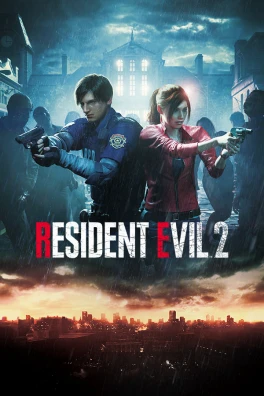
It was easy for me to be cynical about this game going in and assuming that it would be taking a wonderful game and throwing out the things that made it special in order to make something acceptably modern, but the RE2make is a wonderful game that doesn’t just update the original game but pulls elements from across the entire series to make a perfectly designed synthesis that feels modern because the DNA of the Resident Evil series runs through modern action games so much. Gunpowder returns from Resident Evil 3 to provide some flexibility in the punishing scarcity of resources, Resident Evil 4’s knife is combined with the subweapon system of the REmake of the original game to act as both desperation weapon and lifeline, and the game blends the basic action controls of Resident Evil 6 with the dark, horror atmosphere of Resident Evil 7. Being generous I could even credit Resident Evil 0 with the convenience feature of showing items you’ve passed by on the map.
That feature does feel quite necessary though, as the densely detailed environments can make it easy to overlook important resources. I tried briefly to play with the heads up display disabled but between missing things constantly from the lack of interaction prompts and it removing crosshairs entirely it was too much for me on top of playing with hardcore mode on. I would have appreciated a little more granular customisation in display elements and difficult modifiers similar to how automatic reloading can be disabled (which I also did). The risk and tension of dying is great but ruined by actually dying constantly. Lack of checkpointing in hardcore mode can also be sometimes frustrating with multi-stage setpieces that include instant deaths. Amusingly in trying to recapture the survival horror experience some convenience features that were present in the original game have actually been removed. Keys and ink ribbons must be selected from the inventory rather than being used automatically and you are no longer automatically prompted to discard key items that have been fully utilised.
That core tension of balancing scarce resources is still the heart of the game. Weapons, ammunition, keys, health, inventory space and (in hardcore mode) saves need to be weighed constantly against known and unknown risks ahead. Zombies are legitimately scary and a large part of that is the uncertainty in facing them. Sometimes a single lucky shot with the basic pistol will be enough to pop one’s head open, sometimes they can take an entire magazine to the face and barely flinch while both you and the player character scream curses at them, and their staggering and sudden lunges can make them very tricky targets when they close the gap, which they can do with surprising speed. It is still possible to weave past them, but is much more to do difficult than it was in the original game, and sometimes they will not notice you at all if you sneak past them slowly enough. Tiptoeing around oblivious zombies, past sleeping corpses, or under the powerful, fast, but blind licker clinging to the ceiling is a wonderfully tense experience, sold not just by the gameplay but the lighting and incredibly detailed animation work that that responds to exactly how much or how little the analogue stick is gingerly nudged forward.
I am not one to gush about graphics too much but I must admit the game does look fantastic. Locations are redesigned in a way that feels true to the original game while being more detailed and realistic while still being being readable gameplay spaces. The changes that are made are interesting and almost all contribute to a more serious, even more tense atmosphere than the original. The original FMV intro is expanded and reworked into a slower, more tense tutorial area and the original opening gauntlet repurposed as an interstitial space that is traversed after leaving the police station for the first time and some of the sillier and more annoying enemies in the original game have been replaced with things that are much scarier. I do miss the grungier, more industrial version of Umbrella’s labs, though. Other elements that were a little half-baked in the original get expanded on, with Sherry and Ada getting more unique locations for their sections, though Ada’s detective vision puzzles are the one thing in the game that felt quite derivative.
What scant characterisation there was in the original game has been focused on, with Claire’s optimism and Leon’s naïveté emphasised, Annette made into just the worst mother, and Ada being genuinely manipulative. One odd note in the story is that Leon and Claire run into each other even less than in the original game, leading to them barely interacting at all. I suppose that in a story that is trying to be more grounded them splitting up for no good reason after meeting up again would chafe a bit.
Overall just a fantastically stressful reimagining of a classic game.