

Resident Evil 2 ★★★★★
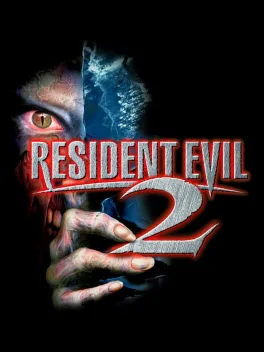
Playing old pre-rendered games in a high resolution on a modern display looks wrong. The models rendered so much more crisply than the backgrounds stand out like an actor on a bad green screen. Instead of any PC port I played the Dual Shock version of Resident Evil 2 in Duckstation with a slightly convoluted rendering pipeline: Internally rendered at ×3 original resolution, downsampled back to the original resolution for some anti-aliasing on the models, then displayed at 2,880×2,160 with a CRT Royale shader to help smooth out the rough edges of the picture more and blend the characters and the world together. And the game still looks great, especially with this presentation. I love the messy, run-down, industrial backdrops of the game. Just enough clutter and noise on everything to give it a huge amount of texture while still being readable. There’s some great body horror done with the models as well. G’s transformations are wonderfully gory.
The fixed camera angles and pre-rendered don’t just look good and are not just solve a technological problem as a way of representing a three-dimensional environment in much higher fidelity than would otherwise have been possible on the hardware, they create a bold style that holds up strongly and allow for some wonderful dramatic framing allow important gameplay elements to be highlighted by the camera itself. Catching a glimpse of a licker for the first time crawling along the outside of a window, only to go into the next room and be met with a high-angle shot of the player character through another window from outside, as if being watched and stalked by something, is particularly memorable. There are some awkward angles and cheap out-of-frame ambushes, but it is more than worth it for the experience they bring and clear sound design and characters automatically looking towards points of interest usually gives one more than enough context for what is off screen.
The tank controls are great. I will not wrap this up in talking about them as “of their time” or a compromise. They are not awkward; they are a fluid means of navigation and with some practise weaving through zombies with them is a joy. Not that they are easy or that I have mastered them—they take concentration and dexterity and I still got bit plenty of times. Safe navigation is part of the challenge and part of the tense calculus of the game. Health, ammunition and inventory space are precious resources and every excursion must be balanced against this. You can save bullets by risking running through the horde, you can take health sprays to mitigate any damage you might suffer from a misstep or from getting corned by a mutant you weren’t expecting to encounter, or you can travel light to maximise the amount of resources you can gather in the field. At least one or two inventory slots given over to keys that are needed to progress, one for a weapon, another for bullets. That’s half of your carrying capacity taken up already before you even bring along any healing items and you will want to be able to bring back any extra resources you can scavenge.
I love how this unpacks as you go through the game. Pressing into the darkness, learning what threats might lurk around each corner, building your mental map of the world. Where are the sa[fv]e rooms? Your home bases, points of refuge with a save point, storage chest and calm, comforting piano against a dark, brooding backing. You learn the layout and safe routes, turning from timid exploration to guided, intentional missions with specific objectives. Zombie hordes are not something to be eliminated without thought, but carefully managed and culled to allow safe passage. The zombie-infested police headquarters slowly becomes familiar operating territory, though it also evolves as you do; zombies spilling into once empty hallways, while lickers crawl their way into once-empty rooms.
I was surprised, though, to be reminded of just how much the game immediately throws you in at the deep end. I played this game many times as a child, but this is my first time coming back to it in two decades with the REmake of the original being my more recent baseline of the fixed-camera Resident Evil games. Here you do not get a slow buildup to seeing your first zombie, you are simply thrown straight into a gauntlet and if you haven’t already played the first game then you must quickly learn to dodge past hordes of the undead before you can earn your first bit of respite.
After the police station the game turns more linear than I remembered. Even the Umbrella laboratories, while it has some back and fourth, do not have the interconnected layout of of the police station. There’s generally only a single route between any two points and some key items are simply left adjacent to where they are needed. This was somewhat disappointing and can feel like the game is running out of steam but it does play into the escalation of action that is taking place, which itself is already much heightened from the first game. Even outside of the opening gauntlet I was surprised by how many zombies this game throws at you from the get-go and the sheer tankiness some of them can have—the inconsistency in how many shots it can take to kill things and how often they play dead is also something one needs to take into account in one’s risk calculus.
I played Leon’s A-side campaign first followed by Claire’s B-side. Surprisingly the second campaign starts off much less stressfully. The path to the police station is a gentle stroll compared to the opening of the first scenario and the headquarters welcomes you in the back door like an old friend, opening its now-familiar corridors to you much more quickly than the first time around. Less time is spent juggling keys and the safe combination isn’t even changed; if you remember it you can grab some ammo and the map for free without even finding the corresponding memo again. As you’ve already peeled apart the station layer by layer the game throws a different challenge at you instead: Mr. X, the first of the Resident Evil series’ signature pursuer enemies, who scared the shit out of enough as a child that, although my memories of much of the game were vague, every time I reached a room where he was scripted to crash through a wall I would be filled with a deep, old dread and have to pause for a moment to gather myself. Playing as an adult he’s much less of a threat—another obstacle among many to duck past—but he’s still effective and intimidating.
Conversely to its surprisingly straightforwardness in the A-side, the later levels introduce extra twists and turns as the actions of the previous protagonist complicate the route to and through the Umbrella labs, a wrinkle that I had not remembered and quite appreciated. It’s still less exploration than the early game, but I appreciate that game continuing to throw surprises in what otherwise would be a retread of familiar ground.
There appears to be a consensus online that the Claire A-side campaign followed by the Leon B-side (the opposite order to how I played it) is the more “canon” order and I can also see how the story would fit together better thematically as well that way. Claire’s less-standard, more improvised-feeling arsenal feels appropriate to a first playthrough (as does the grenade launcher not requiring a separate inventory slot to hold its ammo supply) and a stronger focus on the G-virus mutants for Claire and Sherry’s story fits better. And where X feels redundant as a second giant monster chasing Sherry, he fits a bit better into Leon and Ada’s corporate espionage focus. I don’t intend to play through the game again right now, but if I get the urge to replay hopefully I’ll remember to do the other order.