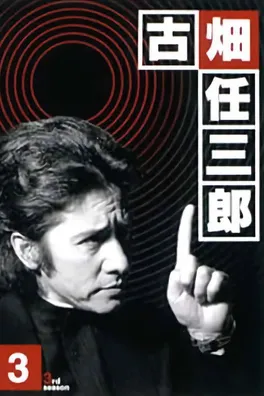
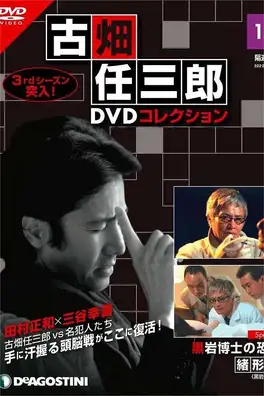
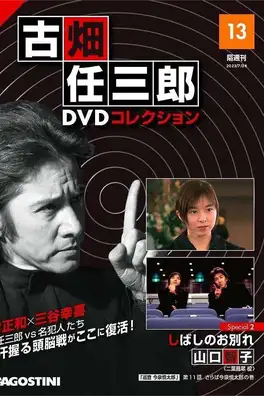
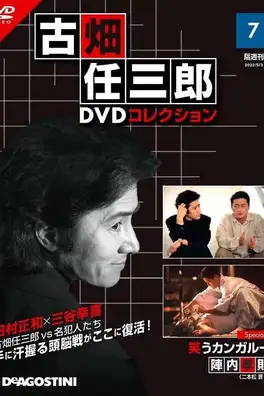
Furuhata Ninzaburō

Caoimhe

What I’m reading vol. ⅩⅣ

Vols.: , , , , , , , , , , , , ⅩⅢ, ⅩⅣ

I keep accumulating links in a drafts for these roundups and forgetting to every post them! Whoops!

I am nearing the end of Furuhata Ninzaburō so in honour of that the musical accompaniment this time will be this remix of the main theme from Dance Dance Revolution 4th Mix.


History, Sociology, Psychology

I Might as Well Explain the Joke: Underwater Basket Weaving — Grayson Davis

The first people annoyed by basket weaving were not students or faculty but soldiers returning from World War II. Basket weaving was one of many activities used in the relatively new field of occupational therapy. Weaving, knitting, and other crafts were (and still are) believed to help people with mental disorders, which included traumatized soldiers.

I have seen a few people linking to this blog now but I think I may have first saw it mentioned by Laura Michet. Davis dives into the history of terms and jokes that have become so cliché as to fade into the background of culture, their original origin or point unclear. They’re all worth reading but this one in particular shows a fascinating lens on how industrialisation changes culture and the perceived value of skills and how different assumptions that arise from those changes can clash.


Why the English stopped opening the windows — Luke Jones

The whole design of the traditional English house was based on this peculiar form of life and its associated norms of thermal comfort and management. The English preference for single glazed sash windows and open hearth fireplaces over European-style double casements and stoves was, among foreigners, a baffling but charming eccentricity, generally understood as an adaptation to the wet oceanic climate.

I am a simple girl. Give me an article on how societal conditions shape culture over time and I will probably read it.


There are no psychopaths — Rasmus Rosenberg Larsen

Today, virtually every single claim about psychopathy has been either thoroughly refuted or failed to find empirical support in experimental settings. Psychopathy may not exist at all.

It is very difficult to kill an idea, even if that idea has little foundation.


Media

M’lady Moon — Kevin Houlihan

How would an anarchist society enforce traffic laws?” and “how would an anarchist society deal with rapists and other violent criminals?”, and similar, are perennial questions in “anarchism 101” type spaces online. I read an interesting answer on the former question recently. If the goal is increasing public safety, simply demanding that people obey certain rules is not very effective.

The Moon is a Harsh Mistress is a book I have never really known anything about except its title, but I enjoyed this view into it and comparison of it to The Dispossessed and how they illustrate the difference between left- and right-libertarianism.


IDW Sonic: On Lanolin the Sheep, and the problem with Sonic Twitter — Bobby Schroeder

Another big part of the problem here is the way people engage with stories like this. (Especially young men in their teens or early 20s.) They treat it like it's not a story with ups and downs, but a sport. You root for your favorite characters, and when bad things happen to them that means you're losing.

I am disconnected from fandom spaces in general. Sometimes I catch site of a post, it often involves the phrase “it’s okay to”, that is clearly in response to some utterly baffling piece of internecine drama that reminds me that this is the correct path to follow. Similarly here, but in much greater detail, Bobby Schroeder outlines how angry fans made the character of Lanolin in the IDW Sonic the Hedgehog a central point of hate that I had no idea of. Lanolin was not my favourite character (though I do quite enjoy Adam Bryce Thomas’s little side comic with her and Shadow bonding over coffee) but the level of toxicity outlined here sounds exhausting. I do think that Schroeder might be ascribing more force to angry fans on Twitter than is warranted in motivating certain creative decisions, but it is easy to see why getting personally dragged into this stuff constantly would colour your perceptions of its impact.


Games

Becoming a Video Game Scientist Part 1: Archipelago — Natalie Weizenbaum

The core problem was this: because it was so difficult to figure out how to do anything at runtime in these games, the only thing the mod was really able to influence was the moment the player received an item. They could see which items the player was getting and replace them with something else. What's more, this didn't work with items purchased from a shop.

Interesting high-level description of making a randomiser mod.


Protagony Three: Gordon — Ian Danskin

Mapping time to space to make a subjective real time that spans a greater period than is temporally possible. Making time hyper-real. That is beyond Oscar bait. That is Golden Lion. It's not quite Palme d’Or, but it’s definitely Grand Prix. But in video games it’s basic literacy.

I am including a video and you can’t stop me! Danskins puts into coherent words some thoughts that I have had about games, and specifically about Half-Life 2, for years.


The Serious Zone

Our Visibility is Somehow a Threat to Power — Margaret Killjoy

I think this gets at the fundamental threat we pose to fascism, and to authoritarian structures more broadly. Authoritarianism relies on classification and stratification, on strict social order. Yet here I am, not only telling everyone in the world that I’m a girl, but having everyone either believe me or politely accept that I see the world differently than they do.

We are going to keep going.


Britain, the Ungoverned Country — Simon McGarr

Starmer's Government followed a plan by FG transplant Morgan McSweeney, to tack hard to the right to chase Reform on immigration, bigotry towards trans people and, weirdly, flag-shagging.

This so upset its voters that they got up and left, going to the Green party or just staying at home. It won them precisely zero votes from people who wanted Reform-style policies, who just voted for Reform.

An Irish look at British politics.


Kill Chain — Kevin Baker

Compress the time and the friction does not disappear. You just stop noticing it. Clausewitz called what unfolds when you refused to notice friction a “war on paper,” a plan that proceeds without resistance because everything that connected it to the world it was supposed to act on has been taken out.

Really good read on how automation is actually being used, the ends it is being used to justify and the failure to talk about these things correctly.


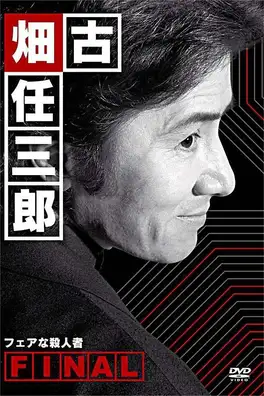
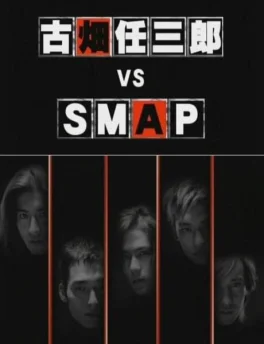
Furuhata Ninzaburō: A Fair Murderer ★★★☆☆

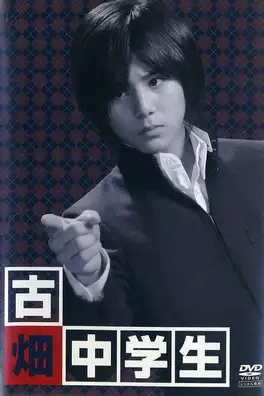
Poster.

I am surprised that in this episode of all of them they don’t bring up Furuhata arresting SMAP. Perhaps they were feeling a bit insecure about this being the second time they’ve done the murderer being a celebrity who is playing themself. Fun episode and I enjoy Furuhata being starstruck and shy for once, though Ichiro is not a great actor. Like the previous episode Imaizumi is toned down to a non-grating level of Flanderisation. The conceit of a blatant challenge between Inchiro and Furuhata is cute and suitably dramatic for a big special so close to the end of the show as a whole, though I feel like Furuhata being happy to go along with such a game feels out of character compared to his previous views on the seriousness of murder and his tactics also seem more dirty than what they really agreed to, which then makes him seem inconsistent within the episode as well.


Caoimhe

One X per year

I previously posted lists I’ve made picking one game and one film per year since 1990. 1990 acted as a good arbitrary stopping point as it’s a nice round number, it’s the year I was born and the number of games I’ve played at all from before then is pretty small, and it would be be fairly difficult to pick out shows for each year before then for me too. I’ve made a dedicated page on the site for these picks, made a few substitutions, added a pick for each for 2025 and added one series of television per year as well. All put into one table with the ability to toggle off which media you want to see selections for as well as some dynamic rearrangement based on screenspace, all done with (a horrendous mess of) Cascading Style Sheets and no Javascript.

These are not necessarily my favourite from each year. I have tried to be deliberate to give a spread of different styles and series I like as well including some weirder picks. Especially with games I spent a lot of time weighing choices for particular years based on what series I wanted to include and some years are just packed with formative games for me. 2001 has Metal Gear Solid 2, Silent Hill 2, Commandos 2 and Halo (and Grand Theft Auto 3 and Advance Wars and Worms World Party…). I eventually gave the year to Metal Gear Solid 2 after weighing up that I could have Resident Evil 2 and Silent Hill: Shattered Memories covering some bases for Silent Hill 2, Shadow Tactics was spiritually taking up a place for the Commandos series and there’s already plenty of shooters there to justify dropping Halo.

Similarly Prey is spiritually covering for System Shock so that I can have a childhood favourite Soleil for 1994 and Half-Life would probably beat out Resident Evil 2 in a head-to-head but there’s already two Half-Life games on there and I wanted it to carry the survival horror water for both the aforementioned Silent Hill 2 and for the REmake that got booted out from the previous iteration to make room for Robot Alchemic Drive. And yes after going on about carefully spreading out my choices I did give three picks to Sonic games, one to another Sonic Team-developed game and two more to Sonic-inspired indie games (and four different series of Doctor Who for the TV list). I will not be taking feedback on this.

Again the page is here and the lists are also on my Letterboxd, Serializd and Backloggd accounts as well as a second Letterboxd list covering the years 1970-1989.


Furuhata Ninzaburō S3 ★★☆☆☆

Poster.

It’s not bad but the show really doubled down on its worst parts. When the show focuses on the supporting or recurring characters it is just the same unfunny comedy every time. Imaizumi has been completely Flanderised and is almost unbearable to watch and none of the rest of the recurring cast or running jokes really add anything. The one exception is the two-part finale, a real highlight of the series, especially the first part, where the extra time gives the show a lot of room to breath and Imaizumi and Saionji actually get to do things. It is still quite good when Furuhata is actually the focus and the one recurring joke that I do enjoy is Furuhata trying to impress people by saying he’s the guy who arrested SMAP.

Sorrowful Perfect Crime/The Housewife Murder also stands out as a mean episode. I think that the writers did not intend to the murderer to be as sympathetic as I found her. They write a very striking abusive relationship where a woman’s self-esteem is constantly undermined by her husband who is trying to control every aspect of her life, and then Furuhata spends the rest of the episode proving him right and then seems to end with suggesting that she was completely delusional about her job, talents and dreams.


Furuhata Ninzaburō: The Terror of Dr. Kuroiwa ★★★★☆

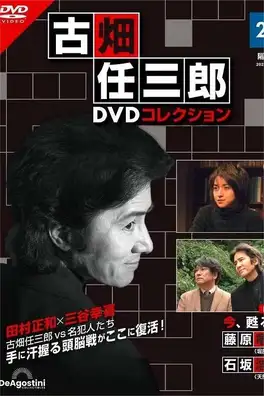
This review contains spoilers. Poster.

A bit strange to have the extended “Furuhata is back!” section when the SMAP special came out a few months before this one. Perhaps some production issue messed with the ordering? Everyone wanking him off for being so cool also goes on far too long.

But it’s a very fun case! Clever and logical (which is to say, I figured out where it was going in advance and was able to happily pat myself on the back for doing so) and plays with the format in a cute ways.

There are two different moments when they stop playing with a different genre and start the “normal” Furuhata episode: First when he agrees to take the case and they drop the self-serious pretending that Furuhata is some kind of thriller protagonist that they are recruiting from a prison cell and the second time when the first actual murder happens and he goes from having to put together clues like a normal detective and gets to step into his Columbo shoes and circle his prey.


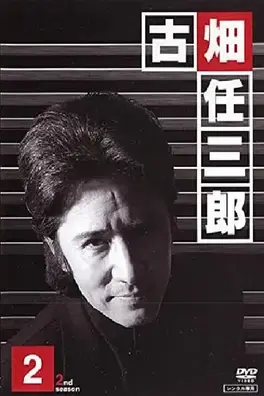
Furuhata Ninzaburō S2 ★★★☆☆

Poster.

Great episodes in this but I think I consistently enjoyed the first series more.

Columbo is a bloodhound, he catches a whiff of something wrong and doggedly pursues the murderer teasing out every detail, taking his time, until he finally corners them. Furuhata is a sly fox and more concerned with being clever. This show is much more interested in the big reveal of how Furuhata catches people, it even devotes a soliloquy every episode into teasing it, which means that whether an episode lands or not depends a lot on if that is satisfying or just comes across as contrived.

I also think they are leaning far too heavily into Imaizumi as a very weak source of comic relief. I just don’t find the degree of cruelty towards him funny or how ridiculous he himself gets. The last episode, despite otherwise being pretty good (I enjoy them having the big we’re going to America! episode for the finale and then have it being possibly the cheapest one of the whole show, mostly just being two people talking on a bus) was marred by its dreadful Imaizumi-focused B-plot.


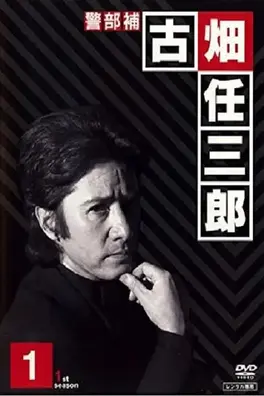
Furuhata Ninzaburō S1 ★★★★☆

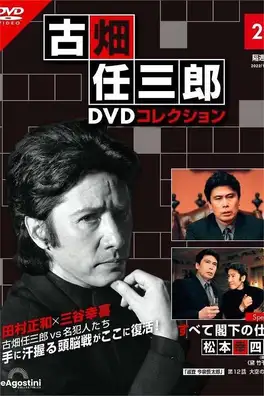
Poster.

Fun take on the Columbo formula without just being a copycat. I enjoy how much of a smug prick Furuhata is in comparison. Cases can be a bit inconsistent, relying on some real logical leaps or assuming absurdly specific behaviour from people. It’s a good thing the killers always confesses at the ends of these types of shows because it would be difficult to build a case otherwise. I enjoy the stagier touches: Furuhata’s address to the audience as the lights go down before the final act and the credits running over a shot from a fixed, wide vantage as the murderers are taken away.