This review contains spoilers.
It’s the same cycle, over and over. I don’t know how to get out, and I don’t know how to keep going, either.
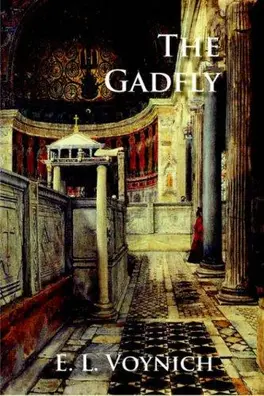
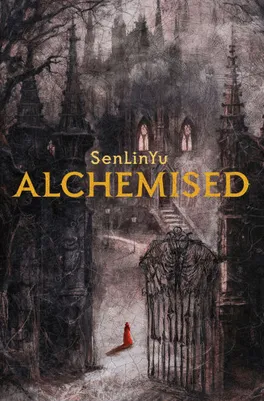
I got this as a Christmas present having never heard of it before. From the cover and the premise—the last survivor of a war against necromancers—I was was imaging something much more strange and eldritch than this book provides. The first large hint was the fact that the protagonist was fighting for the capital-R Resistance. The reality of what I had started reading was cemented when a friend saw me reading and informed me that the book started as a Hermoine/Draco fanfiction. I was honestly less bothered by it being Harry Potter-related than with it being a romance. But I am stubborn and decided to stick with it, leaving it at my partner’s place as something to pick through when at her’s.
The fundamental problem with this book is that it’s over a thousand pages long. I did enjoy much of it, but by the time it stumbles across the finish line I was quite sick of it. There is absolutely no need for it to be this long and even its big structural trick could have been done with half the number of pages. Helena, the protagonist, has amnesia; she doesn’t remember the last two years of the war. Some magical process has blocked out her memories. As the plot picks up and tensions are coming to a head with her and her captor Kaine, Helena starts to remember everything, at which point the novel cuts to an extended (very extended–it’s over half the book) flashback to bring us, and her, up to speed with, before finally returning to the present once we’ve caught back up.
The most obvious possibility as to the source of her amnesia is that she did this to herself to hide things, which the bad guys bring up and them dismiss as impossible. Then later on the bigger bad guy comes in and says lmao she obviously did this to herself you morons. This kind of underwhelming or undermined twist happens a few times. At one point what is basically the Philosopher’s Stone from Fullmetal Alchemist except that it’s white instead of red comes into the plot. Nothing really comes of it for some time other than the characters will occasionally, when talking about Kaine’s inevitable death, remark that maybe the Philosopher’s Stone from Fullmetal Alchemist except that it’s white instead of red might be usable to save Kaine’s life, and then it doesn’t and they do something else that also seems like it was pulled out of Fullmetal Alchemist to save him instead. At one point Helena asserts that the stone was used for something else that I either somehow missed or was completely glossed over and only explained in hindsight. Either way seems like a stone containing the souls of the ancient dead should at be something a bit more than a red white herring.
Not that I wanted it to expand on the ancient lore stuff more than it did. The religious background of the setting turns out to have all been a lie, of course, but then it turns out the lie was also a lie and the main villain is also two different ancient figures whose real history was deliberately obscured and not only does this revelation feel completely disconnected from anything of actual narrative import or emotional weight, it also drags the climax of part two—the giant flashback—to a halt. That might as well have been the climax of the whole book anyway as resetting the narrative again after that and jumping from the end of the war back to the present of Helena’s captivity really takes the wind out of everything again.
The main purpose of the flashback section is to recontextualise the relationship between Helena and Kaine, but even though I certainly could not have predicted the plot I don’t feel like it really reveal as much nuance in the character dynamics as it thinks it does. Even if you weren’t already spoilt, as I was going in, that this is intended as a dark romance, I think that it would be fairly obvious that it was heading in that direction anyway and so by the time we reset to learn exactly how Kaine and Helena really knew each other before she lost her memory, the broad trajectory is relatively clear. I don’t really understand what people find compelling about stories where people who don’t even like each other develop feelings for each other (they do eventually bond over their mutual complete lack of self-worth and instinct for self-sacrifice, but this only comes after they have already fallen for each other for no apparent reason) nor the allure of edgy, dangerous, bad boys so really this book was never going to be for me, but I could have forgiven it that if it wasn’t otherwise so dragged out. Even within the flashback it can’t help but try to do further dramatic recontextualisations of the relationship, with the two revealing secret motivations and layers of manipulation at play in previous interactions that absolutely did not come across as having anything that deep going on at the time nor really explain much of anything that had previously felt mysterious.
And Helena and Kaine’s relationship is the only one that gets developed. Before the flashback we hear the names of various old friends, but even when we jump back in time those relationships have already fallen apart and we never get to spend any time with or learn that much about any of them. Evidently I am meant to give a shit about Soren but the only reason I could conceive that I might is because that in a previous version of this story he was named (I am guessing) Ron Weasley. The story was written with the assumption that you are already bought into these characters and their past relationships but has not been changed to accommodate the references to the source material having been ripped out.
And once Kaine and Helena’s relationship is established (over many, many repetitive scenes) it really shifts gears into feeling like a bad prequel to itself; exhaustively tying everything established in the present back to Helena in some way. Every new invention and technique that gets used on Helena she had a hand in creating, every character that has appeared she had met before, every big event mentioned in passing she had a key hand it. Recontextualising things like this is not bad (it’s the whole point of a flashback like this) but it starts to feel both excessive and like a checklist, with the story having a need to pack in every little idea well beyond the point it has become tiresome. By the time part two finally ended I just wanted the book to be over.
The book, thankfully, does oblige and doesn’t waste too much time in the characters fleeing to the countryside, entering a marriage where they still lie to each other and bicker over it, and letting the bad guy who already had his narrative climax happen back in the flashback die offscreen.