

The Dispossessed ★★★★★
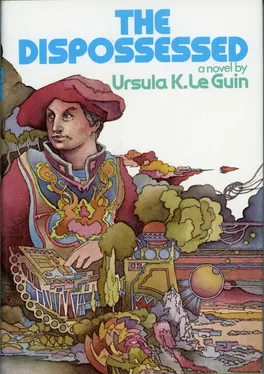
They knew no relation but possession. They were possessed.
In The Ones Who Walk Away from Omelas Le Guin asks the reader to imagine their ideal utopia, as pure or debauched as one likes, but perfect in whatever way one regards it as perfect. If the picture she paints is perhaps too “goody-goody”, then feel free to add an orgy if it would help. But she knows that this idea rings hollow, that such a place feels unsatisfying in its flawlessness, and as such she, famously, adds the suffering child: The rot at the heart of it that somehow fuels the city. The fatal, evil flaw. She does not try to justify this at all—no coherent connection is made between the misery of the child in the basement and the prosperity of the city—but she knows that somehow this absurdity, the most unreasonable thing about her description of Omelas by far, makes it seem more real. We know that perfection and harmony like this cannot be real, and this justifies our doubts of it.
And so Anarres, our ambiguous utopia. Le Guin tries to imagine an anarchist society and imagine it honestly, warts and all. Simply by striking off our chains we will not become new Soviet men, free of flaws and jealousies. People will still be petty and small minded, people will still feel alienated and isolated. I may not be a brilliant physicist (seeing how stressed and miserable my lecturers in university seemed put me off such things) but I related a lot to Shevek; his difficulty with other children and other people, his desire for isolation clashing with his need for community. The story of his struggles with this fallen, conservative anarchism is what first made anarchism seem real to me. That it could happen. That society could be remade. I admit that I do not wish to give up all of my luxuries that the Odonians would consider “excrement”, (I was raised propertarian after all) but the useless work that I do to live comfortably right now certainly does not sit easily in me.