
Tekkōki Mikazuki (demo) ★★★☆☆
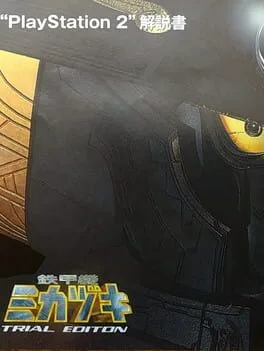
A demo for a cancelled tie-in game for a TV show that got reworked into Robot Alchemic Drive. Very interesting to compare it to the final game. The first thing that jumps out is that the map seems much more detailed here than any in RAD. It makes me wonder what kind of budget and time constraints RAD had during its development. That said, RAD also features extensive use of picture-in-picture effects and panicking crowds running around in the story mode as well a split-screen multiplayer option which might have put some more strict resource constraints on its maps than the largely static Tokyo of this demo. The only things moving around are the player character, their robot, the big watermelon kaiju and the buildings that you are smashing apart as you fight it.
Some of the assets from this demo seem to have been reused for the intro cutscene of the third level in RAD, both of which take place around Tokyo Tower, though when the level proper starts in the final game you are actually in a completely different map based on a different part of Tokyo featuring the Tokyo Metropolitan Government Building. The layouts of the maps in this demo and the cutscene in RAD don’t match up so they didn’t just reuse the same map, but some of the buildings appear to us the same models.
Both demo and final game do not feature a pause menu; the select button in both switching between pilot and robot and the start button showing control reminders in the demo and a map screen in the final game, but in the demo’s free-roam mode a message at the top of the screen informs the player that pressing select and start together will quit back to the menu. This feature is still functional in the challenge and versus modes in RAD but as far as I can tell not documented anywhere in the game or its manual1.
The watermelon monster is taken from the first episode of Tekkōki Mikazuki it’s just a very fun design. The conceit of controlling the robot from the ground is not from the show, though, and is taken from Remote Control Dandy, a game that Robot Alchemic Drive is very clearly a spiritual successor to, reusing and reworking many of the same concepts. The robot controls in this demo, though, are very simplified, using something like the “easy” control option from RAD for moving Mikazuki and without the different array of attack options present in either game. Perhaps the developers only had working or wanted only to present a basic, less complex version of the control scheme than they had in mind for the full game, but the end result in this demo lacks the clunky, expressive charm of RAD or its predecessor.
-
In the English version at least, I cannot speak for the Japanese version. ↩