
Remote Control Dandy ★★★★☆
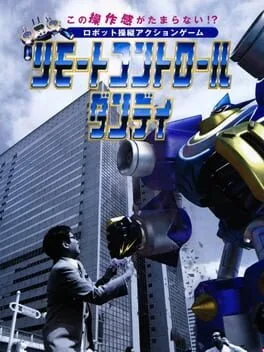
To launch a special attack, it needs to pose. That is an unavoidable requirement of robotics engineering.
I wonder how my feelings towards this and Robot Alchemic Drive would be if I played them in the order that they were released in. In many ways Remote Control Dandy feels like a first draft of RAD. A lot of the same ideas are explored. Similar character archetypes, reused scenarios, even a similar selection of maps for the areas that make up Torino and Senjo: The new downtown area, the old city centre, the docks, the power plant on the mountain. Both even have a map of Shinjuku for a mission where you have to defend the Tokyo Metropolitan Government Building. I definitely feel like a second go at this both lead to a more interesting and compelling story in RAD as well as just a more fun experience. Mechanics that were a small part of RCD get a bigger focus in RAD while a lot of the other concerns fade into the background.
Conversely, while RAD feels like a second draft it actually feels less polished. RAD’s story is more interesting but also less coherent and I don’t think that all of that can be blamed on the rushed (but charming) localisation. In RCD’s favour is that it looks a lot better for a Playstation game than RAD does for a Playstation 2 game. Partly that is aesthetic choices. RAD’s muted palette, Playstation 2 blur and general griminess aren’t doing it many favours, but while it boasts bigger maps and longer draw distances there is a conspicuous lack of damage models for buildings and other details that make Senjo feel a bit more sterile compared to RCD’s Torino. Animated character portraits, a more visual novel-style intermission section and a much fancier and seamless robot selection and launch screen also just make seem like more time and care was allowed in this game than was for RAD.
There is also some more detailed simulationist aspects to RCD that are dropped in its successor. Both games have monetary system to incentivise keeping property destruction down but RAD’s is much more forgiving, simply giving you a base amount of money per mission and then bonuses for protecting key buildings and minimising damage. RCD on the other hand (and somewhat more logically) gives you a larger upfront amount but penalises you for all damage done to the city over the course of your giant robot fights. You can, in fact, lose money on a given mission. The robots available to you even cost variable amounts to send into battle. Do you use the cheap, steam-powered robot that doesn’t have big fancy attacks, or do you send your expensive nuclear-powered model? You can go bankrupt if you spend everything and and smash up the city too much. You can also cause so much property destruction that the populace turns against you. In the second game this has largely been simplified away. RCD has more intricacies here, and that can definitely be appealing, but in the end RAD’s more lackadaisical approach lets one have a lot more fun driving a big stompy robot smashing through buildings without the looming risks of bankruptcy hanging over one’s head (though one is given more second chances than the game initially lets on).
And it’s interesting to see other elements that are somewhat vestigial in RAD having more of a presence here. In both games police cars drive around the city while you do battle. In RCD you have to pay the cost of them if they get destroyed but you are assured that they are automated patrol cars there only to detect and deter people from coming back into the evacuated city to steal while everyone is missing. You definitely aren’t killing anyone so don’t worry about it. The manual for RAD keeps this explanation that the patrol cars are automated drones despite the fact that RAD is more than happy to let you casually crush and mow down crowds of people as they spray comically large clouds of blood. You are not penalised for it at all; it is simply part of the slapstick. Yet it still keeps the excuse that the cars are automated, despite it not serving any purpose.
But for all RAD can feel like a rushed copy of this game, it’s still fundamentally the more fun one. RCD is great in its own right but it feels lacking compared RAD’s analogue stick controls, more engaging mech fights and more fun cast. The battle mode in RCD is also disappointing. While it does allow for playing against computer-controlled opponents it simply gives both players direct control over their robots from a birds-eye view, removing the core dynamic of having to deal with playing as a pilot operating from a ground level.
To end on a compliment, though, Remote Control Dandy’s final boss is much cooler than and has some more interesting unique gameplay tricks than Robot Alchemic Drive’s. Evidently the developers thought that they hit a winner there too, as one of the unique aspects of RCD’s final boss ended up being promoted to a core gameplay mechanic in RAD.
Also the fact that you can combine Vordan’s tornado arms and remote control rocket fist is extremely funny.