

Duel ★★★★☆
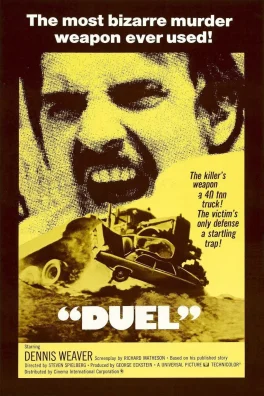
Emasculation, or fear of it, is possibly the most defining feature of masculinity. Much as every generation denounces the proceeding one as immoral and fallen, every subsequent generation of men seems to feel like they don’t get to be real men any more. Here is Steven Spielberg’s first feature film, in 1971, so utterly afraid that men are no longer the head of their households, that they cannot defend themselves, their little compact suburban family cars are puny compared to diesel trucks of real, working-class, leather boot-wearing highway cowboys. It’s reactionary, it’s pathetic, and it’s still a damn good film. Spielberg knows how to tell a story visually and the tension and action throughout, this simple duel between two automobiles, is great.
And even though in the end he celebrates his victory, David Mann’s drive to reclaim is manhood is so blatantly self-destructive. He refuses to every back down, just turn around, lick his wounds, and go home. Even when he is unsalvageably late for whatever meeting he was trying to get to he continues to press on, to fight and try to win. And doing so takes sacrificing his car, the symbol of his own manhood and the family he, as a man, should supposedly be protecting.
The choice to never really show the face of the lorry driver is perfect and, despite the fact they we do occasionally see their arm or boots, it’s easy to see the the Peterbilt itself as the antagonist, the tanker asserting its dominance over the road. And while I don’t think that framing it as a battle purely between two vehicles would work, I do wish it pulled away a bit more from David and in particular cut out the awful narration. This feels like a film that should not have dialogue, or at least kept to an absolute minimum, and Dennis Weaver’s physical acting is enough to show his mental state without having his thought process needless voiced. I had previously watched the cinema cut of the film but this time watched a fan edit that attempts to hew closer to the original broadcast version using the blu-ray release as source material, which at least meant that I didn’t have to sit through David’s phone call with his wife or the interlude where he saves a school bus.