

Bloodborne ★★★★☆
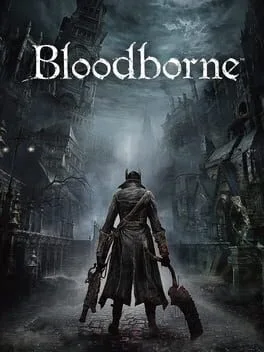
I was pleasantly surprised by how much I enjoyed Bloodborne compared to Dark Souls. Certainly the experience of going into it for the first time is a lot less opaque and frustrating. Some of it this is simply that I have already played Dark Souls at this point and am thus familiar with many of the underlying systems that it shares with Bloodborne, and also I had my partner, a big Soulsborneshadowsring fan, to clarify some questions that I had, but I do think that Bloodborne’s more constrained focus is also a big part of it. The number of stats and choices presented at the start of the game is much pared down and the game focuses on and encourages a particular hit and run, aggressive, glass cannon style of gameplay that is both very fun in its own right and gives the player a clear set of skills to learn that will be useful through the whole game, rather than hitting a brick wall when a particular approach fares poorly against a given enemy or boss.
This also clearly focuses the enemy design—enemies clearly telegraph their attacks much more consistently than they do in Dark Souls and generally having a consistent set of behaviours and principals underlying them. Not to say that this makes them repetitive—there is still a lot of combat possibilities explored throughout the game and some boss fights have some rather cute gimmicks to them. And the game is not entirely constrained: More weapon options become available as the game progresses, as does magic, but they are alternative approaches that can be taken if one wants to explore them after the player has already become accustomed to the game’s particular style. You can eventually even get a shield, though it’s more of a joke item than a serious option.
The world is not quite as intricately and beautifully connected as Dark Souls’, but it is much easier to get invested into Yharnam, a city clearly at the end of a protracted, terminal decline and now in freefall, than Dark Souls’ long-dead world. Getting to see the layers peel back and the world change as one progresses gives some sense of importance to what is happening, even if what exactly caused all of this is as opaque as it was in Dark Souls. I am not a lore fiend and I don’t have much interest in piecing together dozens of item descriptions. I think, even given that I am not a huge fan of this approach in the first place, that it still fails to make the most of it. Character storylines are fascinatingly brittle and easy to miss out on, but also usually lack much payoff even when seeing them through to the end, and while the world is deeper rather than wider it’s not that deep and I assumed that the insight system, interesting as it is, would influence more than it actually does in the end. Back on the gameplay front, equipping gems to weapons also feels a bit half-baked, with so many piddly single-digit percentage stat modifiers, but it’s certainly a more friendly system for adjust weapons and changing their attack types than Dark Souls’ weapon upgrade tree.
The chalice dungeon crawling system is an interesting addition and while it’s not the kind of thing I’d normally engage much with (by the end of this style of game I’ve generally had my fill and want it to be done with rather than hungry for more), it made for something moderately engaging to do while I was feeling wretched for a couple of days after vaccination topups and wasn’t feeling up to much that took a lot of concentration or effort.

